
Clinical Subject Page

Epididymitis
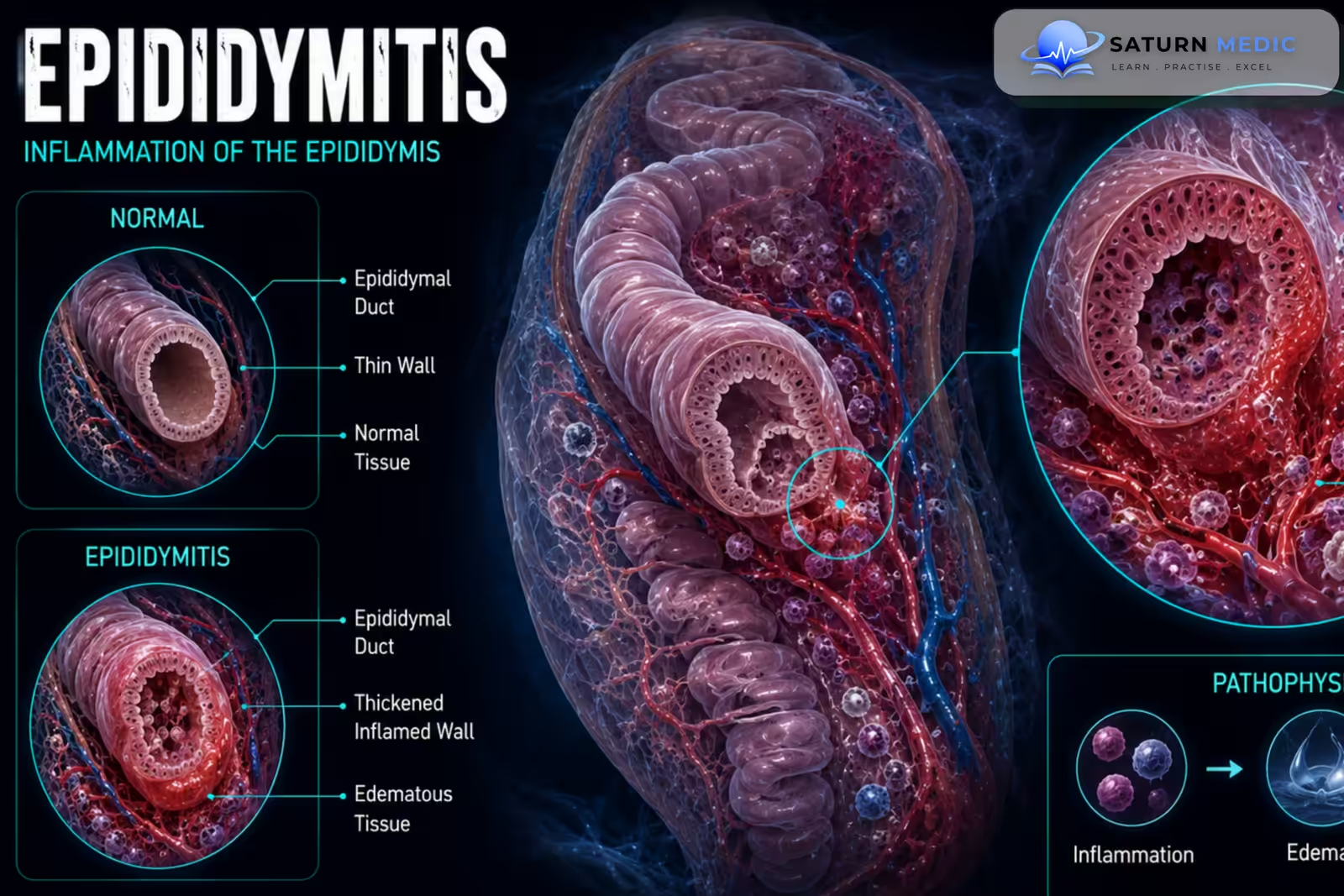
Epididymitis is inflammation of the epididymis, usually caused by infection. It commonly presents with gradually developing unilateral scrotal pain, swelling, and tenderness.
Also called
ICD-10
Specialty
Onset
Reviewed
-
OverviewOverview
-
Etiology & Risk FactorsEtiology & Risk Factors
-
PathophysiologyPathophysiology
-
Clinical PresentationClinical Presentation
-
History TakingHistory Taking
-
Physical ExaminationPhysical Examination
-
InvestigationsInvestigations
-
DiagnosisDiagnosis
-
ManagementManagement
-
ComplicationsComplications
-
PrognosisPrognosis
-
Key Points / Clinical PearlsKey Points / Clinical Pearls
Overview
-Epididymitis is usually an ascending infection involving the epididymis. The causative organism depends on the patient’s age, sexual history, and urinary tract risk factors.
Important causes include:
- Chlamydia trachomatis and Neisseria gonorrhoeae in sexually active men
- Enteric gram-negative organisms, especially Escherichia coli (E. coli), in men with urinary tract infection or bladder outlet obstruction
- Less commonly, noninfectious inflammation, trauma, or specific infections such as tuberculosis
Etiology & Risk Factors
-Etiology
–Epididymitis usually results from retrograde or ascending infection from the urethra or urinary tract.
Common causes include:
- Chlamydia trachomatis
- Neisseria gonorrhoeae
- Escherichia coli (E. coli) and other enteric organisms
- Urinary tract infection
- Recent urinary tract instrumentation
-Risk Factors
- Unprotected sexual activity and sexually transmitted infection exposure
- Previous sexually transmitted infection
- Urinary tract infection
- Benign Prostatic Hyperplasia (BPH) or urinary obstruction
- Recent urethral catheterization or urological instrumentation
Pathophysiology
Ascending urethral or urinary tract infection → retrograde spread through the vas deferens → epididymal infection and inflammation → edema and swelling → scrotal pain and tenderness → possible extension to the testis → epididymo-orchitis or abscess formation
Clinical Presentation
–Symptoms
- Gradually developing unilateral scrotal pain
- Scrotal swelling
- Scrotal heaviness
- Dysuria
- Urinary frequency
- Urinary urgency
- Urethral discharge
- Painful ejaculation
-Signs:
- Tender, swollen epididymis
- Unilateral scrotal swelling
- Scrotal erythema
- Increased scrotal warmth
- Tenderness usually localized initially to the epididymis
History Taking
-Ask about:
- Onset and progression of scrotal pain
- Sudden versus gradual onset
- Previous episodes
- Dysuria or urinary frequency
- Urethral discharge
- Fever or chills
- Recent sexual contacts
- Sexually transmitted infection history
Physical Examination
-General Examination
- Temperature
- Heart rate
- Signs of systemic infection or sepsis
-System-Specific Examination:
- Inspect both sides of the scrotum
- Palpate the testis and epididymis separately when possible
- Assess epididymal tenderness and swelling
- Look for scrotal erythema or edema
- Examine for urethral discharge
- Assess for an inguinal hernia when clinically relevant
Investigations
-Biochemistry / Specific Tests
Urinalysis
Urine culture when enteric urinary infection is suspected
Nucleic acid amplification testing (NAAT) for Chlamydia trachomatis and Neisseria gonorrhoeae when sexually transmitted infection is suspected
Blood cultures may be required in severe systemic infection.
-Imaging
Scrotal Ultrasound with Doppler
Used primarily when the diagnosis is uncertain or Testicular Torsion must be excluded.
Possible findings include:
Enlarged epididymis
Increased epididymal blood flow
Reactive hydrocele
Associated orchitis or abscess
-Special / Confirmatory Tests
There is usually no single confirmatory test.
Diagnosis
Epididymitis is diagnosed primarily from:
Gradual onset unilateral scrotal pain and epididymal tenderness → assessment for urinary or sexually transmitted infection → Doppler ultrasound when torsion cannot be confidently excluded.
-The first priority in acute scrotal pain is excluding Testicular Torsion
Management
1. Definitive Treatment
The definitive treatment is appropriate antimicrobial therapy directed at the likely or confirmed causative organism.
Treatment selection depends on whether the infection is likely caused by:
Sexually transmitted pathogens
Enteric urinary pathogens
Another specific organism
Antibiotic treatment should follow current local antimicrobial guidelines and microbiological results when available.
2. Medical Treatment
Important medical treatment includes:
Appropriate antibiotics
Nonsteroidal anti-inflammatory drugs (NSAIDs) or other analgesics
Antipyretics when needed
Sexual partners should be evaluated and treated when a sexually transmitted infection is identified or strongly suspected.
3. Surgical / Procedural Treatment
No routine surgical treatment.
Procedures may be required for complications such as:
Drainage of a scrotal or epididymal abscess
Surgical exploration when Testicular Torsion cannot be excluded
4. Supportive Management
Bed rest during severe symptoms
Scrotal elevation and support
Adequate hydration
Avoid strenuous activity until symptoms improve
Complications
- Epididymo-orchitis
- Scrotal abscess
- Sepsis
- Chronic scrotal pain
- Infertility
- Testicular atrophy
Prognosis
The prognosis of Epididymitis is generally good with early diagnosis and appropriate antimicrobial treatment. Pain and swelling may take several weeks to fully resolve. Delayed treatment, severe infection, abscess formation, or bilateral disease can increase the risk of chronic pain, infertility, and testicular damage.
Key Points / Clinical Pearls
- Epididymitis is inflammation of the epididymis, usually caused by infection.
- Gradually developing unilateral scrotal pain is a typical presentation.
- Sexually transmitted pathogens are common causes in sexually active younger men.
- Enteric urinary pathogens are more common in patients with urinary tract abnormalities.
- Chlamydia trachomatis and Neisseria gonorrhoeae are important sexually transmitted causes.
- Escherichia coli (E. coli) is an important enteric cause.
- Testicular Torsion must always be considered in acute scrotal pain.
- A positive Prehn sign does not reliably exclude Testicular Torsion.
- Urinalysis, urine culture, and STI testing help identify the cause.
- Doppler ultrasound is useful when the diagnosis is uncertain.
- Appropriate antibiotics are the main treatment.
- European Association of Urology (EAU). EAU Guidelines on Urological Infections .
- Centers for Disease Control and Prevention (CDC). Epididymitis – STI Treatment Guidelines .
- Trojian TH, Lishnak TS, Heiman D. Epididymitis and Orchitis: An Overview. Am Fam Physician. 2009;79(7):583-587. American Family Physician .
- Luzzi GA, O'Brien TS. Acute Epididymitis. BJU Int. 2001;87(8):747-755. PubMed .
- Street EJ, Justice ED, Kopa Z, et al. The 2016 European Guideline on the Management of Epididymo-Orchitis. Int J STD AIDS. 2017;28(8):744-749. PubMed .
- National Library of Medicine (NIH). Epididymitis . StatPearls.