
Clinical Subject Page

Renal Trauma
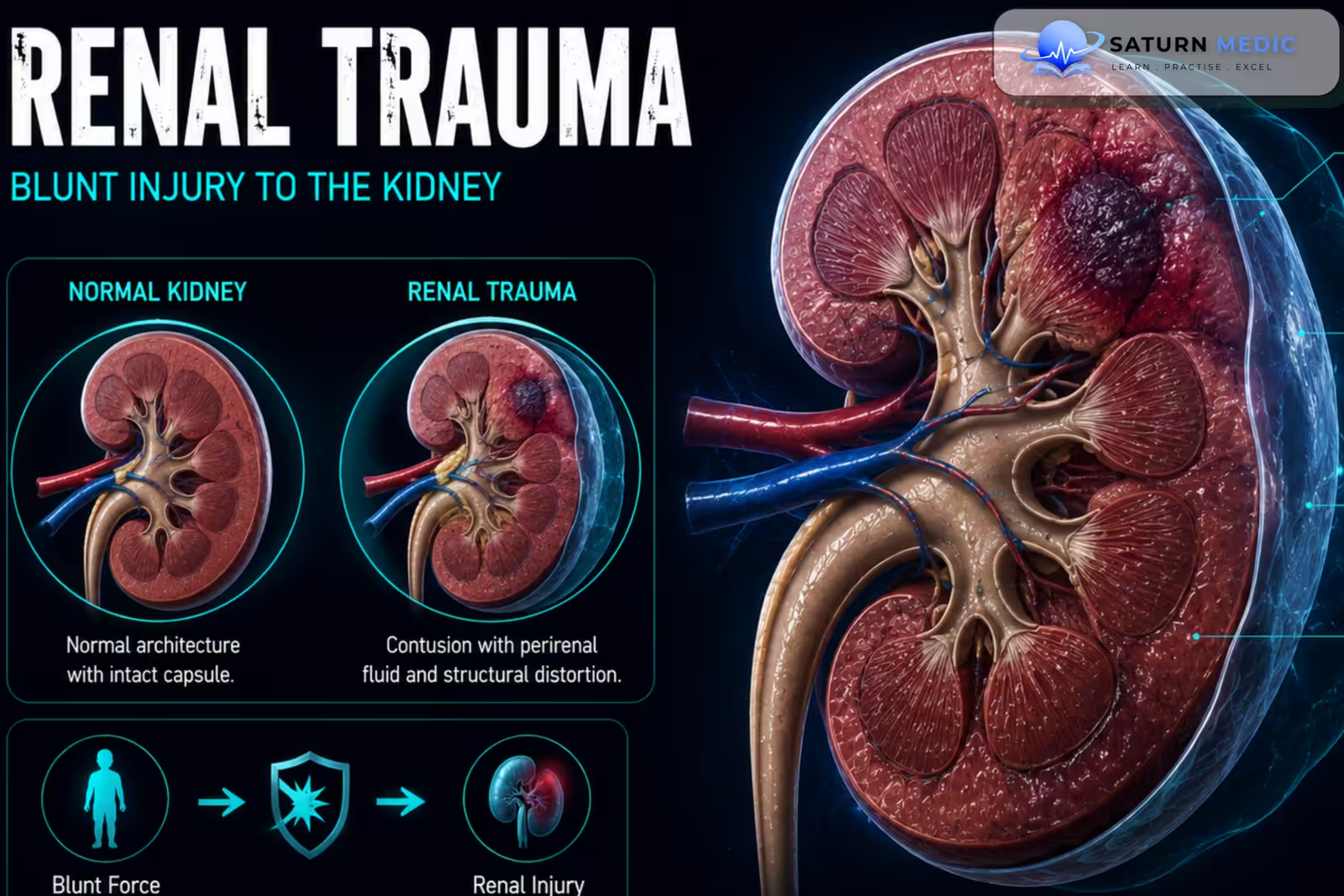
Renal Trauma is an injury to the kidney caused by blunt or penetrating force. It ranges from minor renal contusion to severe laceration, vascular injury, or complete disruption of the kidney. Most cases result from blunt abdominal trauma
Also called
ICD-10
Specialty
Onset
Reviewed
-
OverviewOverview
-
Etiology & Risk FactorsEtiology & Risk Factors
-
PathophysiologyPathophysiology
-
Clinical PresentationClinical Presentation
-
History TakingHistory Taking
-
Physical ExaminationPhysical Examination
-
InvestigationsInvestigations
-
DiagnosisDiagnosis
-
ManagementManagement
-
ComplicationsComplications
-
PrognosisPrognosis
-
Key Points / Clinical PearlsKey Points / Clinical Pearls
Overview
-Renal Trauma may occur after:
- Road Traffic Accidents (RTA)
- Falls
- Sports injuries
- Assault
- Penetrating injuries such as stab or gunshot wounds
-Renal injuries are commonly graded using the American Association for the Surgery of Trauma (AAST) renal injury scale, from Grade I to Grade V:
- Grade I: Contusion or non-expanding subcapsular hematoma
- Grade II: Small renal laceration or contained perirenal hematoma
- Grade III: Deeper renal laceration without collecting-system injury
- Grade IV: Injury involving the collecting system or segmental vascular injury
- Grade V: Shattered kidney or major renal vascular injury
Etiology & Risk Factors
-Etiology:
Renal Trauma is caused by direct or indirect injury to the kidney.
-Blunt Trauma
- Road traffic accidents
- Falls
- Direct blows to the flank
- Sports injuries
-Penetrating Trauma
- Stab wounds
- Gunshot wounds
-Risk Factors
- High-energy trauma
- Contact sports
- Penetrating abdominal or flank injuries
- Pre-existing renal abnormalities
- Enlarged or poorly protected kidneys
Pathophysiology
Blunt or penetrating force → renal contusion, laceration, hematoma, or vascular injury → renal bleeding ± urine leakage → retroperitoneal hematoma → hematuria and flank pain → severe injury may cause hemorrhagic shock, collecting-system disruption, or loss of renal function
Clinical Presentation
–Symptoms
- Flank or abdominal pain
- Hematuria
- Flank bruising
- Abdominal pain
- Difficulty passing urine
- Dizziness or weakness due to blood loss
-Signs:
- Flank tenderness
- Costovertebral angle tenderness
- Flank ecchymosis
- Abdominal tenderness
- Abdominal distension
- Hypotension in severe bleeding
- Tachycardia
- Signs of associated injuries
History Taking
-Ask about:
- Mechanism of injury
- Time of injury
- Direct blow to the flank or abdomen
- High-speed road traffic accident
- Fall from height
- Penetrating injury
- Gross hematuria
- Flank or abdominal pain
- Difficulty passing urine
- Previous kidney disease or surgery
- Use of anticoagulant medication
Physical Examination
-General Examination
- Airway, breathing, and circulation
- Blood pressure
- Heart rate
- Signs of shock
- Overall severity of trauma
-System-Specific Examination:
- Flank tenderness or bruising
- Abdominal tenderness or distension
- Palpable flank mass
- External wounds
- Pelvic examination when associated pelvic injury is suspected
Investigations
-Complete Blood Count
Relevant for:
-
Assessing blood loss
-
Monitoring hemoglobin in significant trauma
-Biochemistry / Specific Tests
-
Urinalysis for hematuria
-
Serum creatinine to assess renal function
-
Blood grouping and crossmatching in significant trauma
-Imaging
Contrast-Enhanced CT Scan
Contrast-enhanced CT of the abdomen and pelvis is the key imaging investigation in hemodynamically stable patients with suspected significant Renal Trauma.
It assesses:
-
Renal lacerations
-
Hematoma
-
Active bleeding
-
Urinary extravasation
-
Collecting-system injury
-
Vascular injury
-
Associated abdominal injuries
-Ultrasound
May identify:
-
Perirenal fluid
-
Large hematoma
-
Gross renal abnormalities
However, ultrasound is less accurate for grading renal injury.
Diagnosis
-Diagnosis of Renal Trauma is based on:
A significant trauma mechanism + clinical findings ± hematuria + imaging evidence of renal injury.
The injury should be graded according to the AAST renal injury scale to guide management.
Management
1. First-Line / Emergency Management
Initial management follows trauma principles:
-
Airway stabilization
-
Breathing assessment and support
-
Circulatory assessment
-
Control of major hemorrhage
-
Intravenous access and fluid or blood resuscitation when required
-
Analgesia
-
Continuous monitoring
-
Urgent trauma and urological assessment
2. Definitive Treatment
Most hemodynamically stable patients with Renal Trauma can be managed non-operatively with:
-
Observation
-
Bed rest or activity restriction as clinically appropriate
-
Monitoring of vital signs
-
Serial hemoglobin assessment when indicated
-
Monitoring of renal function
-
Follow-up imaging for selected injuries
3. Medical Treatment
-
Analgesics
-
Fluid resuscitation when required
-
Blood products for significant hemorrhage
-
Antibiotics only when clinically indicated
-
Treatment of associated complications
4. Surgical / Procedural Treatment
Intervention may be required for:
-
Hemodynamic instability caused by renal bleeding
-
Persistent or uncontrolled hemorrhage
-
Major vascular injury
-
Expanding or pulsatile retroperitoneal hematoma during exploration
-
Selected severe collecting-system injuries
-Procedures may include:
-
Angioembolization
-
Ureteric stenting
-
Percutaneous drainage
-
Renal repair
-
Partial nephrectomy
-
Nephrectomy in severe non-salvageable injury
5. Supportive Management
-
Monitor urine output
-
Monitor hemoglobin and hemodynamic status
-
Monitor renal function
Complications
- Hemorrhage
- Hemorrhagic shock
- Urinary extravasation
- Urinoma
- Perirenal abscess
- Delayed bleeding
- Renal artery thrombosis
- Hypertension
- Reduced renal function
- Chronic Kidney Disease CKD
- Loss of the affected kidney
Prognosis
The prognosis depends mainly on the severity of injury, hemodynamic stability, associated trauma, and pre-existing kidney function. Most low-grade renal injuries heal without surgery and have an excellent prognosis. High-grade injuries have a greater risk of bleeding, urinary complications, reduced renal function, and nephrectomy
Key Points / Clinical Pearls
- Renal Trauma is usually caused by blunt abdominal or flank injury.
- Road traffic accidents and falls are common causes.
- Penetrating trauma can cause severe renal injury.
- Flank pain and hematuria are common presentations.
- The amount of hematuria does not reliably predict injury severity.
- Severe renal vascular injury may occur without significant hematuria.
- Hemodynamic stability is the key factor guiding management.
- The AAST grading system classifies renal injuries from Grade I to Grade V.
- Contrast-enhanced CT is the key imaging test in stable patients with suspected significant injury.
- Most hemodynamically stable patients can be managed non-operatively.
- Angioembolization can control selected cases of active renal bleeding.
- Urinary extravasation may require ureteric stenting or drainage.
- European Association of Urology (EAU) – Guidelines on Urological Trauma . Renal trauma: evaluation, AAST classification, imaging, and management.
- American Urological Association (AUA) – Urotrauma Guideline . Evidence-based assessment and management of renal and other genitourinary injuries.
- Coccolini F, et al. Kidney and uro-trauma: WSES-AAST guidelines . World Journal of Emergency Surgery. 2019.
- Singh S, Sookraj K. Kidney Trauma. StatPearls . NCBI Bookshelf. Updated 2023.