
Clinical Subject Page

Wilms Tumor
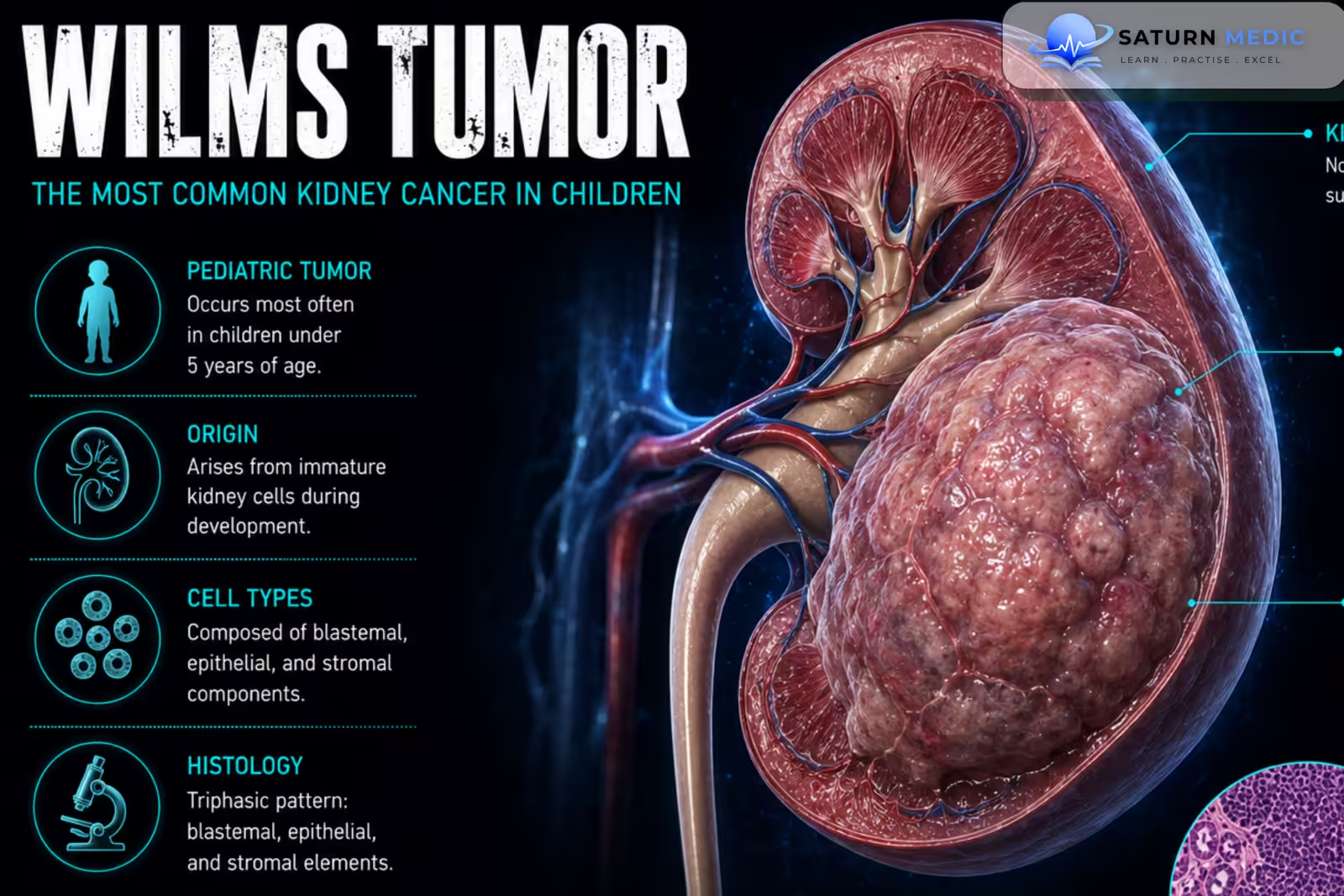
Wilms Tumor is a malignant embryonal tumor of the kidney that occurs mainly in children. It is the most common primary malignant renal tumor of childhood and usually presents as a painless abdominal mass
Also called
ICD-10
Specialty
Onset
Reviewed
-
OverviewOverview
-
Etiology & Risk FactorsEtiology & Risk Factors
-
PathophysiologyPathophysiology
-
Clinical PresentationClinical Presentation
-
History TakingHistory Taking
-
Physical ExaminationPhysical Examination
-
InvestigationsInvestigations
-
DiagnosisDiagnosis
-
ManagementManagement
-
ComplicationsComplications
-
PrognosisPrognosis
-
Key Points / Clinical PearlsKey Points / Clinical Pearls
Overview
–Wilms Tumor develops from immature embryonic kidney tissue and usually affects children between approximately 2 and 5 years of age.
-Important features include:
- Usually unilateral
- Usually presents as a painless abdominal mass
- May cause hematuria or hypertension
- Can metastasize, most commonly to the lungs
-Wilms Tumor may occur as an isolated condition or as part of certain congenital syndromes.
Etiology & Risk Factors
-Etiology
–Wilms Tumor results from abnormal development of embryonic kidney tissue. Genetic abnormalities affecting normal renal development and cell growth are involved.
-It may be associated with congenital syndromes, including:
- WAGR syndrome
- Denys-Drash syndrome
- Beckwith-Wiedemann syndrome
-Risk Factors
- Young childhood
- Certain genetic syndromes
- Aniridia
- Genitourinary abnormalities
- Hemihyperplasia or overgrowth syndromes
Pathophysiology
Abnormal embryonic renal development → persistent immature nephrogenic tissue → genetic alterations → uncontrolled proliferation of nephroblasts → renal mass formation → local expansion ± vascular invasion and metastasis
Clinical Presentation
–Symptoms
- Painless abdominal swelling or mass
- Abdominal pain
- Hematuria
- Fever
- Reduced appetite
- Weight loss
-Signs:
- Large unilateral abdominal mass
- Abdominal distension
- Hypertension
- Pallor in some patients
History Taking
-Ask about:
- Onset and progression of abdominal swelling
- Abdominal pain
- Hematuria
- Fever
- Weight loss or reduced appetite
- Symptoms of hypertension
- Previous congenital abnormalities
- Family history of childhood kidney tumors
Physical Examination
-General Examination
- General appearance
- Weight and growth
- Blood pressure
- Pallor
-System-Specific Examination:
- Inspect the abdomen for asymmetry or distension
- Gently assess the abdominal mass
- Assess whether the mass appears unilateral
- Examine for aniridia
- Look for features of associated congenital syndromes
Investigations
-Biochemistry / Specific Tests
Serum creatinine and kidney function
Liver function tests when clinically indicated
Urinalysis for hematuria
-Imaging
Abdominal Ultrasound Often the initial investigation to identify a renal mass.
Contrast-Enhanced CT or MRI of the Abdomen
Used to assess:
Tumor size
Contralateral kidney
Local extension
Lymph nodes
Renal vein involvement
Inferior vena cava involvement
-Chest CT
Used to assess for pulmonary metastases.
Diagnosis
-Diagnosis is based on:
Typical age and presentation + imaging showing a renal mass consistent with Wilms Tumor.
-Further staging assesses:
- Local tumor extension
- Lymph node involvement
- Renal vein or inferior vena cava involvement
- Distant metastases, particularly to the lungs
–Definitive histopathological confirmation is obtained from tumor tissue according to the treatment protocol
Management
1. Definitive Treatment
Treatment is multidisciplinary and usually includes a combination of:
Surgery
Chemotherapy
Radiotherapy in selected patients
The exact sequence depends on the staging and treatment protocol.
2. Medical Treatment
Chemotherapy is an essential part of treatment for most patients.
Common agents used in treatment protocols may include:
Vincristine
Actinomycin D
Doxorubicin in higher-risk disease
3. Surgical / Procedural Treatment
Radical nephrectomy for many unilateral tumors
Nephron-sparing surgery in selected bilateral tumors or special situations
Surgical assessment and sampling of regional lymph nodes
4. Supportive Management
Blood pressure control
Nutritional support
Monitoring renal function
Complications
- Tumor rupture
- Hemorrhage
- Hypertension
- Renal vein invasion
- Inferior vena cava extension
- Pulmonary metastases
- Liver metastases
- Recurrence
- Reduced renal function
Prognosis
The prognosis for Wilms Tumor is generally favorable with modern multidisciplinary treatment. Outcome depends mainly on tumor stage, histology, molecular features, response to therapy, presence of metastases, and whether the tumor is unilateral or bilateral. Tumors with favorable histology generally have a better outcome than those with anaplastic histology.
Key Points / Clinical Pearls
- Wilms Tumor, also called Nephroblastoma, is a malignant embryonal kidney tumor of childhood.
- It is the most common primary malignant renal tumor in children.
- It usually affects young children, commonly between 2 and 5 years of age.
- A painless abdominal mass is the classic presentation.
- Hematuria and hypertension may occur.
- Wilms Tumor is usually unilateral.
- The lungs are the most common site of distant metastasis.
- Ultrasound is often the initial imaging investigation.
- CT or MRI is used for staging and surgical planning.
- Both kidneys must be evaluated carefully.
- Biopsy before treatment depends on the treatment protocol and clinical situation.
- Treatment usually combines surgery and chemotherapy
- National Cancer Institute (NCI). Wilms Tumor and Other Childhood Kidney Tumors Treatment (PDQ®) .
- European Society for Paediatric Oncology (SIOP Europe). SIOP Europe – Paediatric Oncology Resources .
- Dome JS, Graf N, Geller JI, et al. Advances in Wilms Tumor Treatment and Biology: Progress Through International Collaboration. J Clin Oncol. 2015;33(27):2999-3007. Journal of Clinical Oncology .
- Davidoff AM. Wilms Tumor. Adv Pediatr. 2012;59(1):247-267. PubMed .
- Metzger ML, Dome JS. Current Therapy for Wilms Tumor. Oncologist. 2005;10(10):815-826. The Oncologist .
- National Library of Medicine (NIH). Wilms Tumor . StatPearls.