

Clinical Subject Page
Megaloblastic Anemia
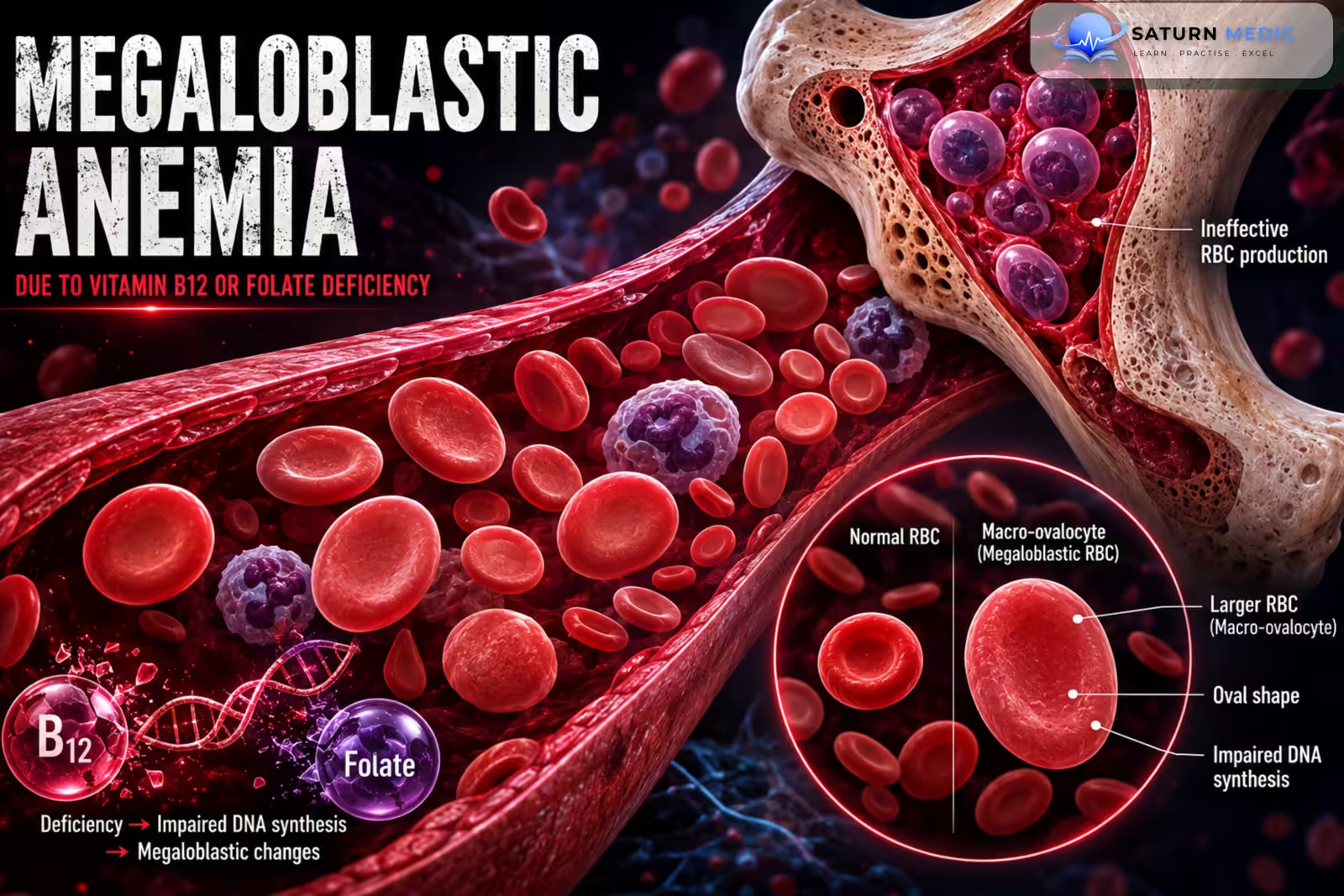
Megaloblastic Anemia is a type of anemia caused by impaired DNA synthesis, resulting in abnormal maturation of red blood cell precursors in the bone marrow. The most common causes are vitamin B12 deficiency and folate deficiency.
Also called
ICD-10
Specialty
Hematology
Onset
Reviewed
-
OverviewOverview
-
Etiology & Risk FactorsEtiology & Risk Factors
-
PathophysiologyPathophysiology
-
Clinical PresentationClinical Presentation
-
History TakingHistory Taking
-
Physical ExaminationPhysical Examination
-
InvestigationsInvestigations
-
DiagnosisDiagnosis
-
ManagementManagement
-
ComplicationsComplications
-
PrognosisPrognosis
-
Key Points / Clinical PearlsKey Points / Clinical Pearls
Overview
Megaloblastic Anemia occurs when impaired DNA synthesis prevents normal cell division in the bone marrow. This produces large, immature red blood cell precursors (megaloblasts) and large circulating red blood cells (macrocytosis). Vitamin B12 and folate deficiencies are the most common causes.
It may also cause leukopenia and thrombocytopenia, resulting in pancytopenia in severe cases. Vitamin B12 deficiency can additionally cause neurological complications, which are not typically seen in folate deficiency.
Etiology & Risk Factors
-Etiology
Vitamin B12 Deficiency
Poor dietary intake
Strict vegan diet
Pernicious anemia
Atrophic gastritis
H. pylori infection
Gastrectomy
Bariatric surgery
Terminal ileal disease
Crohn’s disease
Ileal resection
Malabsorption
Long-term metformin use
Long-term proton pump inhibitor use
Nitrous oxide exposure
Folate Deficiency
Poor dietary intake
Alcohol use disorder
Malnutrition
Malabsorption
Celiac disease
Increased requirements during pregnancy
Hemolytic anemia
Chronic inflammatory disease
Drugs
Methotrexate
Trimethoprim
Phenytoin
Valproate
Sulfasalazine
Hydroxyurea
Pathophysiology
Vitamin B12 or folate deficiency → impaired DNA synthesis → delayed nuclear maturation and cell division → cytoplasmic maturation continues → nuclear-cytoplasmic asynchrony → formation of large abnormal megaloblasts in bone marrow → ineffective erythropoiesis → intramedullary destruction of abnormal precursors → macrocytic anemia → reduced oxygen delivery to tissues → fatigue and other symptoms of anemia.
Vitamin B12 deficiency → impaired DNA synthesis + accumulation of methylmalonic acid → demyelination and neurological injury.
Clinical Presentation
-Symptoms
Fatigue
Weakness
Pallor
Shortness of breath
Dizziness
Headache
Palpitations
Reduced exercise tolerance
-Gastrointestinal Features
Glossitis
Sore tongue
Angular cheilitis
Loss of appetite
Weight loss
Diarrhea
-Neurological Features of Vitamin B12 Deficiency
Peripheral paresthesia
Numbness
Loss of vibration sense
Loss of proprioception
Ataxia
Muscle weakness
Cognitive impairment
Memory problems
-Severe Disease
Pancytopenia
Recurrent infections
Easy bruising
Bleeding
History Taking
Ask about:
- Fatigue and weakness
- Dietary habits
- Vegan or vegetarian diet
- Weight loss
- Gastrointestinal symptoms
- Chronic diarrhea
- Previous gastric surgery
- Bariatric surgery
- Ileal resection
- Crohn’s disease
- Celiac disease
- Alcohol intake
- Pregnancy
- Medication history
- Metformin use
Physical Examination
General Examination
Look for:
Pallor
Jaundice
Tachycardia
Weight loss
Signs of malnutrition
Oral Examination
Look for:
Glossitis
Smooth, red tongue
Angular cheilitis
Neurological Examination
Particularly in suspected Vitamin B12 deficiency:
Sensory impairment
Reduced vibration sense
Impaired proprioception
Peripheral neuropathy
Ataxia
Muscle weakness
Cognitive changes
Investigations
-Complete Blood Count (CBC)
Typical findings:
Low hemoglobin
Increased MCV
Increased MCH
Normal or low MCHC
Increased RDW
Severe disease may cause:
Leukopenia
Thrombocytopenia
Pancytopenia
-Peripheral Blood Film
Characteristic findings:
Macro-ovalocytes
Hypersegmented neutrophils
Anisocytosis
Poikilocytosis
-Reticulocyte Count
Low or inappropriately normal due to ineffective erythropoiesis
-Vitamin Levels
Serum vitamin B12
Serum folate
Additional Tests
-If vitamin B12 deficiency is suspected:
Methylmalonic acid (MMA)
Homocysteine
Typical pattern:
B12 deficiency: ↑ MMA + ↑ homocysteine
Folate deficiency: Normal MMA + ↑ homocysteine
Tests for Underlying Cause
Depending on the clinical context:
Anti-intrinsic factor antibodies
Anti-parietal cell antibodies
Celiac disease screening
H. pylori testing
Gastrointestinal evaluation
Thyroid function tests
Liver function tests
Bone Marrow Examination
Not routinely required.
May show:
Megaloblastic erythropoiesis
Nuclear-cytoplasmic asynchrony
Giant granulocyte precursors
Diagnosis
Diagnosis is based on:
- Macrocytic anemia
- Peripheral blood film showing macro-ovalocytes and hypersegmented neutrophils
- Low vitamin B12 and/or folate levels
- Elevated homocysteine
- Elevated methylmalonic acid in vitamin B12 deficiency
The underlying cause should always be identified.
Management
Vitamin B12 Deficiency
Replace vitamin B12 with:
Intramuscular hydroxocobalamin or cyanocobalamin
High-dose oral vitamin B12 in selected patients
Long-term or lifelong replacement may be required in:
Pernicious anemia
Irreversible malabsorption
Previous gastric or ileal surgery
Folate Deficiency
Oral folic acid
Improve dietary folate intake
Treat the underlying cause
Correct associated malnutrition
Important Management Rule
Do not treat suspected megaloblastic anemia with folic acid alone until vitamin B12 deficiency has been excluded or adequately treated.
Supportive Management
Treat severe anemia appropriately
Correct nutritional deficiencies
Stop or modify causative medications when possible
Treat underlying malabsorption
Manage associated neurological complications
Complications
- Severe anemia
- Pancytopenia
- Infection due to leukopenia
- Bleeding due to thrombocytopenia
- Glossitis
- Neurological damage
- Peripheral neuropathy
- Subacute combined degeneration of the spinal cord
- Cognitive impairment
- Irreversible neurological damage from untreated B12 deficiency
Prognosis
The prognosis is generally excellent when the underlying deficiency is recognized and treated early. Hematological abnormalities usually improve with appropriate replacement therapy. Neurological complications caused by vitamin B12 deficiency may be partially or completely reversible if treated early but can become permanent with prolonged deficiency.
Key Points / Clinical Pearls
- Megaloblastic Anemia is caused by impaired DNA synthesis.
The two main causes are vitamin B12 and folate deficiency. - It typically causes macrocytic anemia.
Peripheral blood film shows macro-ovalocytes and hypersegmented neutrophils. - B12 deficiency causes increased methylmalonic acid and homocysteine.
Folate deficiency causes increased homocysteine with normal methylmalonic acid. - Vitamin B12 deficiency can cause neurological damage.
Always exclude B12 deficiency before giving folic acid alone. - Treatment depends on the underlying cause and involves vitamin replacement.
- Early treatment usually results in an excellent prognosis.
- National Center for Biotechnology Information (NIH). Macrocytic Anemia, StatPearls.
- National Center for Biotechnology Information (NIH). Folic Acid Deficiency, StatPearls.
- Socha DS, DeSouza SI, Flagg A, et al. Severe Megaloblastic Anemia: Vitamin Deficiency and Other Causes. Cleve Clin J Med. 2020;87:153-164. CCJM Article.
- Masked Vitamin B12 Deficiency in Pernicious Anaemia: A Diagnostic Trap Due to Assay Interference - Case Report. PMC12437156.
- MedlinePlus, National Library of Medicine (NIH). Vitamin B12 Deficiency Anemia: Medical Encyclopedia.