

Clinical Subject Page
Chronic Myeloid Leukemia (CML)
Chronic Myeloid Leukemia (CML) is a chronic myeloproliferative neoplasm (MPN) characterized by the uncontrolled proliferation of mature and maturing myeloid cells, driven by the BCR-ABL1 fusion gene (Philadelphia chromosome)
Also called
ICD-10
Specialty
Onset
Reviewed
-
OverviewOverview
-
Etiology & Risk FactorsEtiology & Risk Factors
-
PathophysiologyPathophysiology
-
Clinical PresentationClinical Presentation
-
History TakingHistory Taking
-
Physical ExaminationPhysical Examination
-
InvestigationsInvestigations
-
DiagnosisDiagnosis
-
ManagementManagement
-
ComplicationsComplications
-
PrognosisPrognosis
-
Key Points / Clinical PearlsKey Points / Clinical Pearls
Overview
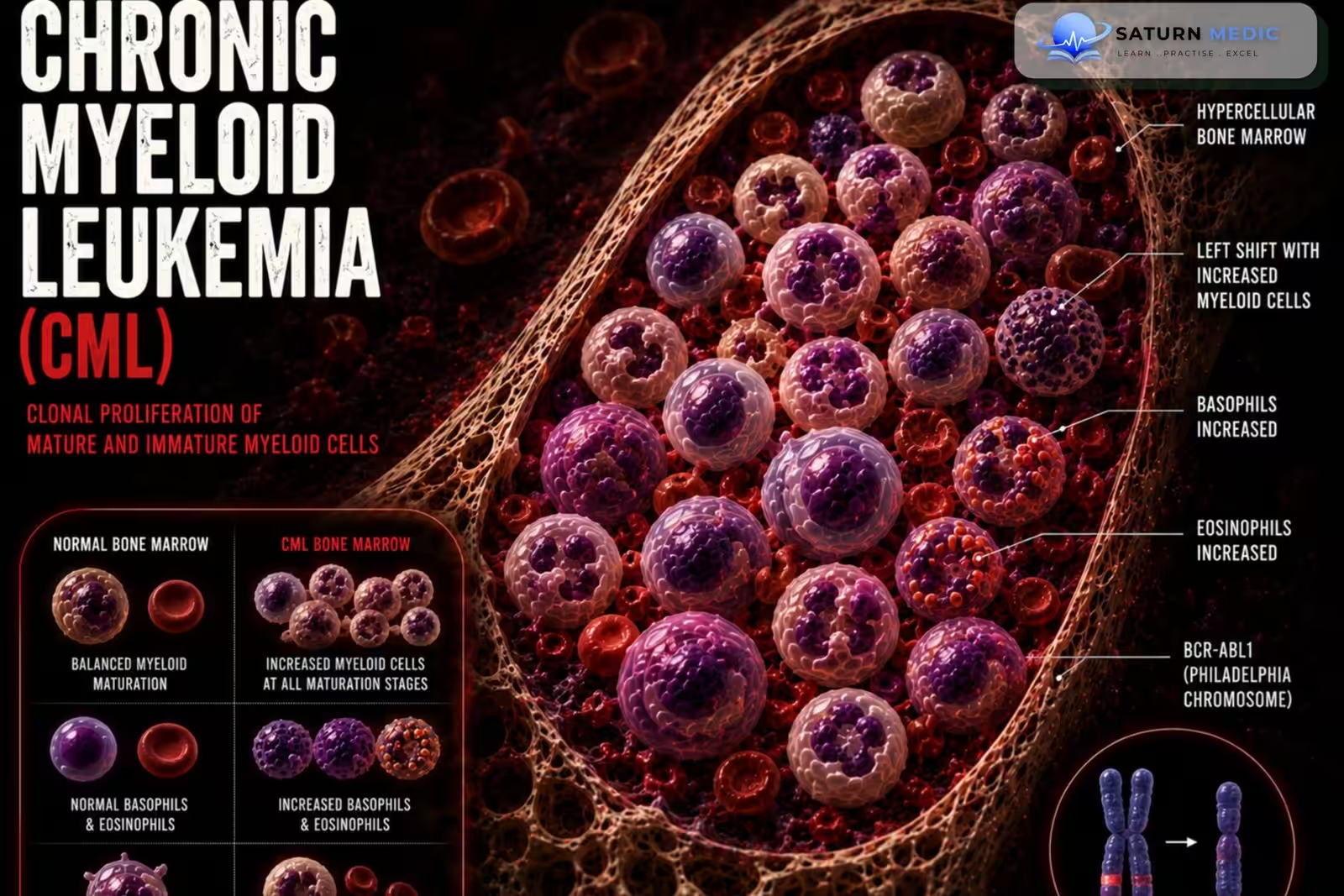
Chronic Myeloid Leukemia (CML) is caused by the Philadelphia chromosome, resulting from the t(9;22) translocation, which creates the BCR-ABL1 fusion gene. This abnormal tyrosine kinase causes uncontrolled proliferation of myeloid cells. Most patients present in the chronic phase, and modern tyrosine kinase inhibitors (TKIs) have dramatically improved survival.
Etiology & Risk Factors
-Etiology of Chronic Myeloid Leukemia (CML)
Chronic Myeloid Leukemia (CML) is caused by an acquired reciprocal translocation:
t(9;22)(q34;q11)
This creates the:
BCR-ABL1 fusion gene
The fusion protein has constitutively active tyrosine kinase activity.
-Risk Factors
Increasing age
Male sex
Previous exposure to ionizing radiation
Rare familial predisposition
Pathophysiology
Acquired t(9;22) translocation → formation of the BCR-ABL1 fusion gene → constitutive tyrosine kinase activation → uncontrolled proliferation of myeloid stem cells → excessive production of granulocytes and their precursors → accumulation in bone marrow, blood, and spleen → progressive disease through chronic, accelerated, and blast phases if untreated
Clinical Presentation
-Symptoms
Fatigue
Weight loss
Night sweats
Fever
Early satiety
Abdominal fullness
Left upper quadrant pain
Bone pain
-Signs
Splenomegaly (common)
Hepatomegaly
Pallor
Bruising
Petechiae (advanced disease)
Disease Phases:
-Chronic Phase
Often asymptomatic
Mild constitutional symptoms
Marked leukocytosis
-Accelerated Phase
Increasing symptoms
Progressive splenomegaly
Worsening cytopenias or thrombocytosis
Rising blast count
-Blast Phase
Resembles acute leukemia
Severe infections
Bleeding
Bone marrow failure
History Taking
-Ask about:
- Fatigue
- Weight loss
- Night sweats
- Fever
- Abdominal discomfort
- Early satiety
- Bleeding
- Bone pain
- Previous radiation exposure
- Family history
- Symptoms suggesting disease progression
Physical Examination
-General Examination
Look for:
Pallor
Weight loss
Fever
Bruising
-Abdominal Examination
Assess for:
Splenomegaly
Hepatomegaly
-Additional Examination
Look for:
Petechiae
Signs of anemia
Signs of blast crisis
Investigations
-Complete Blood Count (CBC)
Typical findings:
-
Marked leukocytosis
-
Left shift with myeloid precursors
-
Basophilia
-
Eosinophilia
-
Mild anemia
-
Platelet count may be increased
-Peripheral Blood Film
Characteristic findings:
-
Marked granulocytosis
-
Myelocytes
-
Metamyelocytes
-
Promyelocytes
-
Basophilia
-
Eosinophilia
-
Few blasts (<10% in chronic phase)
-Bone Marrow Aspiration and Biopsy
Typical findings:
-
Hypercellular marrow
-
Marked granulocytic hyperplasia
-
Increased myeloid-to-erythroid ratio
-Cytogenetic Testing
-
Philadelphia chromosome [t(9;22)]
-Molecular Testing (Gold Standard)
-
BCR-ABL1 detection by quantitative PCR (qPCR)
-
Fluorescence in situ hybridization (FISH) when indicated
-Additional Investigations
-
LDH
-
Uric acid
-
Liver function tests
-
Renal function tests
-
Bone marrow cytogenetics
-
ECG and echocardiography before selected TKIs if indicated
Diagnosis
-Diagnosis of Chronic Myeloid Leukemia (CML) is based on:
-
- CBC and peripheral blood film
- Bone marrow examination
- Detection of the Philadelphia chromosome
- Identification of the BCR-ABL1 fusion gene by PCR or FISH
Management
-First-Line Treatment
Tyrosine Kinase Inhibitors (TKIs)
-
Imatinib
-
Dasatinib
-
Nilotinib
-
Bosutinib
-
Asciminib (selected patients)
-Monitoring
-
Regular CBC
-
Quantitative BCR-ABL1 PCR every 3 months initially
-
Assess molecular response and treatment adherence
-Resistant or Advanced Disease
-
Switch to an alternative TKI based on mutation profile
-
Allogeneic hematopoietic stem cell transplantation for selected patients
-
Blast phase treated similarly to acute leukemia plus TKI therapy
-Supportive Care
-
Hydration
-
Management of hyperuricemia
-
Blood transfusions if required
-
Infection management
Complications
- Accelerated phase
- Blast crisis
- Severe anemia
- Infection
- Bleeding
- Hyperuricemia
- Splenic infarction (rare)
- Treatment resistance
Prognosis
The prognosis has improved dramatically with tyrosine kinase inhibitor therapy. Most patients diagnosed in the chronic phase achieve long-term disease control and near-normal life expectancy. Poor prognosis is associated with progression to accelerated or blast phase, inadequate molecular response, or resistant BCR-ABL1 mutations
Key Points / Clinical Pearls
- Chronic Myeloid Leukemia (CML) is a BCR-ABL1-positive myeloproliferative neoplasm.
- It is caused by the Philadelphia chromosome [t(9;22)].
- Patients commonly present with marked leukocytosis and splenomegaly.
- Peripheral blood shows all stages of granulocyte maturation with basophilia.
- BCR-ABL1 PCR is the key diagnostic and monitoring test.
- Imatinib and other TKIs are first-line therapy.
- Molecular monitoring with quantitative PCR is essential during follow-up.
- CML progresses through chronic, accelerated, and blast phases if untreated.
- Allogeneic stem cell transplantation is reserved for selected resistant or advanced cases.
- With modern TKI therapy, most patients have an excellent long-term prognosis.
- Eden RE, Coviello JM. National Center for Biotechnology Information (NIH). Chronic Myelogenous Leukemia, StatPearls.
- Hochhaus A, Baccarani M, Silver RT, et al. European LeukemiaNet 2020 Recommendations for Treating Chronic Myeloid Leukemia. Leukemia. 2020;34:966-984. PMID: 32127639.
- National Comprehensive Cancer Network (NCCN). NCCN Clinical Practice Guidelines in Oncology: Chronic Myeloid Leukemia.
- National Cancer Institute (NIH). Chronic Myeloid Leukemia Treatment (PDQ), Health Professional Version.
- MedlinePlus, National Library of Medicine (NIH). Chronic Myelogenous Leukemia: Medical Encyclopedia.