

Clinical Subject Page
Paroxysmal Nocturnal Hemoglobinuria (PNH)
Paroxysmal Nocturnal Hemoglobinuria (PNH) is a rare acquired clonal hematopoietic stem cell disorder caused by a mutation in the PIGA gene, leading to deficiency of GPI-anchored proteins that normally protect blood cells from complement-mediated destruction
Also called
ICD-10
Specialty
Onset
Reviewed
-
OverviewOverview
-
Etiology & Risk FactorsEtiology & Risk Factors
-
PathophysiologyPathophysiology
-
Clinical PresentationClinical Presentation
-
History TakingHistory Taking
-
Physical ExaminationPhysical Examination
-
InvestigationsInvestigations
-
DiagnosisDiagnosis
-
ManagementManagement
-
ComplicationsComplications
-
PrognosisPrognosis
-
Key Points / Clinical PearlsKey Points / Clinical Pearls
Overview
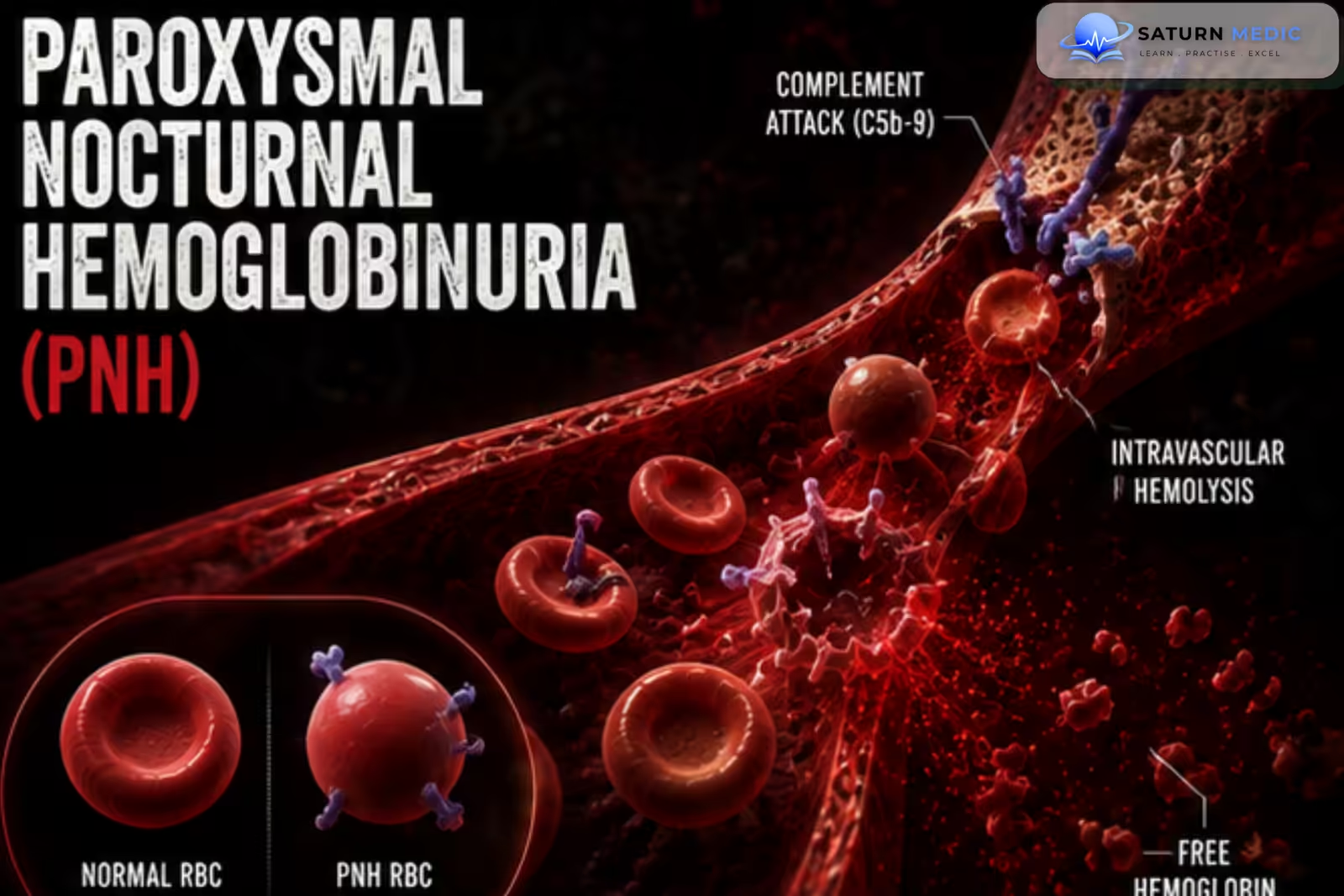
Paroxysmal Nocturnal Hemoglobinuria (PNH) is an acquired disorder of hematopoietic stem cells caused by a PIGA gene mutation. This causes deficiency of GPI-anchored proteins, particularly CD55 and CD59, which normally protect blood cells from complement. Their absence results in intravascular hemolysis, thrombosis, and varying degrees of bone marrow failure.
Etiology & Risk Factors
Paroxysmal Nocturnal Hemoglobinuria (PNH) results from an acquired somatic mutation of the PIGA gene in a hematopoietic stem cell.
The mutation causes defective synthesis of the GPI anchor, resulting in deficiency of several GPI-anchored proteins, especially:
- CD55
- CD59
-Associated Conditions
Paroxysmal Nocturnal Hemoglobinuria (PNH) is strongly associated with:
- Aplastic anemia
- Myelodysplastic syndromes
- Bone marrow failure
- Other clonal hematopoietic disorders
-Risk Factors
Paroxysmal Nocturnal Hemoglobinuria (PNH) is not usually inherited. Risk is mainly associated with underlying bone marrow disorders, particularly aplastic anemia.
Pathophysiology
An acquired PIGA mutation occurs in a hematopoietic stem cell → defective GPI-anchor formation → loss of GPI-anchored complement-regulating proteins, particularly CD55 and CD59 → uncontrolled complement activation on affected blood cells → complement-mediated intravascular hemolysis → release of free hemoglobin into plasma → nitric oxide depletion → smooth-muscle dysfunction causing abdominal pain, dysphagia, and erectile dysfunction → complement-mediated platelet activation → increased risk of thrombosis → progressive anemia and possible bone marrow failure
Clinical Presentation
Symptoms
-
Fatigue
-
Weakness
-
Pallor
-
Dyspnea
-
Dark or cola-colored urine
-
Abdominal pain
-
Back pain
-
Dysphagia
-
Erectile dysfunction
-
Headache
-
Thrombosis-related symptoms
Signs
-
Pallor
-
Jaundice
-
Tachycardia
-
Signs of anemia
-
Signs of thrombosis
-
Hepatomegaly or splenomegaly may occur
-
Features of bone marrow failure
Thrombosis
Paroxysmal Nocturnal Hemoglobinuria (PNH) is particularly associated with thrombosis at unusual sites, including:
-
Hepatic veins → Budd-Chiari syndrome
-
Portal veins
-
Mesenteric veins
-
Cerebral venous sinuses
-
Deep veins
History Taking
-Ask about:
- Dark urine
- Fatigue
- Dyspnea
- Abdominal pain
- Back pain
- Dysphagia
- Erectile dysfunction
- Previous thrombosis
- Headache
- Neurological symptoms
- Previous aplastic anemia
- Previous bone marrow failure
- Recurrent infections
- Bleeding
- Previous blood transfusions
Physical Examination
-General Examination
Look for:
-
Pallor
-
Jaundice
-
Tachycardia
-
Signs of anemia
-Abdominal Examination
Assess for:
-
Hepatomegaly
-
Splenomegaly
-
Abdominal tenderness
-
Signs of Budd-Chiari syndrome
-Cardiovascular Examination
Look for:
-
Tachycardia
-
Signs of high-output cardiac failure in severe chronic anemia
-Neurological Examination
Assess for:
-
Focal neurological deficits
-
Headache
-
Signs suggesting cerebral venous thrombosis
Investigations
-Complete Blood Count (CBC)
May show:
-
Anemia
-
Leukopenia
-
Thrombocytopenia
-
Pancytopenia in associated bone marrow failure
-Hemolysis Screen
Typical findings:
-
↑ LDH
-
↑ Indirect bilirubin
-
↓ Haptoglobin
-
↑ Reticulocyte count
-
Hemoglobinuria
The reticulocyte count may be inappropriately low when significant bone marrow failure is present.
-Direct Antiglobulin Test (DAT)
-
Negative
This helps distinguish Paroxysmal Nocturnal Hemoglobinuria (PNH) from autoimmune hemolytic anemia.
-Flow Cytometry — Gold Standard
Flow cytometry demonstrates deficiency of GPI-anchored proteins.
Important markers:
-
FLAER
-
CD55
-
CD59
Typical finding:
Reduced or absent FLAER binding and reduced/absent CD55/CD59 expression on granulocytes and monocytes.
-Bone Marrow Examination
May demonstrate:
-
Hypocellular marrow
-
Aplastic anemia
-
Myelodysplastic changes
-
Variable marrow cellularity
Bone marrow examination is particularly useful when associated bone marrow failure is suspected.
Urinalysis
May show:
-
Hemoglobinuria
-
Hemosiderinuria
-Imaging for Suspected Thrombosis
Depending on symptoms:
-
Doppler ultrasound
-
CT venography
-
MR venography
-
Abdominal CT/MRI
-
Cerebral venous imaging
Diagnosis
Diagnosis is based on:
- Reduced/absent FLAER binding
- Deficiency of GPI-anchored proteins
- Reduced CD55/CD59 expression
- Supporting evidence of hemolysis, thrombosis, or bone marrow failure
Management
-Complement Inhibition
Main treatments include:
-
Eculizumab
-
Ravulizumab
Other complement-targeted therapies may include:
-
Pegcetacoplan
-
Iptacopan
Choice depends on the clinical situation and availability.
-Thrombosis :
-
Anticoagulation when indicated
-
Complement inhibitor therapy
-
Prompt investigation and treatment of thrombotic complications
-Supportive Management
-
Folic acid supplementation
-
Iron replacement if iron deficient
-
Red blood cell transfusion when necessary
-
Prompt treatment of infections
-
Monitoring of renal function
-Bone Marrow Failure
Management depends on severity and may include:
-
Supportive transfusion therapy
-
Immunosuppressive therapy in selected patients
-
Hematopoietic stem cell transplantation
-Curative Treatment
Allogeneic hematopoietic stem cell transplantation is the only established potentially curative treatment for Paroxysmal Nocturnal Hemoglobinuria (PNH).
However, it is generally reserved for selected patients, particularly those with severe bone marrow failure or other high-risk disease.
Complications
- Severe intravascular hemolysis
- Severe anemia
- Thrombosis
- Budd-Chiari syndrome
- Cerebral venous thrombosis
- Renal impairment
- Pulmonary hypertension
- Abdominal pain
- Dysphagia
- Erectile dysfunction
- Aplastic anemia
- Myelodysplastic syndrome
- Acute leukemia (rare)
Prognosis
The prognosis of Paroxysmal Nocturnal Hemoglobinuria (PNH) has improved significantly with complement-inhibitor therapy. The major causes of morbidity are thrombosis, severe hemolysis, and bone marrow failure. Patients receiving appropriate complement inhibition can have substantially improved survival and quality of life.
Key Points / Clinical Pearls
- Paroxysmal Nocturnal Hemoglobinuria (PNH) is an acquired clonal stem cell disorder.
- It is caused by an acquired PIGA gene mutation.
- The mutation causes deficiency of CD55 and CD59.
- This results in complement-mediated intravascular hemolysis.
- The major clinical problems are hemolysis, thrombosis, and bone marrow failure.
- Thrombosis may occur at unusual sites, especially hepatic and abdominal veins.
- Hemolysis is typically Coombs-negative.
- Flow cytometry with FLAER is the key diagnostic test.
- Eculizumab and ravulizumab are major complement-inhibitor treatments.
- Allogeneic hematopoietic stem cell transplantation is the only potentially curative treatment.
- Shah N, Bhatt H. National Center for Biotechnology Information (NIH). Paroxysmal Nocturnal Hemoglobinuria, StatPearls.
- Hillmen P, Young NS, Schubert J, et al. The Complement Inhibitor Eculizumab in Paroxysmal Nocturnal Hemoglobinuria. N Engl J Med. 2006;355:1233-1243. NEJM.
- Röth A, Maciejewski J, Nishimura JI, Jain D, Weitz JI. Screening and Diagnostic Clinical Algorithm for Paroxysmal Nocturnal Hemoglobinuria: Expert Consensus. Eur J Haematol. 2018;101:3-11.
- Complement Inhibition in Paroxysmal Nocturnal Hemoglobinuria: From Biology to Therapy. Int J Lab Hematol. 2024;46 Suppl 1:43-54. PMID: 38622956.
- MedlinePlus, National Library of Medicine (NIH). Paroxysmal Nocturnal Hemoglobinuria: Genetics Home Reference.