

Clinical Subject Page
Immune Thrombocytopenia (ITP)
Immune thrombocytopenia (ITP) is an autoimmune disorder characterized by isolated
thrombocytopenia caused by autoantibody-mediated platelet destruction and impaired platelet
production
Also called
ICD-10
Specialty
Onset
Reviewed
-
OverviewOverview
-
Etiology & Risk FactorsEtiology & Risk Factors
-
PathophysiologyPathophysiology
-
Clinical PresentationClinical Presentation
-
History TakingHistory Taking
-
Physical ExaminationPhysical Examination
-
InvestigationsInvestigations
-
DiagnosisDiagnosis
-
ManagementManagement
-
ComplicationsComplications
-
PrognosisPrognosis
-
Key Points / Clinical PearlsKey Points / Clinical Pearls
Overview
• Immune Thrombocytopenia (ITP) is Autoimmune destruction of platelets.
• May be primary or secondary to conditions such as SLE, HIV, hepatitis C, or medications.
• Commonly self-limiting in children following viral infection.
• Often chronic in adults.
• Severity ranges from asymptomatic thrombocytopenia to life-threatening bleeding.
Etiology & Risk Factors
-Primary Immune Thrombocytopenia (ITP)
• No identifiable underlying cause.
-Secondary Immune Thrombocytopenia (ITP)
Associated with:
• Systemic lupus erythematosus (SLE)
• HIV infection
• Hepatitis C infection
• Certain medications
• Other identifiable triggers
Pathophysiology
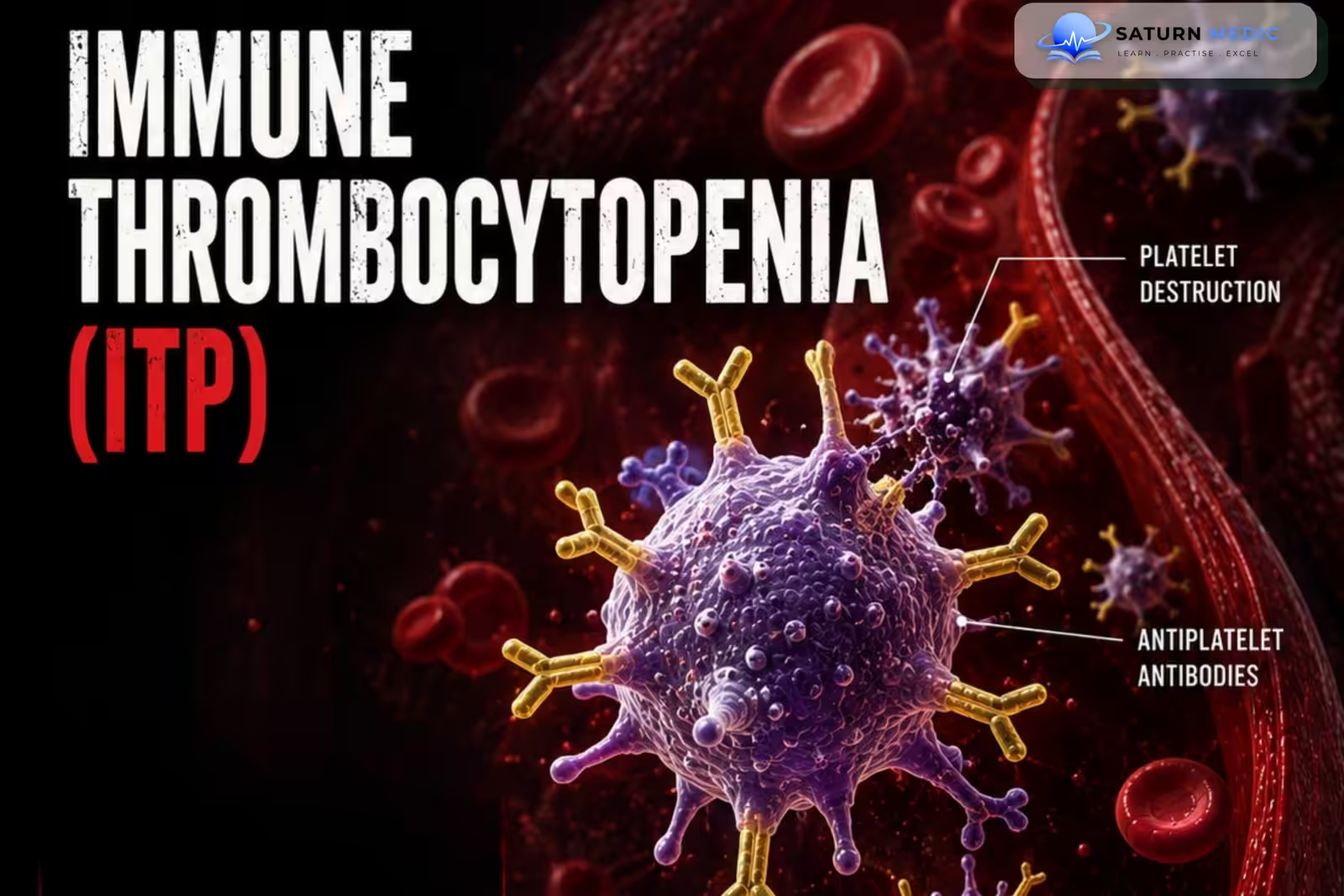
• Autoantibodies target platelet surface antigens.
• Increased destruction of platelets.
• Reduced platelet production due to impaired megakaryocyte function.
• Result: Isolated thrombocytopenia and increased bleeding tendency.
Clinical Presentation
- Many patients are asymptomatic.
- Mild: Petechiae, Purpura, Easy bruising, Epistaxis, Gingival bleeding.
- Severe (rare): Gastrointestinal hemorrhage, Intracranial hemorrhage.
History Taking
- Bleeding history: Petechiae, Bruising, Epistaxis, Gum bleeding, Heavy menstrual bleeding, GI
bleeding, Hematuria. - Duration: Acute vs chronic.
Recent infections (especially viral illness in children). - Drug history including NSAIDs.
- Medical history: Autoimmune diseases, HIV, Hepatitis C.
- Family history: Bleeding disorders.
- Red flags: Neurological symptoms, Severe headache, Massive bleeding
Physical Examination
- Skin: Petechiae, Purpura, Ecchymoses.
- Mucous membranes: Oral bleeding, Gingival bleeding.
- Nose: Active epistaxis.
Neurological examination if concern for intracranial hemorrhage. - General examination: Assess severity of bleeding.
Investigations
Initial laboratory tests:
-CBC: Isolated thrombocytopenia; Platelet count usually <100,000/mm³; Other blood counts
-generally normal.
-Peripheral blood smear: Normal to large platelets; Helps exclude inherited platelet disorders.
-Coagulation profile: Usually normal.Bleeding time: May be prolonged.
-Additional investigations:
All adults: HIV and HCV screening.
-If secondary Immune Thrombocytopenia (ITP) suspected: ANA (if SLE suspected); H. pylori testing (GI symptoms or high-prevalence area).
Bone marrow biopsy: Not routinely required; consider if atypical presentation, diagnostic uncertainty, or concern for malignancy/MDS. Typical finding: Normal or increased megakaryocytes.
Diagnosis
Diagnosis of exclusion based on isolated thrombocytopenia, no other significant CBC
abnormalities, normal or large platelets on smear, exclusion of secondary causes, and appropriate
clinical presentation.
Management
-General: Treat underlying causes; stop platelet-impairing drugs (e.g., NSAIDs).
-Observation: Adults with platelets ≥30,000/mm³ and minimal/no symptoms; most children with
little/no bleeding regardless of platelet count.
First-line: Corticosteroids, IVIG, Anti-D immunoglobulin (selected patients).
-Emergency: Corticosteroids (e.g., methylprednisolone) + IVIG + platelet transfusion as needed +
local hemostatic measures + consider romiplostim if refractory.
-Second-line: TPO-RAs, Rituximab, Splenectomy.
Follow-up: Expedited hematology follow-up (24–72 h when appropriate); admit if emergency
treatment, significant bleeding risk/functional impairment, or very low platelets.
Complications
- Severe mucosal bleeding,
- GI hemorrhage,
- Intracranial hemorrhage,
- Chronic/refractory disease,
- Treatment-related adverse effects.
Prognosis
- Children: Usually self-limiting with spontaneous recovery.
- Adults: Frequently chronic; most managed successfully with observation or medical therapy;
- prognosis depends on bleeding severity and response to treatment.
Key Points / Clinical Pearls
•Immune Thrombocytopenia (ITP) causing isolated low platelet count.
• Diagnosis of exclusion.
• CBC shows isolated thrombocytopenia.
• Peripheral smear shows normal to large platelets.
• Coagulation tests are usually normal.
• HIV and HCV testing are recommended in all adults.
• Bone marrow biopsy only if atypical or diagnosis is uncertain.
• Observation is appropriate for many patients.
• First-line treatment: corticosteroids, IVIG, or anti-D immunoglobulin.
• Emergency bleeding requires corticosteroids + IVIG + platelet transfusion.
• Second-line options include TPO receptor agonists, rituximab, and splenectomy.
- National Center for Biotechnology Information (NIH). Immune Thrombocytopenia, StatPearls.
- Neunert C, Terrell DR, Arnold DM, et al. American Society of Hematology 2019 Guidelines for Immune Thrombocytopenia. Blood Adv. 2019;3:3829-3866. ASH Blood Advances.
- Cuker A, Cines DB, Neunert CE. The 2022 Review of the 2019 American Society of Hematology Guidelines on Immune Thrombocytopenia. Blood Adv. 2024;8:3578-3580. ASH Blood Advances.
- Provan D, Arnold DM, Bussel JB, et al. Updated International Consensus Report on the Investigation and Management of Primary Immune Thrombocytopenia. Blood Adv. 2019;3:3780-3817.
- MedlinePlus, National Library of Medicine (NIH). Idiopathic Thrombocytopenic Purpura: Medical Encyclopedia.