

Clinical Subject Page
Heparin-Induced Thrombocytopenia (HIT)
Heparin-Induced Thrombocytopenia (HIT) is a serious immune-mediated adverse reaction to heparin characterized by a significant fall in platelet count and a high risk of thrombosis. It is caused by antibodies against complexes of platelet factor 4 (PF4) and heparin
Also called
ICD-10
Specialty
Onset
Reviewed
-
OverviewOverview
-
Etiology & Risk FactorsEtiology & Risk Factors
-
PathophysiologyPathophysiology
-
Clinical PresentationClinical Presentation
-
History TakingHistory Taking
-
Physical ExaminationPhysical Examination
-
InvestigationsInvestigations
-
DiagnosisDiagnosis
-
ManagementManagement
-
ComplicationsComplications
-
PrognosisPrognosis
-
Key Points / Clinical PearlsKey Points / Clinical Pearls
Overview
Heparin-Induced Thrombocytopenia (HIT) usually develops 5–10 days after starting heparin and causes a platelet fall of more than 50%. Despite thrombocytopenia, the major complication is new thrombosis, rather than bleeding. It can cause deep vein thrombosis, pulmonary embolism, arterial thrombosis, and limb-threatening ischemia
Etiology & Risk Factors
-Etiology
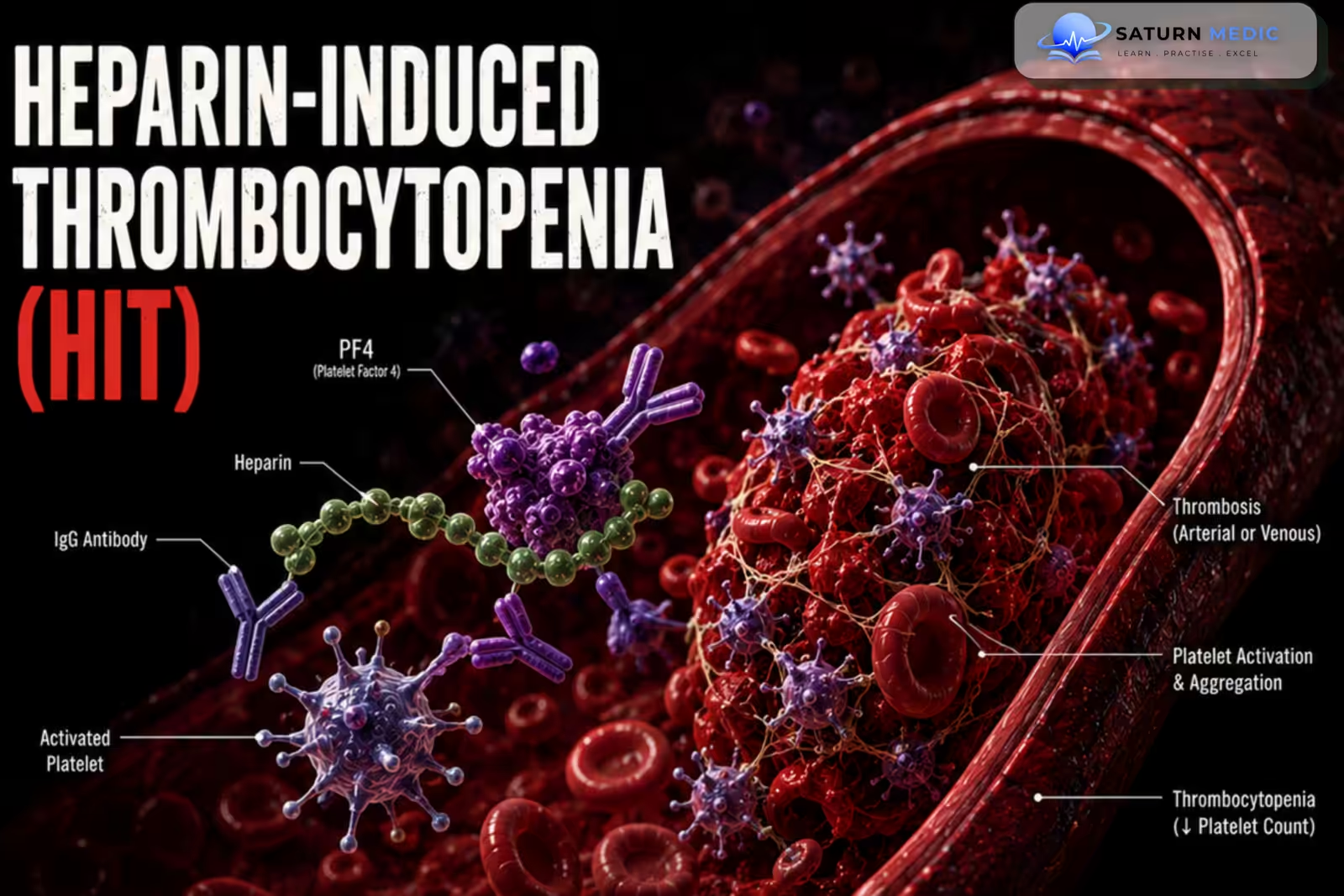
Heparin binds to platelet factor 4 (PF4) → formation of PF4-heparin complexes → IgG antibodies develop against these complexes → antibody binding activates platelets through Fc receptors → platelet consumption and release of procoagulant substances → thrombocytopenia and thrombosis.
-Risk Factors
Unfractionated heparin
Recent heparin exposure
Surgical patients
Cardiovascular surgery
Orthopedic surgery
Prolonged heparin exposure
Female sex
Higher-Risk Heparin
Unfractionated heparin carries a higher risk than low-molecular-weight heparin.
Pathophysiology
Heparin + PF4 → PF4-heparin immune complexes → IgG antibody formation → platelet activation through FcγIIa receptors → platelet consumption → thrombocytopenia → increased thrombin generation and endothelial activation → prothrombotic state → venous or arterial thrombosis.
Clinical Presentation
Symptoms
Patients may develop symptoms related to thrombosis:
Leg pain or swelling
Chest pain
Dyspnea
Headache
Abdominal pain
Limb pain
Neurological symptoms
Signs
Falling platelet count
DVT
Pulmonary embolism
Arterial thrombosis
Limb ischemia
Skin necrosis at injection sites
Digital ischemia
-Timing
Typical onset: 5–10 days after starting heparin
Rapid-onset disease can occur in patients with recent heparin exposure, particularly within the previous few months.
History Taking
-Ask about:
- Date heparin was started
- Type of heparin used
- Previous heparin exposure
- Previous Heparin-Induced Thrombocytopenia (HIT)
- Platelet count before heparin
- Timing of platelet fall
- New DVT or pulmonary embolism symptoms
- Limb pain or ischemia
- Neurological symptoms
- Abdominal pain
- Recent surgery
- Recent hospitalization
Physical Examination
-General Examination
Look for:
Signs of thrombosis
Signs of bleeding
Hemodynamic instability
-Limbs
Assess for:
Swelling
Tenderness
Erythema
Reduced pulses
Limb ischemia
-Cardiovascular Examination
Look for:
Tachycardia
Signs of pulmonary embolism
Signs of arterial thrombosis
-Skin Examination
Look for:
Skin necrosis
Painful erythematous lesions
Injection-site reactions
Investigations
-Complete Blood Count
Typical finding:
Platelet fall >50% from baseline
The absolute platelet count may remain above 150 × 10⁹/L.
Severe thrombocytopenia is less typical.
-4Ts Score
Used to estimate the pretest probability:
Thrombocytopenia
Timing
Thrombosis
oTher causes of thrombocytopenia
Interpretation
Low probability: 0–3
Intermediate probability: 4–5
High probability: 6–8
A low 4Ts score makes Heparin-Induced Thrombocytopenia (HIT) unlikely.
-PF4-Heparin Antibody Testing
An immunoassay detects antibodies against PF4-heparin complexes.
-Examples:
PF4/heparin ELISA
Rapid immunoassays
These tests are highly sensitive but less specific.
-Functional Assays
Used to confirm platelet-activating antibodies.
-Examples:
Serotonin release assay (SRA)
Heparin-induced platelet activation assay (HIPA)
-Imaging
If thrombosis is suspected:
Doppler ultrasound
CT pulmonary angiography
CT/MR angiography
Other appropriate vascular imaging
Diagnosis
Diagnosis is based on:
- Compatible clinical picture
- Significant platelet fall
- Appropriate timing after heparin exposure
- New thrombosis or other HIT-related complications
- Intermediate/high 4Ts score
- Positive PF4-heparin antibody testing
- Functional assay confirmation when necessary
Management
1. Stop All Heparin Immediately
If Heparin-Induced Thrombocytopenia (HIT) is suspected:
Stop all forms of heparin, including:
Unfractionated heparin
Low-molecular-weight heparin
Heparin flushes
Heparin-containing products
2. Start an Alternative Non-Heparin Anticoagulant
Options include:
Argatroban
Bivalirudin
Fondaparinux
A direct oral anticoagulant in appropriate patients
3. Avoid Warfarin Initially
Warfarin should generally not be started during the acute thrombocytopenic phase.
If already receiving warfarin:
Stop warfarin
Give vitamin K when appropriate
Continue non-heparin anticoagulation
4. Platelet Transfusion
Routine platelet transfusion is not recommended unless there is:
Active major bleeding
Very high bleeding risk
An urgent invasive procedure
5. Duration of Anticoagulation
For Heparin-Induced Thrombocytopenia (HIT) with thrombosis:
Anticoagulation is generally continued for several months.
For isolated Heparin-Induced Thrombocytopenia (HIT) without thrombosis:
Anticoagulation is usually continued until platelet recovery, with duration individualized according to clinical circumstances.
Complications
- Deep vein thrombosis
- Pulmonary embolism
- Arterial thrombosis
- Myocardial infarction
- Ischemic stroke
- Limb ischemia
- Skin necrosis
- Organ ischemia
- Death
Prognosis
Heparin-Induced Thrombocytopenia (HIT) can be life-threatening because of its high risk of thrombosis. Early recognition, immediate discontinuation of heparin, and appropriate alternative anticoagulation markedly reduce complications.
Key Points / Clinical Pearls
- Heparin-Induced Thrombocytopenia (HIT) is an immune-mediated reaction to heparin.
- It is caused by antibodies against PF4-heparin complexes.
- Usually occurs 5–10 days after heparin exposure.
- Platelets typically fall by >50%.
- Thrombosis is the major complication.
- Use the 4Ts score to estimate clinical probability.
- Intermediate/high probability → stop all heparin immediately.
- Start a non-heparin anticoagulant.
- PF4-heparin antibody testing supports the diagnosis.
- Functional assays such as the serotonin release assay can confirm platelet-activating antibodies.
- Warfarin should generally be avoided during the acute thrombocytopenic phase.
- Nicolas D, Nicolas S, Hodgens A, Reed M. National Center for Biotechnology Information (NIH). Heparin-Induced Thrombocytopenia, StatPearls .
- Cuker A, Arepally GM, Chong BH, et al. American Society of Hematology 2018 Guidelines for Management of Venous Thromboembolism: Heparin-Induced Thrombocytopenia. Blood Adv. 2018;2(22):3360-3392. ASH Guideline .
- Warkentin TE. Heparin-Induced Thrombocytopenia: Pathogenesis and Management. Br J Haematol. 2003;121(4):535-555.
- Greinacher A. Heparin-Induced Thrombocytopenia. N Engl J Med. 2015;373(3):252-261.
- Linkins LA, Hu G, Warkentin TE. Systematic Review of Fondaparinux for Heparin-Induced Thrombocytopenia. Thromb Res. 2018;166:104-110.