

Clinical Subject Page
Raynaud's Phenomenon
Also called
ICD-10
Specialty
Onset
Reviewed
-
OverviewOverview
-
Etiology & Risk FactorsEtiology & Risk Factors
-
PathophysiologyPathophysiology
-
Clinical PresentationClinical Presentation
-
History TakingHistory Taking
-
Physical ExaminationPhysical Examination
-
InvestigationsInvestigations
-
DiagnosisDiagnosis
-
ManagementManagement
-
ComplicationsComplications
-
PrognosisPrognosis
-
Key Points / Clinical PearlsKey Points / Clinical Pearls
Overview
Raynaud’s Phenomenon is a condition in which small blood vessels in the fingers or toes suddenly narrow, usually because of cold exposure or emotional stress.
This narrowing is called a vasospastic attack. It reduces blood flow temporarily.
Etiology & Risk Factors
-Main cause of Raynaud’s Phenomenon
- Spasm of small blood vessels in fingers or toes
Triggers
- Cold
- Emotional stress
Primary Raynaud
- No clear cause
- Often starts before age 30
- More common in female individuals
Secondary Raynaud
Linked to:
- Smoking
- Certain drugs: beta blockers, ergotamine, bleomycin
- Vibrating tools or repeated hand trauma
- Connective tissue disease, especially scleroderma
- Vascular disease
- Neurologic problems, such as carpal tunnel syndrome
Pathophysiology
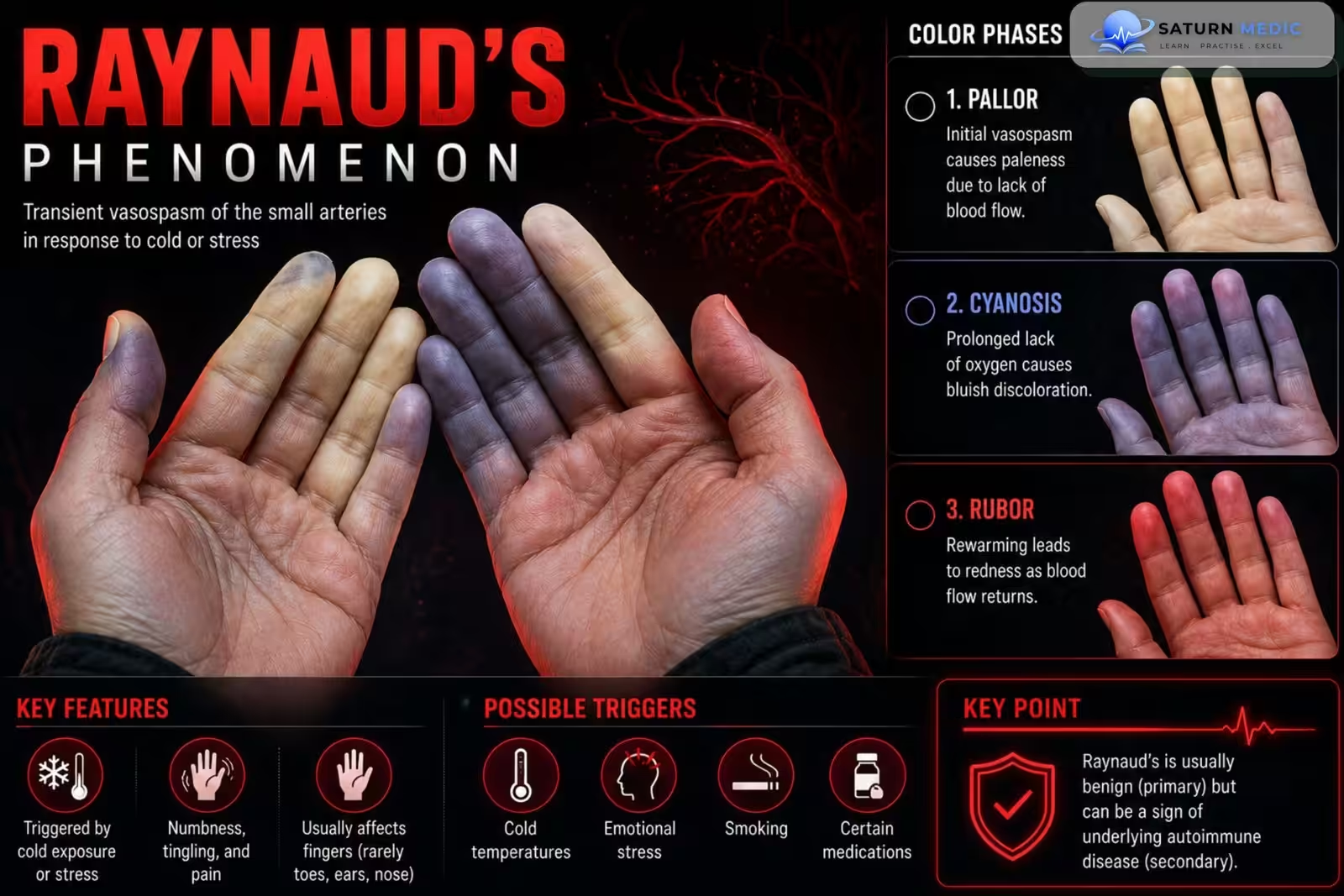
Cold or emotional stress → Exaggerated vasoconstriction → Digital arteries/arterioles narrow → Reduced blood flow to fingers/toes → Ischemia: white → Hypoxia: blue/purple → Blood flow returns → Reactive hyperemia: red
Clinical Presentation
- usually affects the fingers and sometimes the toes
- Often occurs bilaterally
- Triggered by cold or emotional stress
- Thumb is usually spared in primary Raynaud
- May cause numbness, pain, or tingling, especially during rewarming
Classic color change
Cold/stress trigger → White → Blue/purple → Red
- White = ischemia from reduced blood flow
- Blue/purple = low oxygen
- Red = blood flow returns
History Taking
- What triggers it: cold or emotional stress?
- Which areas are affected: fingers, toes, ears, nose, tongue?
- Is it on both sides?
- Does the thumb stay normal?
- What color changes occur: white → blue/purple → red?
- Do you feel numbness, pain, or tingling?
- How long does an episode last?
- Does it improve after warming?
- Any severe pain, ulcers, or tissue damage?
- Any signs of systemic disease: skin thickening, telangiectasias, photosensitivity, patchy alopecia?
- Any history of migraine or irritable bowel syndrome?
Physical Examination
- Fingers or toes may turn white, blue/purple, then red
- Usually affects both sides
- Thumb is often spared in primary Raynaud
- May have numbness, pain, or tingling
- Look for ulcers, pitting, or tissue damage
- Check for signs of connective tissue disease:
- Skin thickening
- Sclerodactyly
- Telangiectasias
- Calcinosis
Usually normal
- Pulses
- Allen test
- Blood pressure in both arms
Investigations
- Usually a clinical diagnosis based on history, photos, or observed color change.
Basic investigations
- CBC
- ANA
- If positive → ENA panel
- ESR or CRP
Special test
- Nailfold capillary microscopy
- Helps detect early connective tissue disease
Consider imaging
- Cervical spine / upper thoracic imaging
- If concern for thoracic outlet syndrome or cervical rib
Diagnosis
–Raynaud’s Phenomenon is a clinical diagnosis
- Diagnose by history or photo/direct observation of attack
- Trigger: cold or emotional stress
- Color change: white → blue/purple → red
- At least white + blue/purple supports diagnosis
Management
- Avoid cold
- Wear warm gloves/layers
- Manage stress
- Stop smoking
- Avoid vibration exposure
- Stop trigger drugs if possible, e.g. beta blockers, ergotamine
If symptoms persist
- Use calcium channel blocker
- Preferred: nifedipine
- Alternatives: amlodipine or felodipine
Secondary Raynaud
- Find and treat the underlying cause
- Consider rheumatology/immunology referral
Severe disease
- Specialist management
- Options include IV prostanoids, PDE-5 inhibitors, or procedures for severe ischemia
Complications
- Severe pain
- Digital ischemia
- Finger/toe ulcers
- Pitting or tissue injury
- Tissue loss
- Gangrene — rare
Prognosis
- usually good prognosis
- Attacks are usually reversible
- Symptoms often improve with trigger avoidance
- Episodes usually last 15–20 minutes after removing the trigger
- Secondary Raynaud: prognosis depends on the underlying cause
- Secondary Raynaud can be more severe and may lead to:
- Digital ulcers
- Tissue loss
- Rarely, gangrene
Key Points / Clinical Pearls
- in Raynaud’s Phenomenon, Blood vessel spasm in fingers or toes
- Triggered by cold or stress
- Color change: white → blue → red
- Primary Raynaud: no clear cause, usually mild
- Secondary Raynaud: due to disease, drugs, smoking, or vibration
- Diagnosis is mainly by history or photos
- Tests check for secondary causes: CBC, ANA, ESR/CRP
- Main treatment: keep warm and avoid triggers
- Medication if needed: nifedipine
- Tissue damage, ulcers, or gangrene suggest secondary Raynaud
- Musa R, Qurie A. National Center for Biotechnology Information (NIH). Raynaud Disease, StatPearls.
- Fernandez-Codina A, Cañas-Ruano E, Pope JE, et al. Raynaud's Phenomenon: Reviewing the Pathophysiology and Management Strategies. PMC8884459.
- MedlinePlus, National Library of Medicine (NIH). Raynaud's Disease: Health Topic.
- National Center for Biotechnology Information (NIH). Scleroderma, StatPearls.
- Wigley FM, Flavahan NA. Raynaud's Phenomenon. N Engl J Med. 2016;375:556-565. PMID: 27509103.