

Clinical Subject Page
Bernard-Soulier Syndrome (BSS)
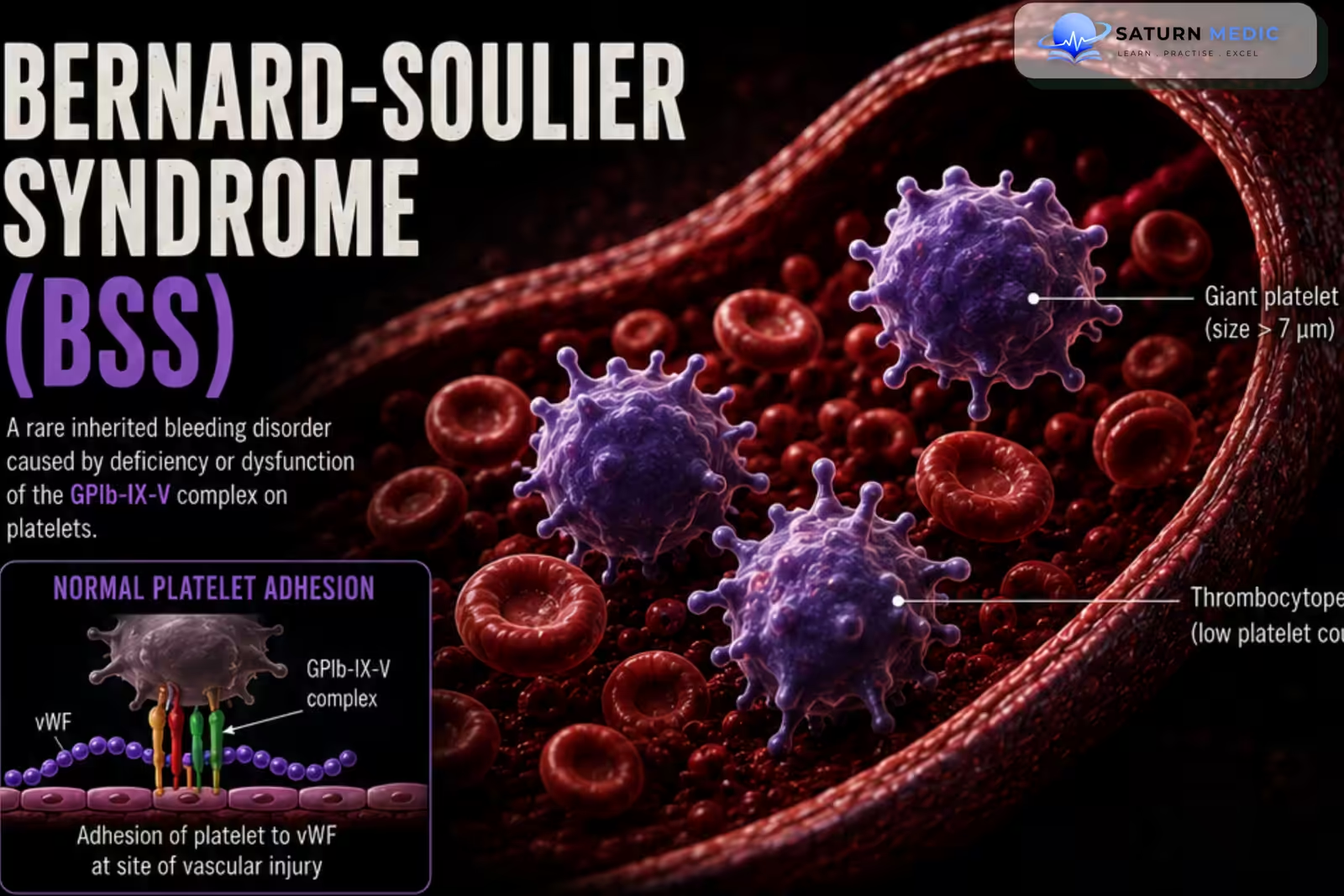
Bernard-Soulier Syndrome (BSS) is a rare inherited platelet function disorder caused by a defect in the platelet GPIb-IX-V receptor complex. This impairs platelet adhesion to von Willebrand factor and causes mucocutaneous bleeding, thrombocytopenia, and unusually large platelets
Also called
Bernard-Soulier Disease
ICD-10
D69.1
Specialty
Hematology
Onset
Chronic
Reviewed
August 2026
On This Page
-
OverviewOverview
-
Etiology & Risk FactorsEtiology & Risk Factors
-
PathophysiologyPathophysiology
-
Clinical PresentationClinical Presentation
-
History TakingHistory Taking
-
Physical ExaminationPhysical Examination
-
InvestigationsInvestigations
-
DiagnosisDiagnosis
-
ManagementManagement
-
ComplicationsComplications
-
PrognosisPrognosis
-
Key Points / Clinical PearlsKey Points / Clinical Pearls
Overview
Bernard-Soulier Syndrome (BSS) is an inherited platelet adhesion disorder caused by deficiency or dysfunction of the GPIb-IX-V receptor. This receptor normally allows platelets to bind to von Willebrand factor at sites of vascular injury. Patients typically have lifelong mucocutaneous bleeding, thrombocytopenia, and giant platelets
Etiology & Risk Factors
-Etiology
Bernard-Soulier Syndrome (BSS) is caused by mutations affecting components of the platelet GPIb-IX-V receptor complex, which is essential for platelet adhesion.
The main genes involved are:
-
GP1BA
-
GP1BB
-
GP9
Gene mutation → defective or absent GPIb-IX-V receptor → impaired platelet binding to von Willebrand factor → defective platelet adhesion → prolonged bleeding.
Inheritance
-
Usually autosomal recessive
-
Both parents are typically unaffected carriers
-
Disease occurs when a child inherits pathogenic variants from both parents
-Risk Factors
-
Positive family history
-
Consanguinity
-
Previous affected siblings
-
Family history of unexplained bleeding
Pathophysiology
GPIb-IX-V receptor defect → impaired platelet binding to von Willebrand factor → defective platelet adhesion to damaged vascular endothelium → impaired primary hemostasis → prolonged mucocutaneous bleeding → thrombocytopenia and formation of unusually large platelets.
Clinical Presentation
-Symptoms
-
Easy bruising
-
Recurrent epistaxis
-
Gum bleeding
-
Heavy menstrual bleeding
-
Prolonged bleeding after dental procedures
-
Prolonged bleeding after surgery
-
Prolonged bleeding after minor trauma
-Signs
-
Petechiae
-
Purpura
-
Ecchymoses
-
Mucosal bleeding
-
Pallor if chronic blood loss causes anemia
-Severe Disease
Severe cases may develop:
-
Gastrointestinal bleeding
-
Significant postoperative bleeding
-
Severe menstrual bleeding
-
Rarely, serious internal bleeding
History Taking
-Ask about:
- Recurrent epistaxis
- Gum bleeding
- Easy bruising
- Heavy menstrual bleeding
- Prolonged bleeding after dental procedures
- Previous surgical bleeding
- Bleeding after minor trauma
- Gastrointestinal bleeding
- Previous blood transfusions
- Family history
- Consanguinity
- Previous platelet transfusions
- Previous diagnosis of a platelet disorder
Physical Examination
-General Examination
Look for:
-
Pallor
-
Signs of anemia
-
Easy bruising
-Skin Examination
Assess for:
-
Petechiae
-
Purpura
-
Ecchymoses
-Oral Examination
Look for:
-
Gingival bleeding
-
Mucosal bleeding
-Nasal Examination
Look for:
-
Evidence of recurrent epistaxis
Investigations
-Complete Blood Count
Typical findings:
-
Thrombocytopenia
-
Hemoglobin may be reduced due to chronic blood loss
-
Large or giant platelets
-Peripheral Blood Film
Characteristic findings:
-
Giant platelets
-
Reduced platelet number
-
Abnormal platelet morphology
PT
Usually: Normal
aPTT
Usually: Normal
-Platelet Function Testing
Shows impaired platelet aggregation and adhesion.
Ristocetin-Induced Platelet Agglutination
Typically:
Reduced or absent response to ristocetin
Importantly, the abnormal response does not correct with normal plasma, helping distinguish Bernard-Soulier Syndrome (BSS) from von Willebrand Disease.
-Flow Cytometry
Demonstrates reduced or absent expression of the:
GPIb-IX-V receptor complex
This is an important confirmatory investigation.
-Genetic Testing
Can identify mutations in:
-
GP1BA
-
GP1BB
-
GP9
-Useful for:
-
Confirmation
-
Family screening
-
Genetic counseling
Diagnosis
Diagnosis is based on:
- Lifelong mucocutaneous bleeding
- Thrombocytopenia
- Giant platelets
- Abnormal platelet function
- Reduced or absent ristocetin-induced platelet agglutination
- Reduced GPIb-IX-V expression on flow cytometry
- Genetic confirmation when required
Management
1. Local Hemostatic Measures
For minor bleeding:
-
Direct pressure
-
Local hemostatic agents
-
Tranexamic acid
2. Antifibrinolytic Therapy
Tranexamic acid can be useful for:
-
Mucosal bleeding
-
Dental procedures
-
Menstrual bleeding
3. Platelet Transfusion
Used for:
-
Severe bleeding
-
Major surgery
-
Life-threatening hemorrhage
Platelet transfusion should be used carefully because repeated exposure can lead to alloimmunization.
4. Recombinant Factor VIIa
May be considered in selected patients with:
-
Severe bleeding
-
Platelet transfusion refractoriness
-
Significant anti-platelet antibodies
5. Iron Replacement
Treat iron deficiency caused by chronic blood loss.
6. Avoid Drugs That Impair Platelet Function
Avoid when possible:
-
Aspirin
-
NSAIDs
-
Other antiplatelet medications
Complications
- Recurrent mucosal bleeding
- Iron deficiency anemia
- Severe postoperative bleeding
- Heavy menstrual bleeding
- Gastrointestinal bleeding
- Pregnancy-related bleeding
- Platelet transfusion alloimmunization
- Platelet transfusion refractoriness
Prognosis
Bernard-Soulier Syndrome (BSS) is a lifelong bleeding disorder. Severity varies between patients. With appropriate bleeding prevention, prompt treatment, and specialist management, most patients can maintain a good quality of life.
Key Points / Clinical Pearls
- Bernard-Soulier Syndrome (BSS) is a rare inherited platelet disorder.
- Usually inherited as autosomal recessive.
- It is caused by defects in the GPIb-IX-V receptor complex.
- The receptor is important for platelet adhesion to von Willebrand factor.
- Typical findings are thrombocytopenia + giant platelets.
- PT and aPTT are usually normal.
- Ristocetin-induced platelet agglutination is reduced or absent.
- Flow cytometry can demonstrate reduced GPIb-IX-V expression.
- Bleeding is predominantly mucocutaneous.
- Tranexamic acid is useful for mucosal bleeding.
- Platelet transfusion is used for significant bleeding or major procedures.
- Repeated platelet transfusions can cause alloimmunization.
- Podda GM, Seligsohn U. National Center for Biotechnology Information (NIH). Bernard-Soulier Syndrome . GeneReviews.
- López JA, Andrews RK, Afshar-Kharghan V, Berndt MC. Bernard-Soulier Syndrome. Blood. 1998;91(12):4397-4418. Blood .
- Nurden AT. Glanzmann Thrombasthenia, Bernard-Soulier Syndrome, and Other Inherited Disorders of Platelet Function. In: Williams Hematology.
- Gresele P, Harrison P, Bury L, et al. Diagnosis of Inherited Platelet Function Disorders: Guidance from the SSC of the ISTH. J Thromb Haemost. 2015;13(2):314-322.
- National Organization for Rare Disorders (NORD). Bernard-Soulier Syndrome .