

Clinical Subject Page
Glanzmann Thrombasthenia (GT)
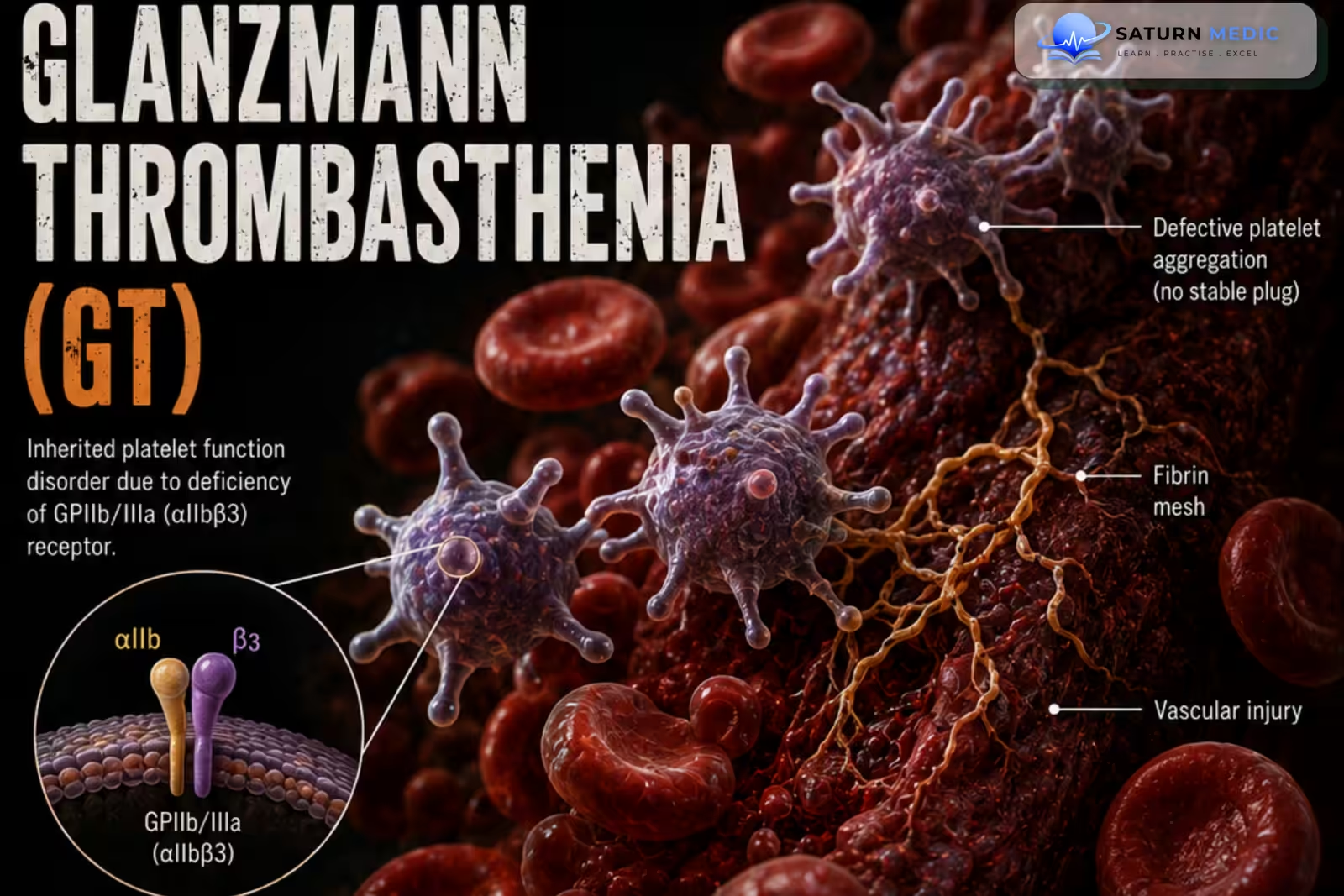
Glanzmann thrombasthenia is a rare inherited platelet aggregation disorder caused by deficiency or dysfunction of the platelet GPIIb/IIIa receptor, resulting in defective platelet aggregation and mucocutaneous bleeding.
Also called
ICD-10
Specialty
Onset
Reviewed
-
OverviewOverview
-
Etiology & Risk FactorsEtiology & Risk Factors
-
PathophysiologyPathophysiology
-
Clinical PresentationClinical Presentation
-
History TakingHistory Taking
-
Physical ExaminationPhysical Examination
-
InvestigationsInvestigations
-
DiagnosisDiagnosis
-
ManagementManagement
-
ComplicationsComplications
-
PrognosisPrognosis
-
Key Points / Clinical PearlsKey Points / Clinical Pearls
Overview
• Rare autosomal recessive inherited platelet function disorder.
• Caused by deficiency or dysfunction of the GPIIb/IIIa (integrin aIIbb3) receptor.
• Platelet count and morphology are usually normal.
• Results in defective platelet aggregation with normal coagulation factors.
Etiology & Risk Factors
Glanzmann Thrombasthenia (GT) is a rare inherited platelet function disorder caused by a deficiency or dysfunction of the platelet glycoprotein IIb/IIIa (GPIIb/IIIa) receptor, which is essential for platelet aggregation.
It is caused by mutations in the ITGA2B or ITGB3 genes → defective or absent GPIIb/IIIa receptor → impaired binding of fibrinogen → failure of platelet aggregation → prolonged mucocutaneous bleeding.
Inheritance
- Autosomal recessive
- Usually requires pathogenic variants in both copies of the responsible gene.
- Consanguinity increases the likelihood of the disorder.
Risk Factors
Glanzmann Thrombasthenia (GT) is genetic, so there are no acquired lifestyle risk factors.
Important risk factors include:
- Positive family history
- Consanguineous parents
- Family history of unexplained bleeding
- Previous affected siblings
- Belonging to populations with a higher prevalence of inherited disorders due to consanguinity
Pathophysiology
• Defective GPIIb/IIIa receptor prevents fibrinogen-mediated platelet aggregation.
• Primary hemostasis is impaired despite normal coagulation factor activity.
• Leads to prolonged mucocutaneous bleeding.
Clinical Presentation
Mucocutaneous bleeding: Petechiae, purpura, easy bruising, epistaxis, gingival bleeding,
menorrhagia, prolonged bleeding after trauma, surgery, or dental procedures
History Taking
-Recurrent epistaxis
-Easy bruising
-Gingival bleeding
-Heavy menstrual bleeding
-Bleeding after
-Dental extraction or surgery childhood —Onset of symptoms
-Family history of bleeding disorders.
Physical Examination
Petechiae
Purpura,
Ecchymoses
Mucosal bleeding
and signs of anemia if chronic blood loss is present.
Investigations
CBC: Platelet count normal.
Peripheral blood smear: Normal platelet morphology.
Coagulation profile: PT normal, aPTT normal.
Platelet function testing: Abnormal platelet aggregation confirms the diagnosis.
Advanced platelet function testing: Used to identify inherited platelet function disorders such as
Glanzmann thrombasthenia.
Diagnosis
Diagnosis is based on:
Compatible bleeding history
Normal platelet count
Normal platelet morphology
Normal PT and aPTT
Abnormal platelet aggregation testing.
Management
General measures: Hematology referral and avoidance of medications that impair platelet function
(e.g., aspirin and NSAIDs).
During bleeding episodes: Supportive hemostatic management and blood product transfusion when
clinically indicated.
Perioperative care: Plan bleeding management with a hematologist before surgery or invasive
procedures.
Complications
- Recurrent mucocutaneous
- bleeding, excessive postoperative bleeding
- iron-deficiency anemia
due to chronic blood loss.
Prognosis
Most patients have a normal life expectancy. Prognosis depends on bleeding severity and
appropriate supportive management
Key Points / Clinical Pearls
• Rare autosomal recessive platelet function disorder.
• Defect of the GPIIb/IIIa receptor.
• Causes impaired platelet aggregation.
• Presents with mucocutaneous bleeding.
• Platelet count is normal.
• Peripheral smear shows normal platelets.
• PT and aPTT are normal.
• Abnormal platelet aggregation testing confirms the diagnosis.
• Management is mainly supportive with hematology follow-up and avoidance of platelet-inhibiting
medications
- Solari A, Gresele P. National Center for Biotechnology Information (NIH). Glanzmann Thrombasthenia, StatPearls .
- Nurden AT. Glanzmann Thrombasthenia. Orphanet J Rare Dis. 2006;1:10. Orphanet Journal of Rare Diseases .
- Poon MC, D'Oiron R, von Depka M, et al. Glanzmann's Thrombasthenia: A Review of the Literature and Management Strategies. Haemophilia.
- World Federation of Hemophilia. Guidelines for the Management of Hemophilia .
- National Organization for Rare Disorders (NORD). Glanzmann Thrombasthenia .