

Clinical Subject Page
Hemophilia A & B
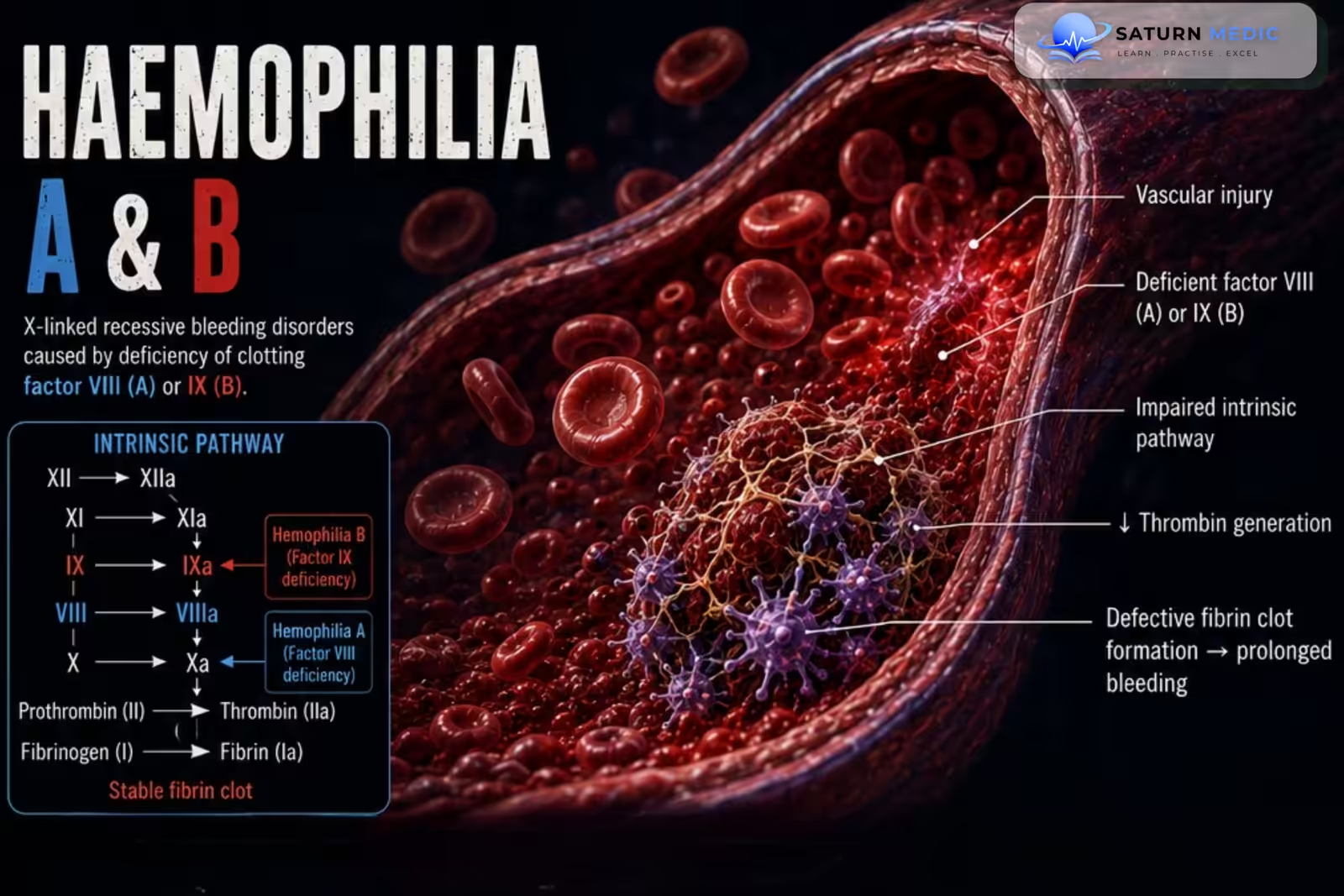
Hemophilia A and B are inherited bleeding disorders caused by deficiencies of clotting factors VIII and IX, respectively. They cause impaired secondary hemostasis and typically present with deep tissue bleeding, hemarthroses, and prolonged bleeding after trauma or procedures
Also called
ICD-10
Specialty
Onset
Reviewed
-
OverviewOverview
-
Etiology & Risk FactorsEtiology & Risk Factors
-
PathophysiologyPathophysiology
-
Clinical PresentationClinical Presentation
-
History TakingHistory Taking
-
Physical ExaminationPhysical Examination
-
InvestigationsInvestigations
-
DiagnosisDiagnosis
-
ManagementManagement
-
ComplicationsComplications
-
PrognosisPrognosis
-
Key Points / Clinical PearlsKey Points / Clinical Pearls
Overview
Hemophilia A is caused by factor VIII deficiency, while Hemophilia B is caused by factor IX deficiency. Both are usually X-linked recessive disorders, so they predominantly affect males. The severity depends on the residual clotting factor activity.
Etiology & Risk Factors
-Etiology
Hemophilia A
Caused by mutations in the F8 gene, resulting in reduced or absent factor VIII activity.
Hemophilia B
Caused by mutations in the F9 gene, resulting in reduced or absent factor IX activity.
Inheritance
Both are usually:
X-linked recessive
Mainly affect males
Females may be carriers
Rarely, females can have clinically significant disease
-Risk Factors
Family history
Maternal carrier status
Male sex
De novo mutation
Consanguinity may be relevant in rare familial cases
Pathophysiology
Factor VIII or IX deficiency → impaired intrinsic coagulation pathway → reduced activation of factor X → reduced thrombin generation → inadequate fibrin formation → defective secondary hemostasis → prolonged bleeding and recurrent bleeding into joints, muscles, and deep tissues.
Clinical Presentation
-Symptoms
Easy bruising
Prolonged bleeding after injury
Prolonged bleeding after surgery
Recurrent joint bleeding
Muscle hematomas
Nosebleeds
Oral bleeding
Hematuria
Gastrointestinal bleeding
Hemarthrosis
Commonly affects:
Knees
Ankles
Elbows
Repeated hemarthroses can cause chronic hemophilic arthropathy.
-Severe Disease
Severe hemophilia may present during infancy or early childhood with:
Spontaneous bleeding
Joint bleeding
Muscle hematomas
Intracranial hemorrhage
History Taking
-Ask about:
- Previous bleeding episodes
- Joint swelling or pain
- Muscle hematomas
- Prolonged bleeding after dental procedures
- Surgical bleeding
- Bleeding after circumcision
- Intracranial bleeding
- Hematuria
- Family history
- Maternal carrier status
- Previous factor replacement
- Inhibitor development
Physical Examination
-General Examination
Look for:
Pallor
Bruising
Signs of anemia
-Joint Examination
Assess for:
Swelling
Warmth
Tenderness
Reduced range of motion
Chronic joint deformity
Common joints:
Knee
Ankle
Elbow
-Muscle Examination
Look for:
Muscle swelling
Tenderness
Reduced movement
Signs of compartment syndrome
-Neurological Examination
Assess urgently for:
Headache
Altered consciousness
Focal neurological deficits
Signs of intracranial hemorrhage
Investigations
-Complete Blood Count
Usually:
Platelet count: normal
Hemoglobin may be reduced if significant bleeding has occurred
PT
Usually: Normal
aPTT Typically: Prolonged
Mixing Study
A prolonged aPTT that corrects with normal plasma supports a clotting factor deficiency.
Failure to correct suggests an inhibitor.
Factor Assays
Low factor VIII → Hemophilia A
Low factor IX → Hemophilia B
Inhibitor Testing
Patients receiving repeated factor replacement may develop factor VIII or IX inhibitors.
-The Bethesda assay can quantify inhibitor levels.
-Genetic Testing
Can identify the causative mutation and is useful for:
Confirming diagnosis
Carrier testing
Family counseling
Prenatal diagnosis
Diagnosis
Diagnosis is based on:
- Compatible bleeding history
- Family history
- Prolonged aPTT
- Normal PT
- Normal platelet count
- Reduced factor VIII or IX activity
- Genetic testing when required
Management
1. Factor Replacement
Hemophilia A
Replace factor VIII.
Options include:
Recombinant factor VIII
Extended half-life factor VIII preparations
Hemophilia B
Replace factor IX.
Options include:
Recombinant factor IX
Extended half-life factor IX preparations
Factor replacement is used for:
Acute bleeding
Surgical procedures
Trauma
Prevention of recurrent bleeding
2. Emicizumab
Used primarily for Hemophilia A, particularly for routine prophylaxis.
It is a bispecific antibody that mimics the function of factor VIII in the coagulation pathway.
3. Desmopressin
Useful in selected patients with:
Mild Hemophilia A
It increases endogenous factor VIII and von Willebrand factor.
It is not useful for Hemophilia B.
4. Antifibrinolytic Therapy
Examples:
Tranexamic acid
Aminocaproic acid
Particularly useful for:
Dental procedures
Oral bleeding
Mucosal bleeding
5. Inhibitors
If significant factor inhibitors develop, management may include:
Bypassing agents
Emicizumab for Hemophilia A
Immune tolerance induction in selected patients
Complications
- Recurrent hemarthrosis
- Chronic hemophilic arthropathy
- Muscle hematomas
- Intracranial hemorrhage
- Gastrointestinal bleeding
- Urinary tract bleeding
- Compartment syndrome
- Inhibitor development
- Transfusion-related complications in older treatment eras
- Chronic pain
- Disability
Prognosis
With modern factor replacement, prophylaxis, and comprehensive specialist care, people with hemophilia can have near-normal life expectancy and good quality of life. The major long-term concerns are recurrent bleeding, joint damage, and development of factor inhibitors.
Key Points / Clinical Pearls
- Hemophilia A = factor VIII deficiency.
- Hemophilia B = factor IX deficiency.
- Both are usually X-linked recessive.
- They cause deep tissue bleeding and hemarthrosis.
- PT is normal.
- aPTT is prolonged.
- Platelet count is usually normal.
- Factor assays confirm the deficient clotting factor.
- Hemophilia A may respond to desmopressin when mild.
- Emicizumab is an important prophylactic option for Hemophilia A.
- Hemophilia B is treated with factor IX replacement.
- Inhibitors are an important complication of factor replacement.
- Early treatment of bleeding helps prevent permanent joint damage.
- Srivastava A, Santagostino E, Dougall A, et al. WFH Guidelines for the Management of Hemophilia, 3rd edition. Haemophilia. 2020;26(Suppl 6):1-158. World Federation of Hemophilia Guidelines .
- Srivastava A, Santagostino E, Dougall A, et al. WFH Guidelines for the Management of Hemophilia, 3rd edition. World Federation of Hemophilia .
- National Heart, Lung, and Blood Institute (NIH). Hemophilia .
- National Library of Medicine (NIH). Hemophilia A .
- National Library of Medicine (NIH). Hemophilia B .