

Clinical Subject Page
Thrombotic Thrombocytopenic Purpura (TTP)
Thrombotic Thrombocytopenic Purpura (TTP) is a life-threatening thrombotic microangiopathy caused by severe deficiency of ADAMTS13, leading to accumulation of unusually large von Willebrand factor multimers and widespread platelet-rich microthrombi
Also called
ICD-10
Specialty
Onset
Reviewed
-
OverviewOverview
-
Etiology & Risk FactorsEtiology & Risk Factors
-
PathophysiologyPathophysiology
-
Clinical PresentationClinical Presentation
-
History TakingHistory Taking
-
Physical ExaminationPhysical Examination
-
InvestigationsInvestigations
-
DiagnosisDiagnosis
-
ManagementManagement
-
ComplicationsComplications
-
PrognosisPrognosis
-
Key Points / Clinical PearlsKey Points / Clinical Pearls
Overview
Thrombotic Thrombocytopenic Purpura (TTP) causes widespread formation of platelet-rich microthrombi in small blood vessels. This consumes platelets and mechanically fragments red blood cells, causing thrombocytopenia and microangiopathic hemolytic anemia. The microthrombi can also cause neurological, renal, gastrointestinal, and cardiac complications
Etiology & Risk Factors
–Thrombotic Thrombocytopenic Purpura (TTP) results from severe deficiency of the ADAMTS13 enzyme, which normally cleaves large von Willebrand factor multimers.
Acquired Thrombotic Thrombocytopenic Purpura (TTP) Usually caused by:
- Autoantibodies against ADAMTS13
Congenital Thrombotic Thrombocytopenic Purpura (TTP)
Caused by:
- Inherited mutations in the ADAMTS13 gene
-Risk Factors / Triggers
- Pregnancy
- Autoimmune disease
- Infection
- Certain medications
- Malignancy
- Transplantation
- Some cases occur without an identifiable trigger
Pathophysiology
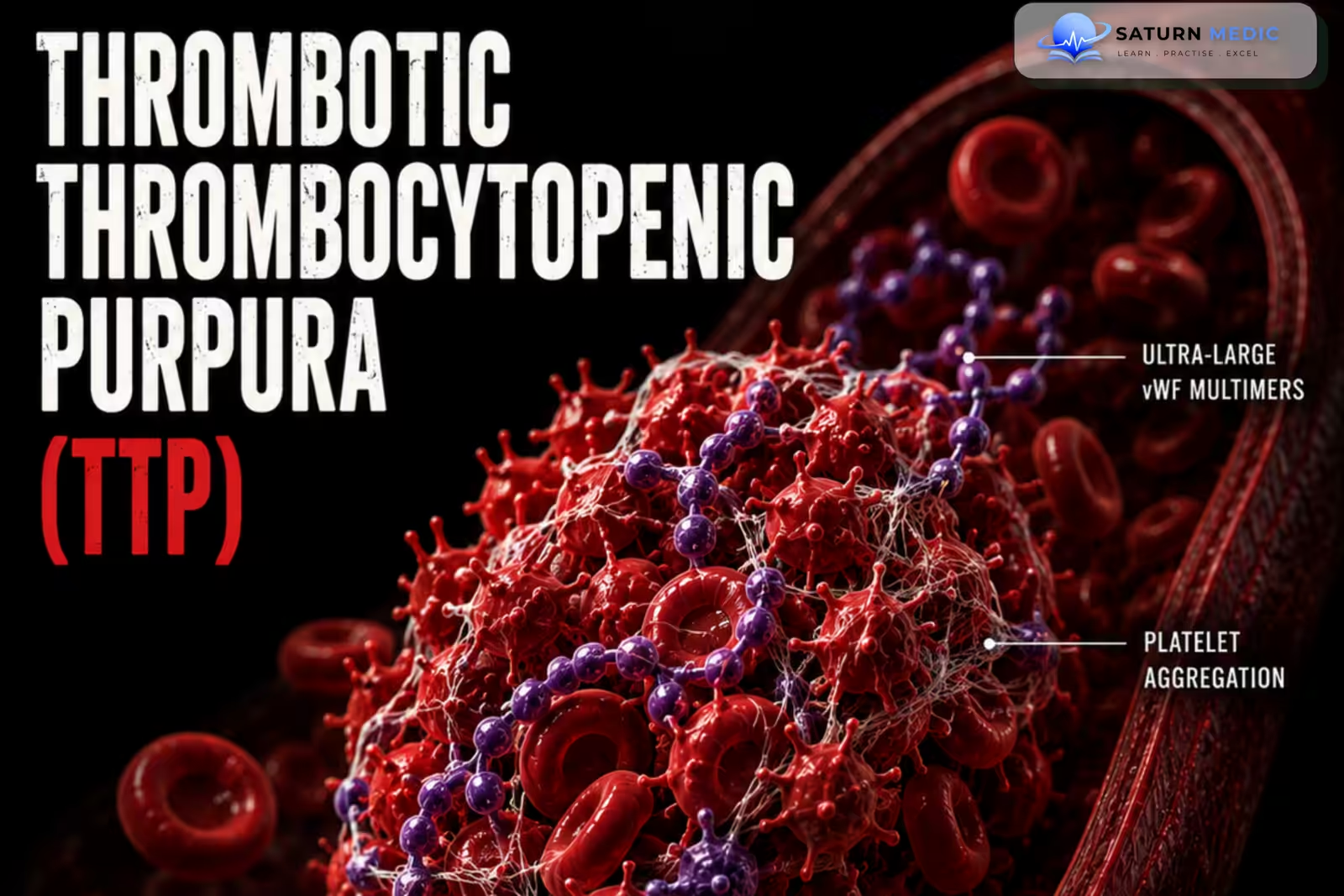
Severe ADAMTS13 deficiency → impaired cleavage of ultra-large von Willebrand factor multimers → excessive platelet adhesion and aggregation in small vessels → platelet-rich microthrombi → platelet consumption → thrombocytopenia → mechanical fragmentation of red blood cells passing through partially occluded vessels → schistocyte formation and microangiopathic hemolytic anemia → tissue ischemia and organ dysfunction
Clinical Presentation
Symptoms
-
Fatigue
-
Weakness
-
Headache
-
Confusion
-
Fever
-
Abdominal pain
-
Nausea
-
Vomiting
-
Dark urine
-
Reduced urine output
-
Chest pain
-
Shortness of breath
Signs
-
Petechiae
-
Purpura
-
Pallor
-
Jaundice
-
Fever
-
Neurological abnormalities
-
Renal impairment
-Classic Pentad
Historically described as:
-
Thrombocytopenia
-
Microangiopathic hemolytic anemia
-
Neurological abnormalities
-
Renal dysfunction
-
Fever
The complete pentad is uncommon, and treatment should not wait for all five features.
History Taking
-Ask about:
- Fatigue
- Headache
- Confusion
- Seizures
- Visual symptoms
- Fever
- Bleeding or bruising
- Abdominal pain
- Dark urine
- Reduced urine output
- Chest pain
- Pregnancy
- Autoimmune disease
- Recent infection
- Recent medications
- Previous episodes of Thrombotic Thrombocytopenic Purpura (TTP)
Physical Examination
-General Examination
Look for:
-
Pallor
-
Jaundice
-
Petechiae
-
Purpura
-
Fever
-Neurological Examination
Assess for:
-
Confusion
-
Reduced consciousness
-
Focal neurological deficits
-
Seizures
-
Headache
-Cardiovascular Examination
Look for:
-
Tachycardia
-
Signs of myocardial ischemia
-
Heart failure
-Abdominal Examination
Assess for:
-
Abdominal tenderness
-
Hepatomegaly
-
Splenomegaly
Investigations
-Complete Blood Count
Typical findings:
-
Severe thrombocytopenia
-
Anemia
-Peripheral Blood Film
Characteristic findings:
-
Schistocytes
-
Polychromasia
-
Anisocytosis
-Hemolysis Screen
Typical findings:
-
↑ LDH
-
↑ Indirect bilirubin
-
↓ Haptoglobin
-
↑ Reticulocyte count
-
Hemoglobinuria may occur
Direct Antiglobulin Test
-
Usually negative
-ADAMTS13 Activity
-
Severely reduced ADAMTS13 activity, typically <10%, strongly supports Thrombotic Thrombocytopenic Purpura (TTP).
ADAMTS13 inhibitor testing can help identify acquired autoimmune disease.
-PLASMIC Score
The PLASMIC score can help estimate the probability of severe ADAMTS13 deficiency while awaiting definitive testing.
-Renal Function
Check:
-
Urea
-
Creatinine
-
Electrolytes
-
Urinalysis
-Renal impairment can occur but is often less severe than in hemolytic uremic syndrome.
-Coagulation Profile
Usually:
-
PT: normal
-
aPTT: normal
-
Fibrinogen: normal
This helps distinguish Thrombotic Thrombocytopenic Purpura (TTP) from disseminated intravascular coagulation.
-Cardiac Assessment
If clinically indicated:
-
ECG
-
Troponin
-
Echocardiography
Diagnosis
Diagnosis is based on:
- Thrombocytopenia
- Microangiopathic hemolytic anemia
- Schistocytes
- Elevated LDH
- Low haptoglobin
- Usually normal coagulation studies
- Severe ADAMTS13 deficiency
ADAMTS13 activity <10% strongly supports the diagnosis.
Management
Emergency Management
Start treatment immediately when Thrombotic Thrombocytopenic Purpura (TTP) is strongly suspected.
1. Plasma Exchange
Urgent therapeutic plasma exchange (TPE) is the cornerstone of treatment.
It:
-
Removes circulating ADAMTS13 autoantibodies
-
Replaces deficient ADAMTS13
-
Removes ultra-large von Willebrand factor multimers
2. Corticosteroids
Used to suppress the autoimmune process in acquired Thrombotic Thrombocytopenic Purpura (TTP).
3. Caplacizumab
A targeted therapy that inhibits the interaction between von Willebrand factor and platelets.
It is used with plasma exchange and immunosuppression in appropriate patients with acquired Thrombotic Thrombocytopenic Purpura (TTP).
4. Rituximab
An anti-CD20 monoclonal antibody used particularly for:
-
Severe or persistent disease
-
Relapsed disease
-
Prevention of relapse in selected patients
-Congenital Thrombotic Thrombocytopenic Purpura
Treatment may involve:
-
Plasma infusion
-
Recombinant ADAMTS13 replacement where available
-Supportive Care
-
Red blood cell transfusion when necessary
-
Avoid platelet transfusion unless there is serious bleeding or an urgent invasive procedure
-
Treat seizures
-
Manage renal dysfunction
-
Monitor cardiac and neurological complications
Complications
- Stroke
- Seizures
- Renal impairment
- Myocardial ischemia
- Cardiac failure
- Severe anemia
- Organ ischemia
- Relapse
- Death if untreated
Prognosis
Untreated Thrombotic Thrombocytopenic Purpura (TTP) has a very high mortality rate. With rapid plasma exchange and modern therapies, survival has improved dramatically. Relapses can occur, particularly in acquired disease, so long-term monitoring is important.
Key Points / Clinical Pearls
- Thrombotic Thrombocytopenic Purpura (TTP) is a medical emergency.
- It is caused by severe ADAMTS13 deficiency.
- The classic laboratory combination is thrombocytopenia + microangiopathic hemolytic anemia + schistocytes.
- ADAMTS13 activity is typically <10%.
- Coagulation studies are usually normal.
- Urgent plasma exchange is the cornerstone of treatment.
- Corticosteroids are used in acquired disease.
- Caplacizumab rapidly inhibits platelet-von Willebrand factor interaction.
- Rituximab may be used for persistent or relapsing disease.
- Do not wait for ADAMTS13 results before starting treatment when clinical suspicion is high.
- Stanley M, Killeen RB, Michalski JM. National Center for Biotechnology Information (NIH). Thrombotic Thrombocytopenic Purpura, StatPearls.
- Zheng XL, Vesely SK, Cataland SR, et al. ISTH Guidelines for Treatment of Thrombotic Thrombocytopenic Purpura. J Thromb Haemost. 2020;18:2496-2502.
- 2025 Focused Update of the 2020 ISTH Guidelines for Management of Thrombotic Thrombocytopenic Purpura. J Thromb Haemost. 2025. JTH Journal.
- Iqbal S, Zaidi SZ, Motabi IH, et al. Thrombotic Thrombocytopenic Purpura - Analysis of Clinical Features, Laboratory Characteristics and Therapeutic Outcome of 24 Patients Treated at a Tertiary Care Center in Saudi Arabia. Pak J Med Sci. 2016;32:1494-1499.
- MedlinePlus, National Library of Medicine (NIH). Thrombotic Thrombocytopenic Purpura: Medical Encyclopedia.