
Clinical Subject Page

Hydrocele
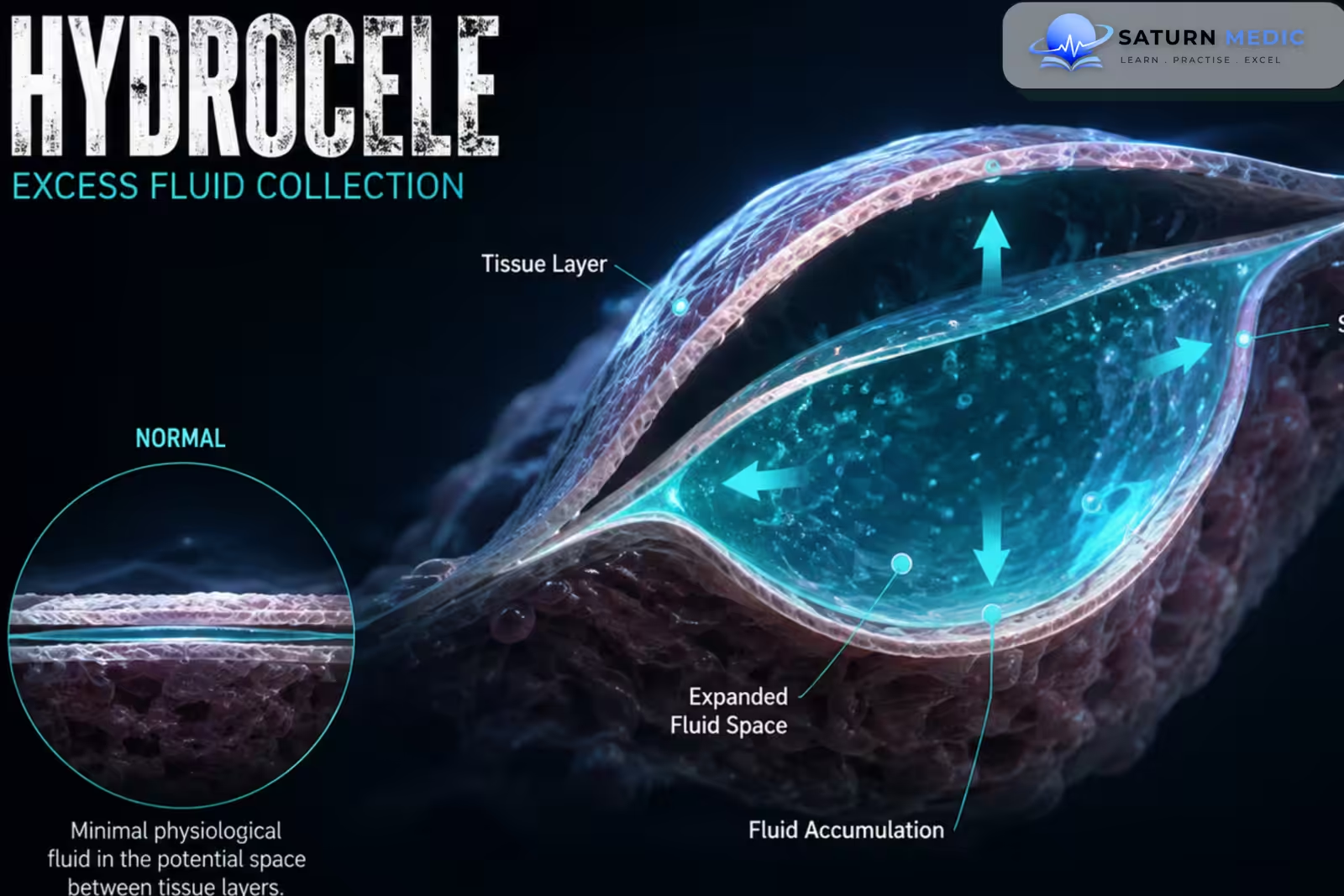
Hydrocele is an abnormal collection of serous fluid between the layers of the tunica vaginalis surrounding the testis. It usually presents as painless scrotal swelling but may occasionally indicate an underlying testicular, inflammatory, or traumatic condition
Also called
ICD-10
Specialty
Onset
Reviewed
-
OverviewOverview
-
Etiology & Risk FactorsEtiology & Risk Factors
-
PathophysiologyPathophysiology
-
Clinical PresentationClinical Presentation
-
History TakingHistory Taking
-
Physical ExaminationPhysical Examination
-
InvestigationsInvestigations
-
DiagnosisDiagnosis
-
ManagementManagement
-
ComplicationsComplications
-
PrognosisPrognosis
-
Key Points / Clinical PearlsKey Points / Clinical Pearls
Overview
A Hydrocele occurs when fluid accumulates around the testis within the tunica vaginalis.
-Major types include:
- Primary hydrocele: usually idiopathic and caused by imbalance between fluid production and absorption.
- Secondary hydrocele: associated with infection, inflammation, trauma, tumor, or other scrotal pathology.
- Communicating hydrocele: associated with a persistent connection between the peritoneal cavity and the scrotum, usually due to a patent processus vaginalis.
-Hydrocele is common in newborns and may also occur in adults.
Etiology & Risk Factors
-Etiology
may result from:
- Idiopathic imbalance between fluid secretion and absorption
- Persistent processus vaginalis
- Epididymal or testicular inflammation
- Scrotal trauma
- Testicular tumor
- Previous scrotal or inguinal surgery
-Risk Factors
- Infancy
- Increasing age
- Previous epididymal or testicular inflammation
- Scrotal trauma
- Inguinal or scrotal surgery
Pathophysiology
Impaired fluid absorption or increased fluid production → accumulation of serous fluid within the tunica vaginalis → progressive scrotal enlargement → pressure and discomfort when large
-For a communicating Hydrocele:
Patent processus vaginalis → communication with the peritoneal cavity → movement of peritoneal fluid into the scrotum → fluctuating scrotal swelling
Clinical Presentation
–Symptoms
- Painless scrotal swelling
- Feeling of heaviness
- Mild discomfort
- Enlarging scrotum
- Symptoms may fluctuate in a communicating Hydrocele
-Signs:
- Smooth scrotal swelling
- Usually non-tender
- Fluctuant swelling
- Positive transillumination
- Testis may be difficult to palpate separately when the Hydrocele is large
History Taking
-Ask about:
- Onset and duration of swelling
- Progressive or fluctuating size
- Pain or tenderness
- Sudden onset
- Fever or urinary symptoms
- Previous epididymitis or orchitis
- Scrotal trauma
- Previous surgery
- Symptoms suggesting inguinal hernia
- Testicular lump
Physical Examination
-General Examination
- Temperature when infection is suspected
- General assessment for systemic illness when clinically indicated
-System-Specific Examination:
- Inspect and palpate the scrotal swelling
- Assess tenderness and consistency
- Attempt to palpate the testis separately
- Perform transillumination
- Examine for an inguinal hernia
- Compare the opposite testis
Investigations
-Biochemistry / Specific Tests
No specific laboratory test is routinely required for an uncomplicated cases.
Urinalysis may be performed if infection is suspected.
-Imaging
Scrotal ultrasound is useful to:
Confirm fluid around the testis
Assess the testicular parenchyma
Exclude a testicular mass
Identify associated epididymal or scrotal pathology
-Special / Confirmatory Tests
Clinical examination is often sufficient for a typical case .
Diagnosis
–Diagnosis is usually based on:
Painless scrotal swelling + fluctuant examination findings + positive transillumination.
Scrotal ultrasound confirms the presence of fluid and helps exclude underlying testicular pathology when required.
Management
1. Definitive Treatment
Treatment depends on the cause and symptoms.
Observation is appropriate for many small, asymptomatic disease.
Treat the underlying cause.
Persistent or symptomatic disease may require surgical treatment.
2. Medical Treatment
There is no routine medication that removes a simple Hydrocele.
Medical treatment may be required for an underlying cause, such as:
Antibiotics for bacterial infection when present
Anti-inflammatory treatment for selected inflammatory conditions
3. Surgical / Procedural Treatment
Hydrocelectomy is the definitive treatment for persistent or symptomatic Hydrocele.
Aspiration with or without sclerotherapy may be considered in selected adults who are poor surgical candidates, but recurrence is more common.
4. Supportive Management
Reassurance for uncomplicated asymptomatic Hydrocele
Scrotal support when uncomfortable
Simple analgesia when required
Complications
- Chronic discomfort
- Progressive scrotal enlargement
- Pressure-related discomfort
- Infection
- Hematocele
- Recurrence after treatment
- Rare underlying testicular pathology being initially obscured
Prognosis
The prognosis is generally excellent. Many infant Hydroceles resolve spontaneously, while asymptomatic adult Hydroceles may remain stable. Surgical treatment is usually effective for persistent or symptomatic cases. Prognosis depends on identifying and treating any underlying cause in secondary Hydrocele.
Key Points / Clinical Pearls
- Hydrocele is an abnormal collection of fluid around the testis.
- It usually presents as painless scrotal swelling.
- Primary Hydrocele is often idiopathic.
- Secondary Hydrocele may result from infection, trauma, inflammation, or a testicular lesion.
- Communicating Hydrocele results from a persistent processus vaginalis.
- The swelling is usually smooth, fluctuant, and non-tender.
- A Hydrocele commonly transilluminates.
- The testis may be difficult to palpate when the Hydrocele is large.
- Sudden severe pain is not typical and requires urgent assessment.
- Scrotal ultrasound is useful when the diagnosis is uncertain or the testis cannot be adequately examined.
- Small asymptomatic Hydroceles may only require observation.
- European Association of Urology (EAU). EAU Guidelines on Paediatric Urology .
- American Urological Association (AUA). Evaluation and Treatment of Cryptorchidism Guideline .
- Dagur G, Gandhi J, Suh Y, et al. Classifying Hydroceles of the Pelvis and Groin: An Overview of Etiology, Secondary Complications, Evaluation, and Management. Curr Urol. 2017;10(1):1-14. Current Urology .
- Ku JH, Kim ME, Lee NK, Park YH. The Excision of Adult Hydrocele: A Comparison of the Lord and Jaboulay Procedures. BJU Int. 2001;87(1):82-84.
- National Health Service (NHS). Hydrocele .
- National Library of Medicine (NIH). Hydrocele . StatPearls.