
Clinical Subject Page

Interstitial Cystitis (IC)
Interstitial Cystitis (IC) is a chronic bladder pain condition characterized by pain, pressure, or discomfort perceived to originate from the bladder, usually associated with urinary frequency and urgency. Interstitial Cystitis (IC) occurs without a proven urinary infection or another identifiable cause that fully explains the symptoms
Also called
ICD-10
Specialty
Onset
Reviewed
-
OverviewOverview
-
Etiology & Risk FactorsEtiology & Risk Factors
-
PathophysiologyPathophysiology
-
Clinical PresentationClinical Presentation
-
History TakingHistory Taking
-
Physical ExaminationPhysical Examination
-
InvestigationsInvestigations
-
DiagnosisDiagnosis
-
ManagementManagement
-
ComplicationsComplications
-
PrognosisPrognosis
-
Key Points / Clinical PearlsKey Points / Clinical Pearls
Overview
–Interstitial Cystitis (IC) is a chronic, symptom-based condition that can significantly affect quality of life. The typical pattern is bladder or pelvic pain that worsens as the bladder fills and improves, at least temporarily, after urination.
Two important clinical patterns are recognized:
- IC with Hunner lesions: distinctive inflammatory lesions visible on cystoscopy.
- Non-Hunner IC: no Hunner lesions are identified.
-The exact cause is unclear, and symptoms may overlap with Urinary Tract Infection (UTI), Overactive Bladder (OAB), Chronic Pelvic Pain Syndrome (CPPS), pelvic floor dysfunction, and other pelvic disorders.
Etiology & Risk Factors
-Etiology
–The exact cause of Interstitial Cystitis (IC) is not fully understood. Proposed mechanisms include:
- Defective bladder epithelial barrier
- Chronic inflammation
- Abnormal mast-cell activity
- Peripheral nerve sensitization
- Central pain sensitization
- Pelvic floor dysfunction
-Risk Factors
- Female sex
- Chronic pelvic pain disorders
- Pelvic floor dysfunction
- Other chronic pain syndromes
- Previous bladder or pelvic inflammation
Pathophysiology
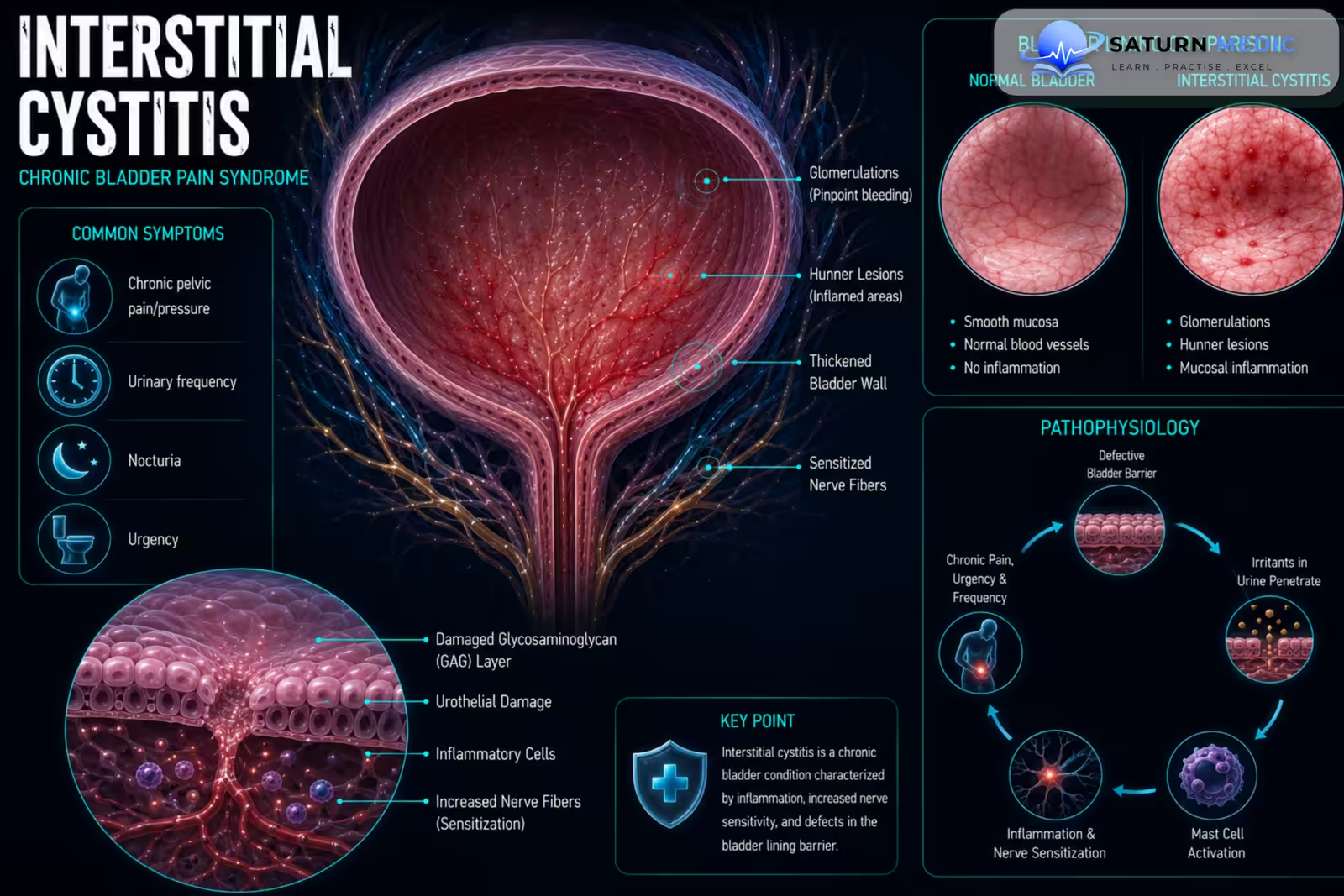
Bladder epithelial dysfunction or another trigger → increased bladder wall permeability and irritation → inflammation and abnormal nerve activation → peripheral sensitization → central sensitization → chronic bladder pain → urgency and frequency
Clinical Presentation
–Symptoms
- Chronic bladder or suprapubic pain
- Pelvic discomfort or pressure
- Pain worsening with bladder filling
- Temporary relief after urination
- Urinary frequency
- Urinary urgency
- Nocturia
-Signs:
Physical examination may be normal.
Possible findings include:
- Suprapubic tenderness
- Bladder tenderness
- Pelvic floor muscle tenderness
- Increased pelvic floor muscle tone
History Taking
-Ask about:
- Duration and location of pain
- Relationship between pain and bladder filling
- Relief after urination
- Urinary frequency and urgency
- Nocturia
- Dysuria
- Hematuria
- Sexual pain
- Previous Urinary Tract Infection (UTI)
- Previous urine culture results
- Pelvic surgery or trauma
Physical Examination
-General Examination
- Assess general wellbeing
- Assess the impact of chronic pain
- Look for fever or systemic illness suggesting another diagnosis
-System-Specific Examination:
- Assess suprapubic tenderness
- Examine the external genitalia when appropriate
- Assess pelvic floor tenderness or muscle spasm
- Perform a focused pelvic examination when clinically indicated
Investigations
-Biochemistry / Specific Tests
-
Urinalysis
-
Urine culture to exclude Urinary Tract Infection (UTI)
-
Voiding diary to document frequency and voided volumes
-Imaging
Not routinely required for uncomplicated Interstitial Cystitis (IC).
Ultrasound or other imaging may be used when an alternative structural abnormality is suspected.
-Special / Confirmatory Tests
There is no single confirmatory test.
Cystoscopy
May be used to:
-
Identify Hunner lesions
-
Evaluate persistent or unexplained symptoms
-
Investigate hematuria
-
Exclude other bladder pathology when indicated
A normal cystoscopy does not exclude IC.
Bladder Biopsy
Not routinely required.
It may be performed when malignancy or another specific pathology needs to be excluded.
Diagnosis
-The diagnosis of Interstitial Cystitis (IC) is based on:
Chronic bladder-related pain or pressure → associated urinary frequency or urgency → characteristic relationship with bladder filling → exclusion of infection and other identifiable causes
Management
1. Definitive Treatment
There is no single definitive cure for Interstitial Cystitis (IC). Management is individualized and aims to reduce pain, improve bladder symptoms, and restore quality of life.
2. Medical Treatment
Depending on the patient’s symptoms and local practice:
-
Simple analgesics or nonsteroidal anti-inflammatory drugs (NSAIDs)
-
Neuropathic pain medications
-
Tricyclic antidepressants
-
Other bladder-directed medications in selected patients
Repeated antibiotics should be avoided without evidence of bacterial infection.
3. Surgical / Procedural Treatment
No routine surgical treatment.
Selected patients may require:
-
Endoscopic treatment of Hunner lesions
-
Bladder-directed procedures for refractory symptoms
Major surgery is reserved for rare, severe, treatment-resistant disease.
4. Supportive Management
-
Patient education
-
Identification and avoidance of individual triggers
-
Adequate hydration
Complications
- Chronic pelvic pain
- Sleep disturbance
- Sexual dysfunction
- Anxiety
- Depressive symptoms
- Reduced quality of life
Prognosis
Interstitial Cystitis (IC) is usually chronic and fluctuating. Symptoms may improve, worsen, or recur over time. Although there is no universal cure, many patients achieve meaningful improvement with individualized, multimodal management.
Key Points / Clinical Pearls
- Interstitial Cystitis (IC) is a chronic bladder pain condition.
- It is also known as Bladder Pain Syndrome (BPS).
- Pain often worsens with bladder filling.
- Pain may improve temporarily after urination.
- Frequency and urgency are common symptoms.
- Repeated negative urine cultures support the diagnosis.
- IC is a diagnosis of exclusion.
- There is no single confirmatory test.
- A normal cystoscopy does not exclude IC.
- Cystoscopy can identify Hunner lesions.
- Urine culture is important to exclude Urinary Tract Infection (UTI).
- American Urological Association (AUA). Diagnosis and Treatment of Interstitial Cystitis/Bladder Pain Syndrome: AUA Guideline .
- European Association of Urology (EAU). EAU Guidelines on Chronic Pelvic Pain .
- Hanno PM, Erickson D, Moldwin R, Faraday MM. Diagnosis and Treatment of Interstitial Cystitis/Bladder Pain Syndrome: AUA Guideline Amendment. J Urol. 2015;193(5):1545-1553. Journal of Urology .
- van de Merwe JP, Nordling J, Bouchelouche P, et al. Diagnostic Criteria, Classification, and Nomenclature for Painful Bladder Syndrome/Interstitial Cystitis: An ESSIC Proposal. Eur Urol. 2008;53(1):60-67. PubMed .
- Hanno P, Dmochowski R. Status of International Consensus on Interstitial Cystitis/Bladder Pain Syndrome/Painful Bladder Syndrome: 2008 Snapshot. Neurourol Urodyn. 2009;28(4):274-286. PubMed .
- National Institute of Diabetes and Digestive and Kidney Diseases (NIDDK). Interstitial Cystitis (Bladder Pain Syndrome) . National Institutes of Health.
- National Library of Medicine (NIH). Interstitial Cystitis/Bladder Pain Syndrome . StatPearls.