

Clinical Subject Page
Multiple Myeloma (MM)
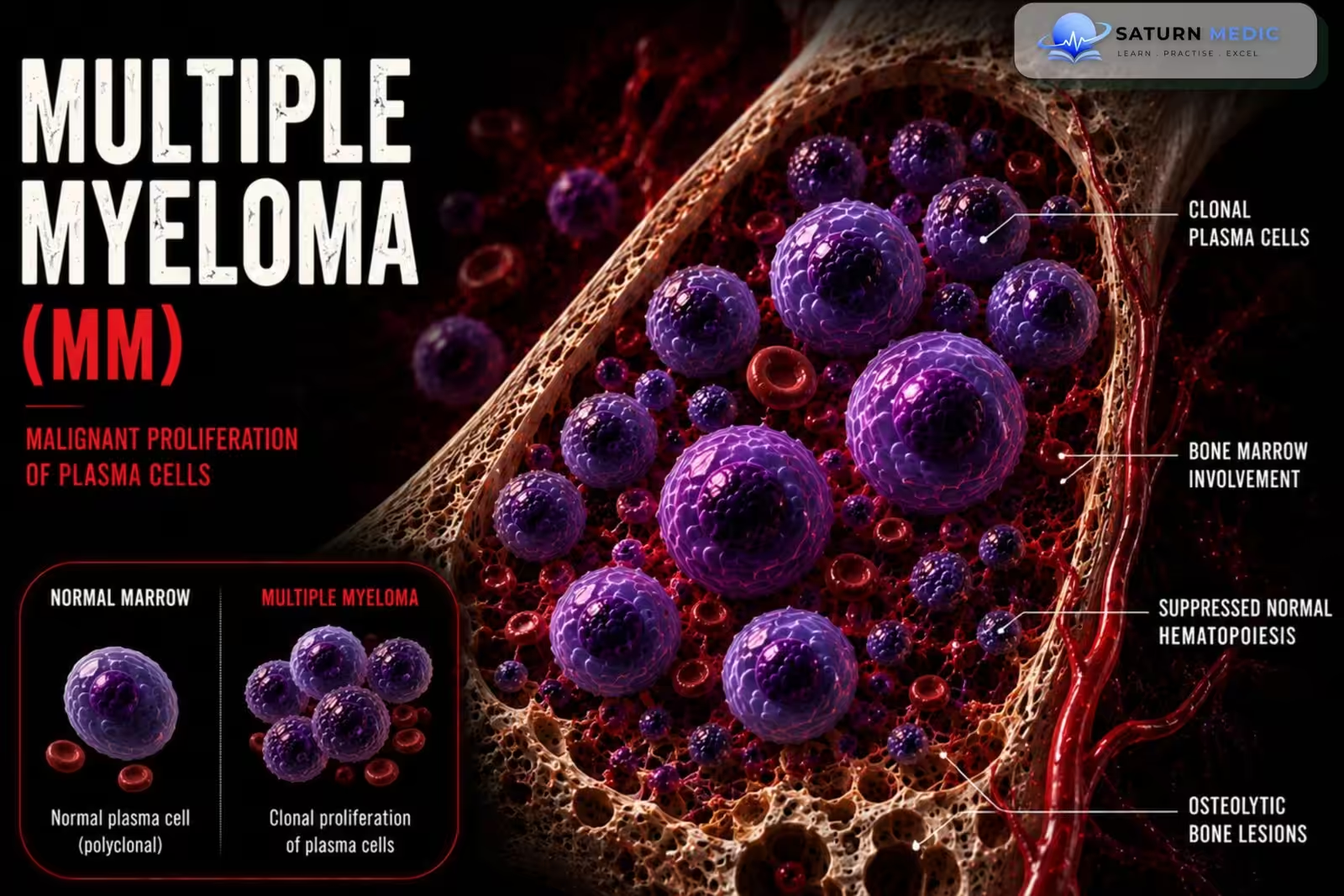
Multiple Myeloma (MM) is a malignant plasma cell disorder characterized by clonal proliferation of plasma cells in the bone marrow, resulting in monoclonal (M) protein production, bone destruction, anemia, renal impairment, and immunodeficiency
Also called
ICD-10
Specialty
Onset
Reviewed
-
OverviewOverview
-
Etiology & Risk FactorsEtiology & Risk Factors
-
PathophysiologyPathophysiology
-
Clinical PresentationClinical Presentation
-
History TakingHistory Taking
-
Physical ExaminationPhysical Examination
-
InvestigationsInvestigations
-
DiagnosisDiagnosis
-
ManagementManagement
-
ComplicationsComplications
-
PrognosisPrognosis
-
Key Points / Clinical PearlsKey Points / Clinical Pearls
Overview
Multiple Myeloma (MM) is a plasma cell malignancy in which abnormal plasma cells accumulate in the bone marrow and produce a monoclonal immunoglobulin (M protein). This causes bone pain, osteolytic lesions, hypercalcemia, anemia, renal dysfunction, and recurrent infections. Diagnosis is based on bone marrow plasma cells, detection of monoclonal protein, and evidence of end-organ damage (CRAB criteria).
Etiology & Risk Factors
-Etiology
Multiple Myeloma (MM) develops from malignant transformation of plasma cells and is usually preceded by Monoclonal Gammopathy of Undetermined Significance (MGUS) or Smoldering Multiple Myeloma (SMM).
Risk Factors
Increasing age (>60 years)
Male sex
African ancestry
Family history
MGUS
Smoldering Multiple Myeloma
Obesity
Exposure to ionizing radiation
Certain occupational chemical exposures
Pathophysiology
Malignant plasma cell proliferation within the bone marrow → excessive production of monoclonal immunoglobulin (M protein) or free light chains → suppression of normal hematopoiesis causing anemia → osteoclast activation leading to osteolytic bone lesions and hypercalcemia → light-chain deposition causing renal injury → reduced normal immunoglobulin production resulting in recurrent infections.
Clinical Presentation
Symptoms
Bone pain (especially back or ribs)
Fatigue
Weakness
Weight loss
Recurrent infections
Polyuria
Constipation
Nausea
Confusion (hypercalcemia)
Paresthesia
Signs
Pallor
Bone tenderness
Pathological fractures
Kyphosis
Dehydration
Neurological deficits (spinal cord compression)
Signs of renal impairment
History Taking
-Ask about:
- Bone pain
- Fatigue
- Recurrent infections
- Weight loss
- Fractures
- Back pain
- Symptoms of hypercalcemia
- Renal symptoms
- Neurological symptoms
- Previous MGUS
- Family history
Physical Examination
General Examination
Look for:
Pallor
Weight loss
Dehydration
Musculoskeletal Examination
Assess for:
Bone tenderness
Vertebral tenderness
Pathological fractures
Reduced mobility
Neurological Examination
Look for:
Peripheral neuropathy
Spinal cord compression
Muscle weakness
Investigations
-Complete Blood Count (CBC)
Typical findings:
Normocytic normochromic anemia
Leukopenia (advanced disease)
Thrombocytopenia (advanced disease)
-Blood Tests
Serum calcium (elevated)
Creatinine and renal function
LDH
Albumin
Beta-2 microglobulin (prognostic marker)
-Serum Protein Electrophoresis (SPEP)
Detects M protein (monoclonal paraprotein)
-Serum Immunofixation
Identifies the type of monoclonal immunoglobulin
-Serum Free Light Chain Assay
Detects kappa and lambda light chains
Essential for light-chain myeloma
-Urine Studies
Urine protein electrophoresis
Bence Jones proteins (free light chains)
-Bone Marrow Aspiration and Biopsy (Gold Standard)
Typical findings:
≥10% clonal plasma cells
Plasma cell infiltration
-Imaging
Preferred imaging:
Whole-body low-dose CT
Whole-body MRI
PET-CT (selected patients)
May show:
Osteolytic lesions
Pathological fractures
Vertebral collapse
Diagnosis
Diagnosis is based on:
- Bone marrow plasma cells ≥10% or biopsy-proven plasmacytoma
- Monoclonal protein on SPEP/UPEP or free light chain assay
- Myeloma-defining events:
- CRAB features
- SLiM biomarkers (when present)
Management
-Initial Treatment
Transplant-eligible patients:
Induction therapy (e.g., Bortezomib + Lenalidomide + Dexamethasone [VRd])
Autologous stem cell transplantation
Maintenance therapy (commonly lenalidomide)
Transplant-ineligible patients:
Combination chemotherapy with targeted agents
Continuous therapy based on fitness
-Supportive Care
Bisphosphonates (e.g., zoledronic acid)
Adequate hydration
Pain control
Blood transfusions if needed
Treatment of hypercalcemia
Infection prevention and vaccination
Dialysis if severe renal failure
-Relapsed Disease
Proteasome inhibitors
Immunomodulatory drugs
Monoclonal antibodies (e.g., daratumumab)
CAR T-cell therapy or bispecific antibodies in selected patients
Complications
- Pathological fractures
- Hypercalcemia
- Renal failure
- Recurrent infections
- Spinal cord compression
- Hyperviscosity syndrome (rare)
- Amyloidosis (AL amyloidosis)
- Disease relapse
Prognosis
The prognosis depends on disease stage, cytogenetic abnormalities, renal function, and treatment response. Modern therapies, including proteasome inhibitors, immunomodulatory drugs, monoclonal antibodies, and autologous stem cell transplantation, have significantly improved survival, although Multiple Myeloma remains an incurable but highly treatable disease
Key Points / Clinical Pearls
- Multiple Myeloma (MM) is a malignant plasma cell disorder.
- The classic CRAB features are HyperCalcemia, Renal impairment, Anemia, and Bone lesions.
- Serum protein electrophoresis (SPEP) detects the monoclonal (M) protein.
- Bone marrow biopsy shows ≥10% clonal plasma cells.
- Bence Jones proteins are monoclonal free light chains detected in urine.
- Whole-body CT or MRI is preferred for detecting bone lesions.
- Autologous stem cell transplantation is standard for eligible patients.
- Bisphosphonates reduce skeletal complications.
- Modern targeted therapies have markedly improved outcomes.
- Multiple Myeloma is generally treatable but remains incurable in most patients.
- National Center for Biotechnology Information (NIH). Multiple Myeloma, StatPearls.
- Rajkumar SV, Dimopoulos MA, Palumbo A, et al. International Myeloma Working Group Updated Criteria for the Diagnosis of Multiple Myeloma. Lancet Oncol. 2014;15:e538-e548.
- International Myeloma Foundation (IMF). Multiple Myeloma Diagnostic Criteria.
- National Comprehensive Cancer Network (NCCN). NCCN Clinical Practice Guidelines in Oncology: Multiple Myeloma.
- MedlinePlus, National Library of Medicine (NIH). Multiple Myeloma: Health Topic.