

Clinical Subject Page
Neutropenic Fever (NF)
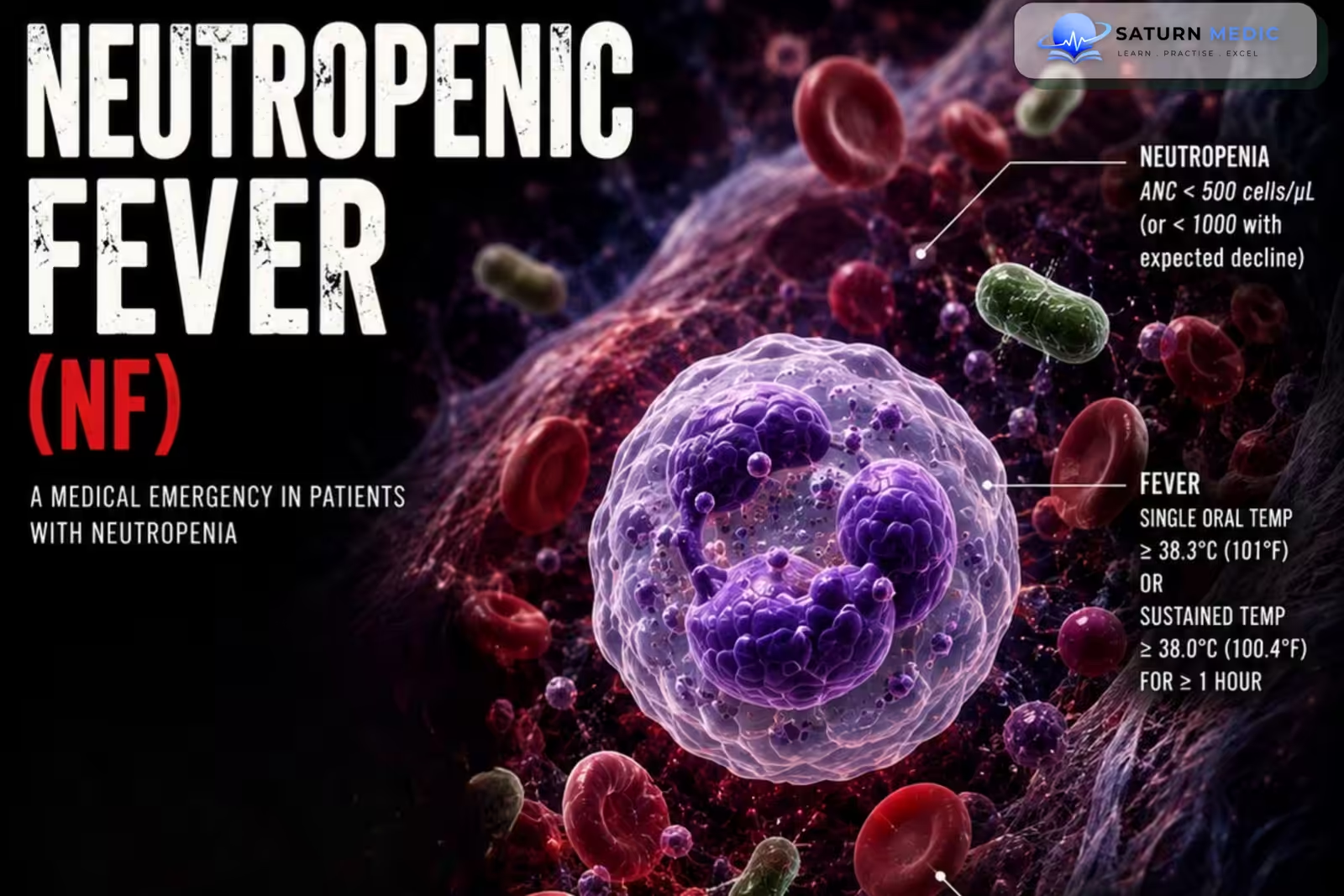
Neutropenic Fever (NF) is a medical emergency defined as fever occurring in a patient with neutropenia, usually following chemotherapy. Because neutropenic patients may not show typical signs of infection, prompt evaluation and immediate empiric broad-spectrum antibiotics are essential
Also called
ICD-10
Specialty
Onset
Reviewed
-
OverviewOverview
-
Etiology & Risk FactorsEtiology & Risk Factors
-
PathophysiologyPathophysiology
-
Clinical PresentationClinical Presentation
-
History TakingHistory Taking
-
Physical ExaminationPhysical Examination
-
InvestigationsInvestigations
-
DiagnosisDiagnosis
-
ManagementManagement
-
ComplicationsComplications
-
PrognosisPrognosis
-
Key Points / Clinical PearlsKey Points / Clinical Pearls
Overview
Neutropenic Fever (NF) most commonly develops after chemotherapy due to profound neutropenia, leaving patients highly susceptible to bacterial and fungal infections. Fever may be the only sign of a life-threatening infection, making immediate assessment and treatment critical. Delays in antibiotics significantly increase morbidity and mortality.
Etiology & Risk Factors
Neutropenic Fever (NF) results from infection during severe neutropenia or, less commonly, from noninfectious inflammatory causes.
-Risk Factors For Neutropenic Fever (NF)
- Chemotherapy (most common)
- Hematologic malignancies (AML, ALL, lymphoma)
- Hematopoietic stem cell transplantation
- Severe neutropenia (ANC <500/µL)
- Prolonged neutropenia (>7 days)
- Immunosuppressive therapy
- Central venous catheter
- Mucositis
- Recent surgery or invasive procedures
Pathophysiology
Chemotherapy or bone marrow failure → neutropenia → impaired innate immune defense → bacterial or fungal invasion through damaged skin or mucosal barriers → systemic infection → fever, often with minimal localizing signs because of the lack of neutrophils.
Clinical Presentation
Symptoms
-
Fever
-
Chills
-
Malaise
-
Fatigue
-
Sore throat
-
Cough
-
Dyspnea
-
Abdominal pain
-
Diarrhea
-
Dysuria
Signs
-
Fever (may be the only sign)
-
Hypotension
-
Tachycardia
-
Mucositis
-
Cellulitis
-
Catheter-site infection
-
Altered mental status (severe sepsis)
History Taking
-Ask about:
- Recent chemotherapy
- Duration of fever
- Chills
- Respiratory symptoms
- Urinary symptoms
- Gastrointestinal symptoms
- Central venous catheter
- Recent antibiotic use
- Previous resistant organisms
- Medication allergies
Physical Examination
-General Examination
Look for:
-
Fever
-
Hypotension
-
Tachycardia
-
Signs of sepsis
-Systemic Examination
Assess for:
-
Oral mucositis
-
Skin and catheter-site infection
-
Chest signs
-
Abdominal tenderness
-
Perianal infection (inspect carefully; avoid routine digital rectal examination)
Investigations
-Immediate Laboratory Tests For Neutropenic Fever (NF)
-
Complete Blood Count (CBC) with differential
-
Absolute Neutrophil Count (ANC)
-
Urea, creatinine, and electrolytes
-
Liver function tests
-
CRP ± Procalcitonin
-
Serum lactate if septic
-Microbiology
-
At least two sets of blood cultures before antibiotics
-
Peripheral and central line cultures (if catheter present)
-
Urine culture
-
Sputum culture if productive cough
-
Stool studies if diarrhea
-
Other cultures as clinically indicated
-Imaging
-
Chest X-ray (if respiratory symptoms)
-
CT chest for persistent fever or suspected fungal infection
-
CT abdomen/pelvis when indicated
Diagnosis
Diagnosis of Neutropenic Fever (NF) is based on:
- Single oral temperature ≥38.3°C or ≥38.0°C sustained for ≥1 hour
- ANC <500/µL, or expected to fall below 500/µL within 48 hours
- Clinical evaluation and microbiological investigations to identify the source
Management
-Immediate Management of Neutropenic Fever (NF)
-
Assess for sepsis
-
Obtain cultures before antibiotics (if this does not delay treatment)
-
Start empiric broad-spectrum IV antibiotics within 1 hour
-
IV fluids and supportive care
-
Admit high-risk patients
-Empiric Antibiotics
Preferred monotherapy:
-
Piperacillin-tazobactam
-
Cefepime
-
Meropenem or imipenem (selected high-risk patients)
Add vancomycin only if indicated (e.g., suspected catheter infection, MRSA, severe skin/soft tissue infection, or hemodynamic instability).
-Additional Management
-
Antifungal therapy if persistent fever after 4–7 days despite antibiotics
-
G-CSF in selected high-risk patients
-
Remove infected central venous catheter when indicated
-
Treat the identified source of infection
Complications
- Sepsis
- Septic shock
- Invasive fungal infection
- Respiratory failure
- Multi-organ failure
- Death
Prognosis
The prognosis depends on the severity and duration of neutropenia, the infecting organism, and how quickly appropriate antibiotics are started. Early recognition and prompt treatment significantly improve outcomes.
Key Points / Clinical Pearls
- Neutropenic Fever (NF) is an oncologic emergency.
- Fever may be the only sign of severe infection.
- Obtain cultures, but never delay antibiotics.
- Start empiric IV broad-spectrum antibiotics within 1 hour.
- Blood cultures should be taken before antibiotics whenever possible.
- ANC <500/µL defines severe neutropenia.
- High-risk patients require hospital admission.
- Persistent fever despite antibiotics should prompt evaluation for fungal infection.
- G-CSF may be used in selected high-risk patients.
- Early treatment is the key to reducing mortality.
- National Center for Biotechnology Information (NIH). Febrile Neutropenia, StatPearls.
- Freifeld AG, Bow EJ, Sepkowitz KA, et al. Clinical Practice Guideline for the Use of Antimicrobial Agents in Neutropenic Patients With Cancer: 2010 Update by the Infectious Diseases Society of America. Clin Infect Dis. 2011;52:e56-e93. Oxford Academic.
- Taplitz RA, Kennedy EB, Bow EJ, et al. Outpatient Management of Fever and Neutropenia in Adults Treated for Malignancy: ASCO and IDSA Clinical Practice Guideline Update. J Clin Oncol. 2018;36:1443-1453. IDSA Guideline.
- National Comprehensive Cancer Network (NCCN). NCCN Clinical Practice Guidelines in Oncology/Prevention and Treatment of Cancer-Related Infections.
- MedlinePlus, National Library of Medicine (NIH). Low Neutrophil Count and Fever: Medical Encyclopedia.