

Clinical Subject Page
Squamous Cell Carcinoma of the Lung (SCC)
Lung squamous cell carcinoma (SCC) is a non-small cell lung cancer (NSCLC) that
typically arises in the central bronchi and is strongly associated with cigarette smoking.
Also called
ICD-10
Specialty
Onset
Reviewed
-
OverviewOverview
-
Etiology & Risk FactorsEtiology & Risk Factors
-
PathophysiologyPathophysiology
-
Clinical PresentationClinical Presentation
-
History TakingHistory Taking
-
Physical ExaminationPhysical Examination
-
InvestigationsInvestigations
-
DiagnosisDiagnosis
-
ManagementManagement
-
ComplicationsComplications
-
PrognosisPrognosis
-
Key Points / Clinical PearlsKey Points / Clinical Pearls
Overview
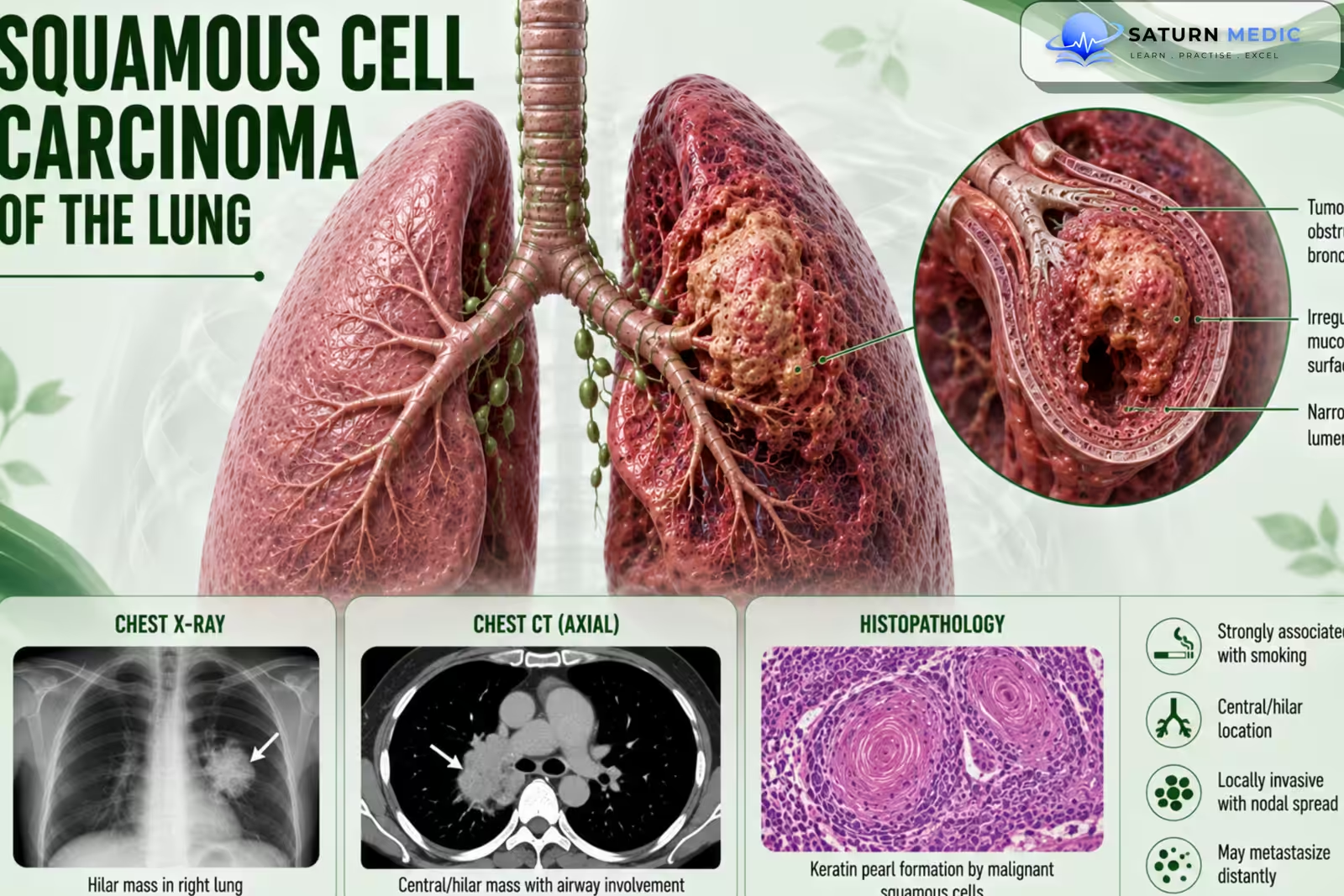
SCC is a centrally located epithelial lung cancer characterized by
keratin production, intercellular bridges, cavitary lesions, and frequent association with
paraneoplastic hypercalcemia due to Parathyroid Hormone Related Protein (PTHrP).
Etiology & Risk Factors
Main cause:
- Cigarette smoking — strongly associated with lung SCC
Long-term exposure to carcinogens causes:
Bronchial epithelial injury → Squamous metaplasia → Dysplasia → Carcinoma in situ → Invasive SCC
Risk Factors
- Heavy cigarette smoking
- Long smoking duration
- Secondhand smoke exposure
- Increasing age
- Occupational exposure to:
- Asbestos
- Radon
- Arsenic
- Chromium
- Nickel
- Air pollution
- Previous radiation exposure
- Chronic lung disease
Pathophysiology
• Malignant transformation of bronchial squamous epithelial cells.
• Usually arises centrally from a hilar bronchus.
• Produces keratin and forms intercellular bridges.
• May secrete parathyroid hormone-related peptide (PTHrP), causing hypercalcemia.
Clinical Presentation
-Patients may present with:
• Pulmonary symptoms
• Extrapulmonary symptoms
• Paraneoplastic manifestations
• Features of metastatic disease
-Characteristic features include:
• Central lung mass
• Cavitary lesion arising from a hilar bronchus
• Hypercalcemia due to PTHrP
History Taking
-Assess for:
• Smoking history
• Respiratory symptoms
• Constitutional symptoms
• Symptoms of hypercalcemia
• Symptoms suggestive of metastatic disease
Physical Examination
-Assess for:
• Respiratory findings
• Evidence of hypercalcemia
• General performance status
• Signs of metastatic disease
Investigations of Squamous Cell Carcinoma of the Lung (SCC)
-Laboratory studies :
• CBC
• Comprehensive metabolic panel
• Hypercalcemia may indicate PTHrP production or bone metastases
• LDH
-Imaging :
• Chest X-ray
• CT chest
Characteristic imaging findings:
• Central lung mass
• Cavitating lesion with air-fluid levels
-Tissue diagnosis:
• Bronchoscopy with transbronchial biopsy (central lesions)
• Histopathological confirmation is required
-Histopathology :
Characteristic findings:
• Keratin pearls
• Intercellular bridges (desmosomes)
• Solid epithelial tumor
-Staging :
May include:
• CT thorax and abdomen
• Brain imaging (MRI preferred)
• PET-CT
Diagnosis of Squamous Cell Carcinoma of the Lung (SCC)
-Diagnosis is based on:
• Clinical evaluation
• Chest imaging
• Histopathological confirmation by biopsy
• Classification as NSCLC (squamous cell subtype)
Related Topics
Management Squamous Cell Carcinoma of the Lung (SCC)
-Management depends on disease stage and should involve a multidisciplinary tumor board whenever available.
Stage I–IIA (No metastases)
• Preferred: Surgical resection with or without chemotherapy
• If not a surgical candidate: Radiotherapy (e.g., stereotactic radiotherapy)
Stage IIB–IIIC
• Preferred: Surgical resection plus chemotherapy
• If inoperable:
• Chemotherapy plus radiotherapy
• Consider adjuvant immunotherapy
Stage IVA–IVB (Metastatic disease)
• Palliative treatment
• If targetable mutation is present:
• Molecular targeted therapy
• If no targetable mutation:
• Chemotherapy and/or immunotherapy
-General principles :
• Early palliative care improves quality of life and may prolong survival.
• Many patients present with advanced disease, making treatment primarily palliative.
Complications
• Hypercalcemia due to PTHrP
• Cavitating lung lesions
• Metastatic disease
• Progressive respiratory compromise
Prognosis of Squamous Cell Carcinoma of the Lung (SCC)
- Prognosis depends on the stage at diagnosis.
- As with other lung cancers, many patients present with advanced disease, resulting in an overall poor prognosis.
Key Points / Clinical Pearls of Squamous Cell Carcinoma of the Lung (SCC)
• NSCLC subtype.
• Strongly associated with cigarette smoking.
• Usually centrally located.
• Cavitary lesions are characteristic.
• Produces PTHrP → hypercalcemia.
• Histology shows keratin pearls and intercellular bridges.
• Diagnosis requires biopsy.
• Early-stage disease is managed primarily with surgery.
• Advanced disease is treated with chemotherapy, radiotherapy, immunotherapy,
and/or targeted therapy depending on stage and molecular findings.
- Sabbula BR, Gasalberti DP, Mukkamalla SKR, Anjum F. National Center for Biotechnology Information (NIH). Squamous Cell Lung Cancer, StatPearls.
- Clark SB, Alsubait S. National Center for Biotechnology Information (NIH). Non-Small Cell Lung Cancer, StatPearls.
- National Cancer Institute (NIH). Non-Small Cell Lung Cancer Treatment (PDQ), Health Professional Version.
- MedlinePlus, National Library of Medicine (NIH). Lung Cancer: Health Topic.
- Perri F, Pisconti S, Della Vittoria Scarpati G, et al. Squamous Cell Carcinomas of the Lung and of the Head and Neck: New Insights on Molecular Characterization. Oncotarget. 2016. PMC5041888.