

Clinical Subject Page
Allergic Bronchopulmonary Aspergillosis (ABPA)
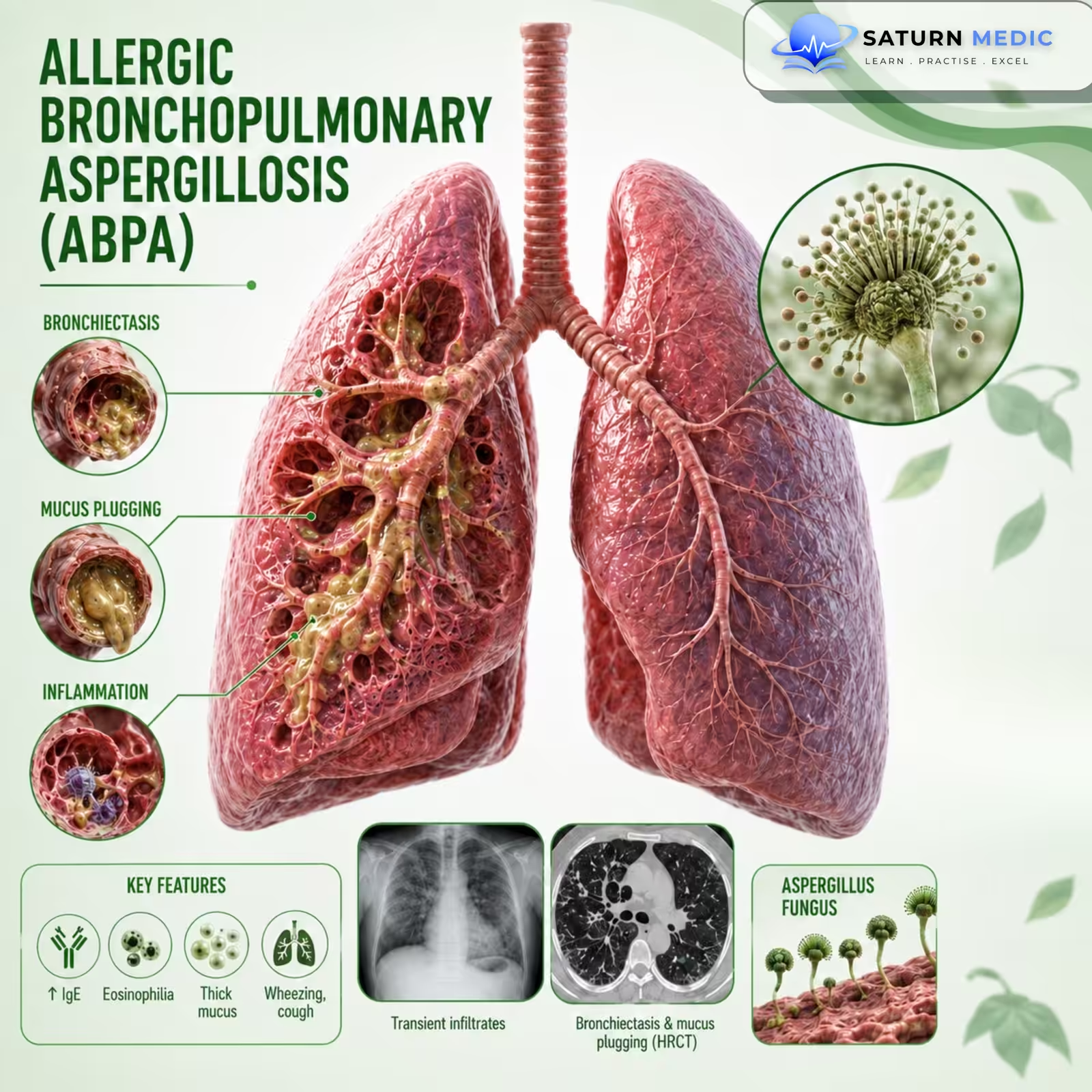
Allergic bronchopulmonary aspergillosis (ABPA) is an allergic hypersensitivity reaction to Aspergillus fumigatus colonizing the airways, occurring mainly in patients with asthma or cystic fibrosis.
Also called
ICD-10
Specialty
Onset
Reviewed
-
OverviewOverview
-
Etiology & Risk FactorsEtiology & Risk Factors
-
PathophysiologyPathophysiology
-
Clinical PresentationClinical Presentation
-
History TakingHistory Taking
-
Physical ExaminationPhysical Examination
-
InvestigationsInvestigations
-
DiagnosisDiagnosis
-
ManagementManagement
-
ComplicationsComplications
-
PrognosisPrognosis
-
Key Points / Clinical PearlsKey Points / Clinical Pearls
Overview
ABPA results from an exaggerated immune response to Aspergillus fumigatus, leading to:
- Airway inflammation
- Mucus plugging
- Recurrent pulmonary infiltrates
- Bronchiectasis
Untreated disease may cause progressive lung damage and permanent bronchiectasis.
Etiology & Risk Factors
-Cause
An exaggerated immune hypersensitivity reaction to Aspergillus fumigatus colonizing the airways.
-Risk Factors
Asthma (most common)
Cystic fibrosis
Atopy
Elevated IgE levels
Recurrent exposure to Aspergillus spores
Important Note
ABPA is an allergic reaction to Aspergillus—not an invasive fungal infection.
Pathophysiology
Airway colonization by Aspergillus fumigatus
⬇
Type I and Type III hypersensitivity reactions
⬇
IgE production + Eosinophilic inflammation
⬇
Airway edema + Mucus plugging
⬇
Recurrent airway inflammation
⬇
Central bronchiectasis
⬇
Progressive lung damage if untreated
-Key Concept
Repeated allergic inflammation causes irreversible bronchiectasis if untreated.
Clinical Presentation
Symptoms
Wheezing
Cough
Dyspnea
Thick brown mucus plugs
Fever (occasionally)
Chest tightness
Recurrent asthma exacerbations
Hemoptysis
Signs
Wheezing
Crackles
Reduced air entry during exacerbations
History Taking
Ask about:
- History of asthma?
- Cystic fibrosis?
- Frequent asthma exacerbations?
- Wheezing?
- Dyspnea?
- Productive cough?
- Brown mucus plugs?
- Hemoptysis?
- Previous pulmonary infiltrates?
Physical Examination
-General Examination
Look for:
- Wheezing
- Tachypnea
- Respiratory distress
- Reduced oxygen saturation (severe disease)
-Chest Examination
May show:
- Wheezing
- Crackles
- Reduced air entry
Important Note
Physical examination findings are often similar to an asthma exacerbation.
Investigations of Allergic Bronchopulmonary Aspergillosis (ABPA)
-Blood Tests
- Total serum IgE (markedly elevated)
- Peripheral eosinophil count
- Aspergillus-specific IgE
- Aspergillus-specific IgG
-Skin Testing
- Immediate hypersensitivity skin test to Aspergillus
-Chest Imaging
Chest X-ray
May show:
- Transient pulmonary infiltrates
- Mucus plugging
-High-Resolution CT (HRCT)
May show:
- Central bronchiectasis
- Mucus plugging
- Finger-in-glove opacities
-Pulmonary Function Tests
Usually show:
- Obstructive pattern
Diagnosis of Allergic Bronchopulmonary Aspergillosis (ABPA)
-Diagnosis is based on:
1. Predisposing Condition
- Asthma
- Cystic fibrosis
2. Immunologic Evidence
- Elevated total IgE
- Positive Aspergillus-specific IgE or skin test
3. Supportive Findings
- Peripheral eosinophilia
- Central bronchiectasis
- Pulmonary infiltrates
Related Topics
Management of Allergic Bronchopulmonary Aspergillosis (ABPA)
-Main Goals
Control allergic inflammation
Prevent lung damage
Reduce exacerbations
Preserve lung function
Corticosteroids
Oral corticosteroids are the main treatment.
Antifungal Therapy
May include:
Itraconazole
Voriconazole (selected patients)
Used to reduce the fungal burden and decrease antigen exposure.
-Asthma Management
Inhaled corticosteroids
Bronchodilators
Standard asthma treatment
-Biologic Therapy
May be considered in selected refractory patients.
Complications of Allergic Bronchopulmonary Aspergillosis (ABPA)
- Central bronchiectasis
- Pulmonary fibrosis
- Chronic respiratory failure
- Recurrent exacerbations
- Permanent lung damage
- Reduced lung function
Prognosis of Allergic Bronchopulmonary Aspergillosis (ABPA)
- Early diagnosis and treatment usually lead to good outcomes.
- Recurrent untreated disease may result in irreversible bronchiectasis and fibrosis.
- Prognosis depends on:
- Disease severity
- Frequency of exacerbations
- Treatment adherence
- Presence of established bronchiectasis
Key Points / Clinical Pearls of Allergic Bronchopulmonary Aspergillosis (ABPA)
- ABPA is an allergic reaction to Aspergillus fumigatus, not an invasive fungal infection.
- It occurs mainly in patients with asthma or cystic fibrosis.
- Poorly controlled asthma with eosinophilia should raise suspicion of ABPA.
- Markedly elevated total IgE is a key laboratory finding.
- Central bronchiectasis is the classic HRCT finding.
- Systemic corticosteroids are the main treatment.
- Antifungal therapy may reduce fungal burden in selected patients.
- Early treatment helps prevent irreversible lung damage.
- National Center for Biotechnology Information (NIH). Allergic Bronchopulmonary Aspergillosis, StatPearls.
- Agarwal R, Sehgal IS, Muthu V, et al; ISHAM-ABPA Working Group. Revised ISHAM-ABPA Working Group Clinical Practice Guidelines for Diagnosing, Classifying and Treating Allergic Bronchopulmonary Aspergillosis/Mycoses. Eur Respir J. 2024;63:2400061. doi: 10.1183/13993003.00061-2024.
- Patterson K, Strek ME. Allergic Bronchopulmonary Aspergillosis. Proc Am Thorac Soc. 2010. PMID: 20463254.
- Shah A, Panjabi C. Allergic Bronchopulmonary Aspergillosis: A Perplexing Clinical Entity. Allergy Asthma Immunol Res. 2016. PMC4809788.
- MedlinePlus, National Library of Medicine (NIH). Aspergillosis: Medical Encyclopedia.