

Clinical Subject Page
Common Cold
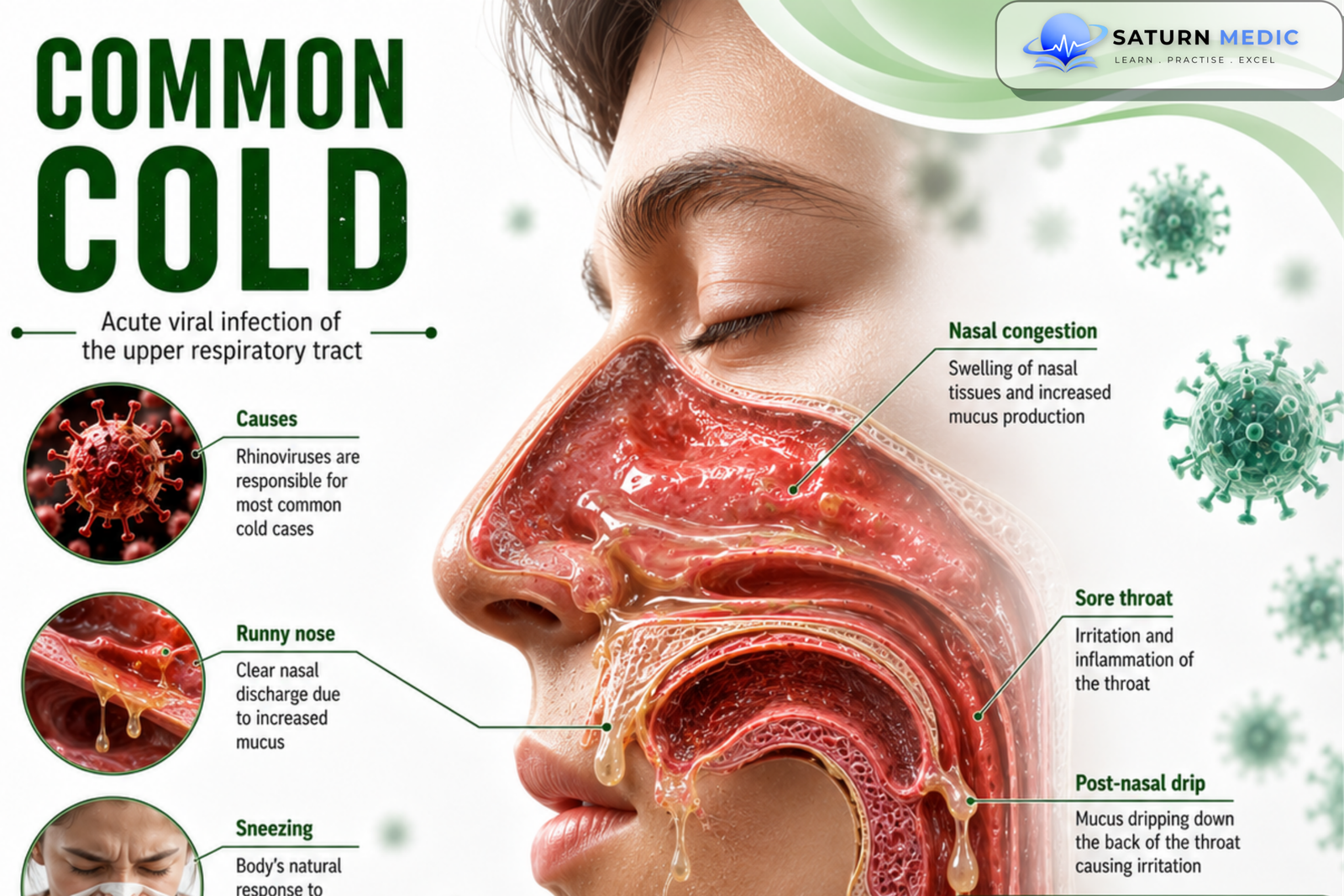
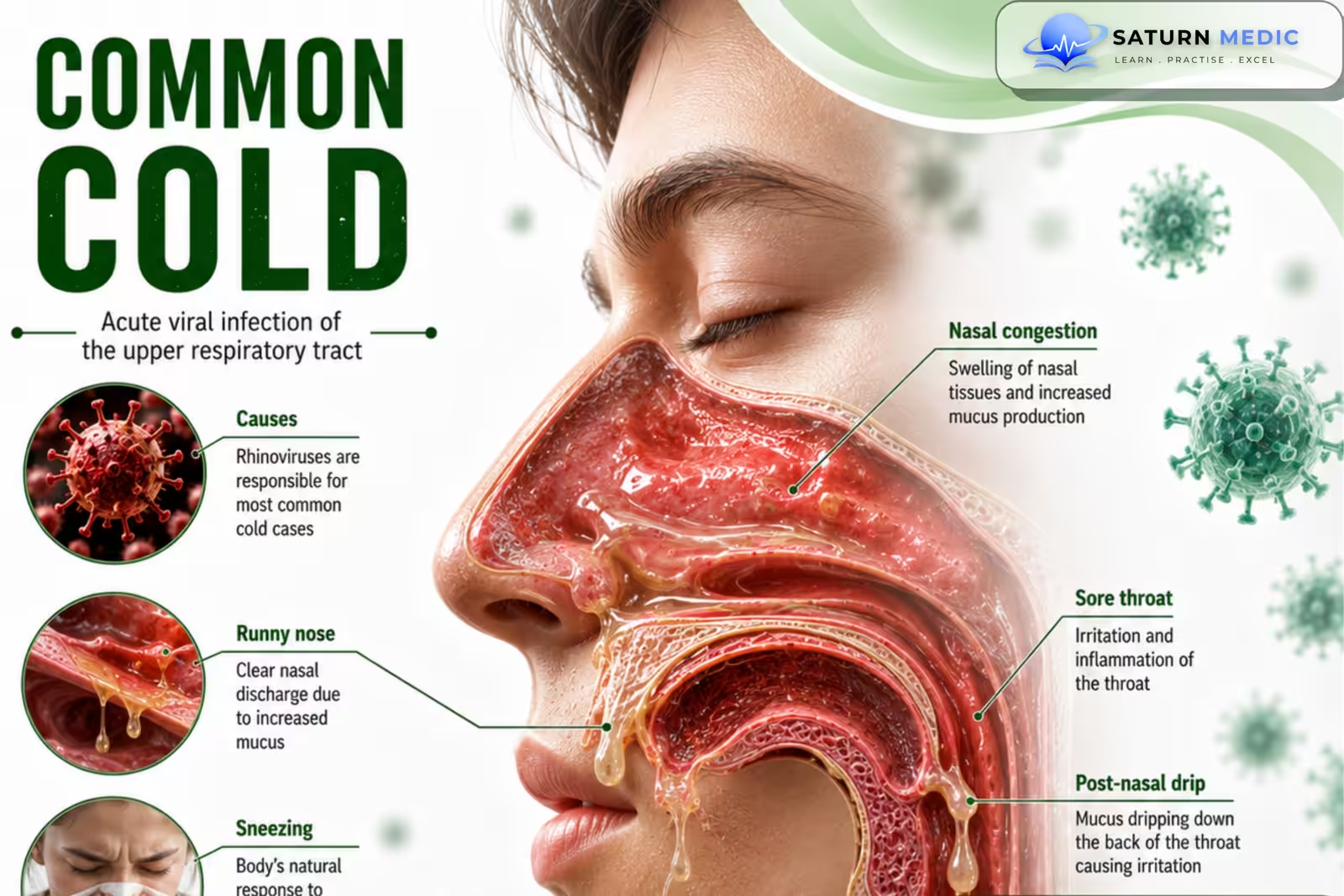
The common cold is an acute, self-limiting viral infection of the upper respiratory tract, mainly affecting the nose and throat.
Also called
ICD-10
Specialty
Onset
Reviewed
-
OverviewOverview
-
Etiology & Risk FactorsEtiology & Risk Factors
-
PathophysiologyPathophysiology
-
Clinical PresentationClinical Presentation
-
History TakingHistory Taking
-
Physical ExaminationPhysical Examination
-
InvestigationsInvestigations
-
DiagnosisDiagnosis
-
ManagementManagement
-
ComplicationsComplications
-
PrognosisPrognosis
-
Key Points / Clinical PearlsKey Points / Clinical Pearls
Overview
The common cold is caused by many different respiratory viruses, with rhinoviruses being the most common cause. It mainly affects the:
- Nose
- Nasopharynx
- Throat
Patients typically develop rhinorrhea, nasal congestion, sneezing, sore throat, and cough. The illness is usually mild and resolves spontaneously.
Etiology & Risk Factors
-Most Common
- Rhinoviruses
-Other Viruses
- Common human coronaviruses
- Adenoviruses
- Parainfluenza viruses
- Enteroviruses
- Human metapneumovirus
More than 200 respiratory viruses can cause cold symptoms.
-Transmission
The infection spreads through:
- Respiratory droplets and particles
- Direct contact with infected secretions
- Contaminated hands and surfaces
-Risk Factors
- Close contact with an infected person
- Crowded environments
- Poor hand hygiene
- Exposure to young children
- Weakened immune system
Pathophysiology
Exposure to respiratory virus
⬇
Virus enters the upper respiratory tract
⬇
Infection of respiratory epithelial cells
⬇
Activation of the immune response
⬇
Release of inflammatory mediators
⬇
Nasal and throat inflammation
⬇
Increased mucus production + Mucosal swelling
⬇
Rhinorrhea + Nasal congestion + Sore throat + Cough
Key Concept
Most symptoms result largely from the inflammatory immune response to viral infection.
Clinical Presentation
-Common Symptoms
- Rhinorrhea (runny nose)
- Nasal congestion
- Sneezing
- Sore or scratchy throat
- Cough
- Hoarseness
- Mild headache
- Fatigue or malaise
-Fever
- Usually absent in adults
- May occur in children
-Typical Course
Symptoms usually:
-
- Begin gradually
- Peak within the first few days
- Improve spontaneously
History Taking
-
Ask about:
- Runny nose?
- Nasal congestion?
- Sneezing?
- Sore throat?
- Cough?
- Fever?
- Headache?
- Muscle aches?
- When did symptoms start?
- Sick contacts?
- Shortness of breath?
Physical Examination
-General Examination
Look for:
- General appearance
- Fever
- Respiratory distress
- Hydration status
-Nose & Throat Examination
May show:
- Nasal discharge
- Swollen nasal mucosa
- Mild throat redness
-Chest Examination
Usually:
- Normal
May occasionally show:
- Mild transmitted upper airway sounds
Important Note
Abnormal oxygen saturation, marked respiratory distress, or focal chest signs are not typical of an uncomplicated condition.
Investigations of Common Cold
-Routine Testing
Usually not required.
Its Diagnosed clinically from:
- Symptoms
- History
- Physical examination
-Viral Testing
Consider when identifying a specific virus would change management, such as suspected:
- Influenza
- COVID-19
- RSV in selected high-risk patients
-Chest Imaging
Not routinely required.
Consider only if:
-
- Pneumonia is suspected
- Symptoms are severe
- An alternative diagnosis is suspected
Diagnosis of Common Cold
-Diagnosis is based on:
1. Typical Upper Respiratory Symptoms
- Rhinorrhea
- Nasal congestion
- Sneezing
- Sore throat
- Cough
2. Mild, Self-Limiting Clinical Course
3. Absence of Features Suggesting a More Serious Disease
Related Topics
Management of Common Cold
-Main Goals
- Relieve symptoms
- Maintain hydration
- Prevent spread
- Identify complications or alternative diagnoses
-Supportive Management
- Rest
- Adequate fluids
- Analgesics or antipyretics when needed
- Saline nasal irrigation or drops
- Symptomatic treatment for nasal congestion when appropriate
-Antibiotics
- Not indicated
- Because it is caused by viruses
- Antibiotics do not shorten the illness
-Antiviral Therapy
-
- No routine antiviral treatment for the common cold
- Specific antivirals may be indicated if testing identifies another treatable infection, such as influenza or COVID-19, in an eligible patient
Complications of Common Cold
- Acute sinusitis
- Otitis media
- Asthma exacerbation
- COPD exacerbation
- Secondary lower respiratory infection in susceptible patients
Prognosis of Common Cold
- The prognosis is excellent.
- It is usually mild and self-limiting.
- Most patients recover without specific treatment.
- Cough may persist longer than other symptoms.
- Severe or prolonged symptoms should prompt evaluation for another diagnosis or a complication.
Key Points / Clinical Pearls of Common Cold
- The common cold is an acute viral upper respiratory tract infection.
- Rhinovirus is the most common cause.
- Rhinorrhea, nasal congestion, sore throat, sneezing, and cough are typical symptoms.
- Diagnosis is usually clinical.
- Routine investigations are not required.
- Treatment is mainly supportive.
- Antibiotics are not indicated.
- Cold weather itself does not cause the infection.
- Tobin EH, Thomas M, Bomar PA. National Center for Biotechnology Information (NIH). Upper Respiratory Tract Infections With Focus on The Common Cold, StatPearls.
- MedlinePlus, National Library of Medicine (NIH). Common Cold: Medical Encyclopedia.
- MedlinePlus, National Library of Medicine (NIH). How to Treat the Common Cold at Home.
- Kenealy T, Arroll B. Antibiotics for the Common Cold and Acute Purulent Rhinitis. Cochrane Database Syst Rev. 2025. PMID: 41277585.
- Turner RB. National Center for Biotechnology Information (NIH). Rhinoviruses, PMC.