

Clinical Subject Page
Chronic Obstructive Pulmonary Disease (COPD)
Chronic obstructive pulmonary disease (COPD) is a chronic lung disease characterized by persistent respiratory symptoms and airflow obstruction caused by abnormalities of the airways and/or alveoli.
Also called
ICD-10
Specialty
Onset
Reviewed
-
OverviewOverview
-
Etiology & Risk FactorsEtiology & Risk Factors
-
PathophysiologyPathophysiology
-
Clinical PresentationClinical Presentation
-
History TakingHistory Taking
-
Physical ExaminationPhysical Examination
-
InvestigationsInvestigations
-
DiagnosisDiagnosis
-
ManagementManagement
-
ComplicationsComplications
-
PrognosisPrognosis
-
Key Points / Clinical PearlsKey Points / Clinical Pearls
Overview
COPD develops gradually, usually after long-term exposure to cigarette smoke or other harmful particles and gases.
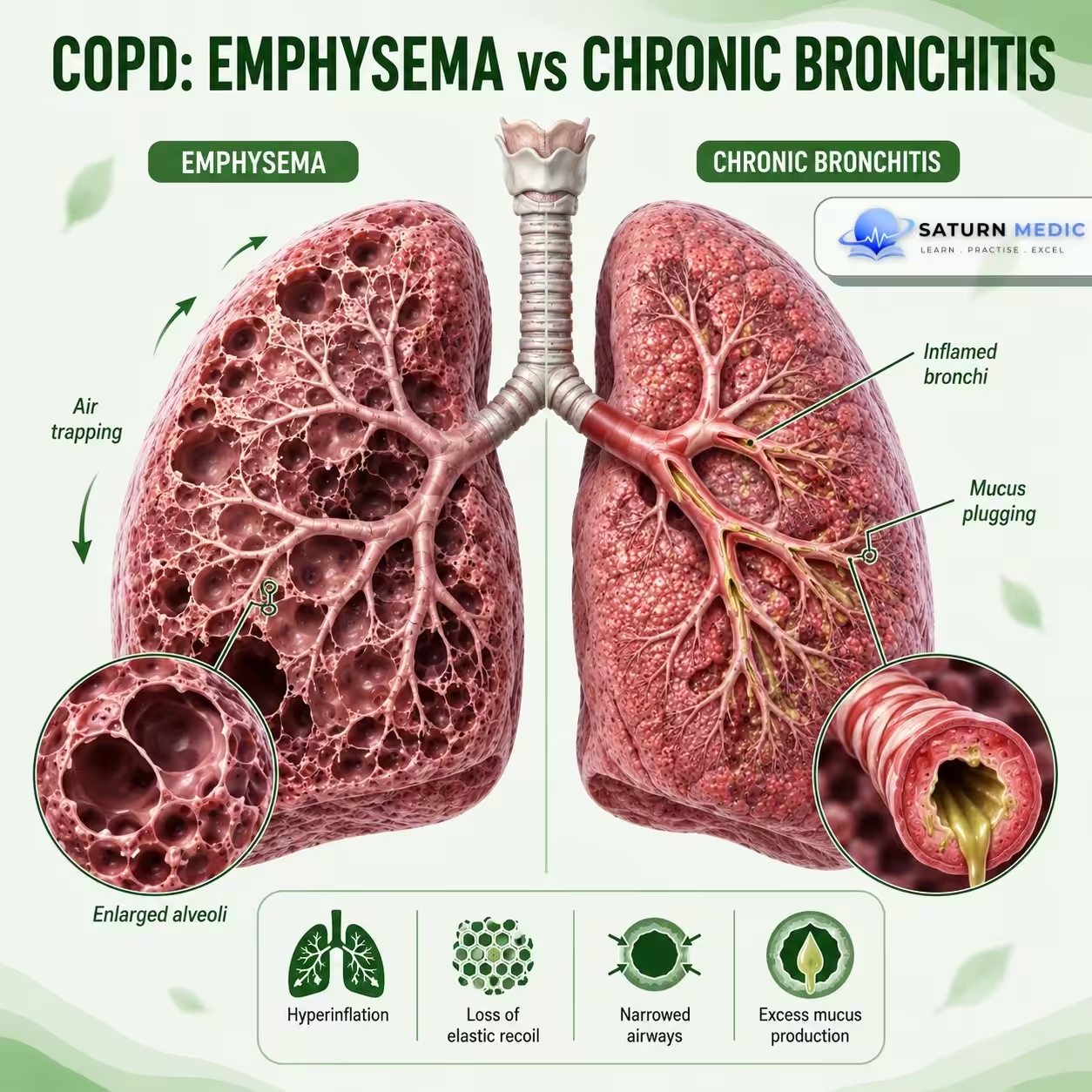
It mainly includes features of:
- Chronic bronchitis → airway inflammation and mucus production
- Emphysema → destruction of alveoli and loss of elastic recoil
The airflow obstruction is persistent and usually progressive.
Etiology & Risk Factors
Main Causes
-Cigarette Smoking
The most important risk factor for COPD.
-Other Causes
- Biomass fuel exposure
- Occupational dusts and chemicals
- Air pollution
- Recurrent respiratory infections
- Abnormal lung development
-Genetic Cause
Alpha-1 Antitrypsin Deficiency
An important inherited cause, especially in:
- Younger patients
- Patients with little or no smoking history
- Patients with early-onset emphysema
-Risk Factors
- Smoking
- Increasing age
- Occupational exposure
- Indoor air pollution
- Outdoor air pollution
- Poor lung growth
- Family history of COPD
Pathophysiology
Long-term exposure to harmful particles or gases
⬇
Chronic airway inflammation
⬇
Small airway narrowing + Mucus hypersecretion
⬇
Alveolar wall destruction
⬇
Loss of elastic recoil
⬇
Air trapping and hyperinflation
⬇
Persistent expiratory airflow limitation
⬇
Dyspnea + Cough + Sputum production
Key Concept
Unlike asthma, airflow obstruction in COPD is persistent and not fully reversible.
Clinical Presentation
Symptoms
Progressive dyspnea
Chronic cough
Sputum production
Wheezing
Chest tightness
Reduced exercise tolerance
Fatigue
Typical Pattern
Symptoms usually:
Develop gradually
Progress over years
Worsen with exertion
Become worse during exacerbations
Signs
Prolonged expiration
Wheezing
Reduced breath sounds
Hyperinflated chest
Accessory muscle use
Pursed-lip breathing
Cyanosis in advanced disease
Peripheral edema in cor pulmonale
History Taking
Ask about:
- Shortness of breath?
- Chronic cough?
- Daily sputum?
- Wheezing?
- When did symptoms start?
- Are symptoms progressive?
- Exercise limitation?
- Smoking history?
- Pack-years?
- Biomass fuel exposure?
- Occupational exposure?
- Previous exacerbations?
- Previous hospital admissions?
- Current inhalers?
- Inhaler technique?
- Treatment adherence?
Physical Examination
-General Examination
Look for:
- Respiratory distress
- Tachypnea
- Cyanosis
- Accessory muscle use
- Pursed-lip breathing
- Reduced oxygen saturation
- Low body weight in advanced disease
-Chest Examination
- Barrel-shaped chest
- Reduced chest expansion
- Hyperresonance
- Reduced breath sounds
- Prolonged expiration
- Wheezing
-Advanced Disease
Look for:
- Raised JVP
- Peripheral edema
- Signs of pulmonary hypertension
- Signs of cor pulmonale
Investigations
Spirometry — Key Test
Shows:
Persistent airflow obstruction
Reduced FEV₁/FVC ratio
-Post-bronchodilator spirometry is required to confirm persistent airflow obstruction.
-Pulse Oximetry
Assesses:
Oxygen saturation
-Arterial Blood Gas
Consider in:
Severe COPD
Severe exacerbations
Suspected respiratory failure
-Chest X-ray
May show:
Hyperinflation
Flattened diaphragm
Increased lung lucency
–CT Chest
Consider when:
Diagnosis is uncertain
Emphysema needs assessment
Lung cancer is suspected
Surgery or other interventions are being considered
-Blood Tests
CBC
Alpha-1 antitrypsin testing when indicated
Diagnosis
COPD · Diagnosis — GOLD 2024
Related Topics
Management
COPD · Management — GOLD 2024
| GOLD Group | Patient profile | Initial therapy | Escalation if uncontrolled |
|---|---|---|---|
| Group A | Low symptoms (CAT <10, mMRC 0–1) + Low exacerbation risk (≤1 mild exac/yr) | SABA or SAMA as needed Salbutamol or ipratropium PRN |
Add LAMA or LABA if symptoms persist |
| Group B | High symptoms (CAT ≥10, mMRC ≥2) + Low exacerbation risk | LAMA or LABA daily Tiotropium or salmeterol/formoterol/indacaterol |
LAMA + LABA (dual bronchodilation) — preferred if still symptomatic |
| Group E | High exacerbation risk (≥2 exac/yr or ≥1 hospitalisation) — regardless of symptoms | LAMA + LABA dual bronchodilation first-line |
If eos ≥300: add ICS → LAMA + LABA + ICS triple therapy If eos <300: consider roflumilast or azithromycin add-on |
Amoxicillin Doxycycline 5–7 days
Co-amoxiclav or Cefuroxime
Complications
-COPD Exacerbation
An acute worsening of:
- Dyspnea
- Cough
- Sputum production
that requires additional treatment.
-Common Triggers
- Respiratory infections
- Air pollution
- Other environmental exposures
-Treatment May Include
- Short-acting bronchodilators
- Systemic corticosteroids
- Antibiotics when indicated
- Oxygen therapy
- Noninvasive ventilation in selected severe cases
-Other Complications :
- Recurrent exacerbations
- Respiratory failure
- Pulmonary hypertension
- Cor pulmonale
- Pneumonia
- Pneumothorax
- Weight loss and muscle wasting
- Reduced quality of life
- Increased risk of lung cancer
- Death
Prognosis
- COPD is a chronic and usually progressive disease.
- The rate of progression varies between patients.
- Prognosis is worse with:
- Continued smoking
- Frequent exacerbations
- Severe airflow limitation
- Low oxygen levels
- Poor exercise capacity
- Low body weight
- Significant comorbidities
- Smoking cessation is the most important intervention to slow further lung damage.
- Appropriate treatment can improve symptoms and reduce exacerbations.
Key Points / Clinical Pearls
- Smoking is the most important risk factor for COPD.
- Progressive dyspnea is the most important symptom.
- COPD causes persistent, not fully reversible airflow obstruction.
- Spirometry is required to confirm the diagnosis.
- Smoking cessation is the most important intervention.
- Long-acting bronchodilators are central to maintenance treatment.
- ICS is not routinely used alone in COPD.
- National Center for Biotechnology Information (NIH). Chronic Obstructive Pulmonary Disease, StatPearls.
- Global Initiative for Chronic Obstructive Lung Disease (GOLD). Global Strategy for Prevention, Diagnosis and Management of COPD: 2026 Report.
- Pahal P, Avula A, Afzal M. National Center for Biotechnology Information (NIH). Emphysema, StatPearls.
- Widysanto A, Goldin J, Mathew G. National Center for Biotechnology Information (NIH). Chronic Bronchitis, StatPearls.
- MedlinePlus, National Library of Medicine (NIH). COPD: Health Topic.