

Clinical Subject Page
Acute Bronchitis
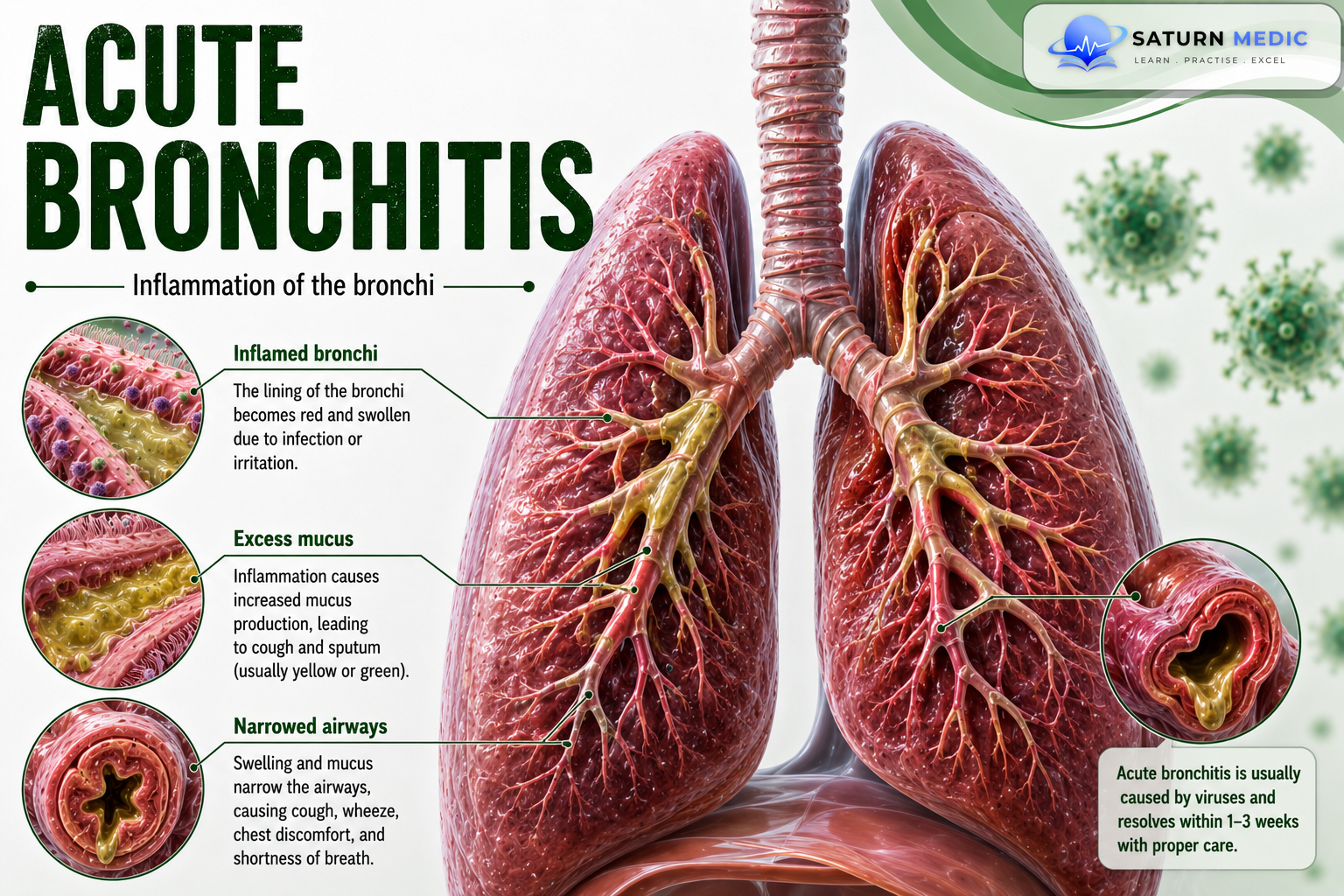
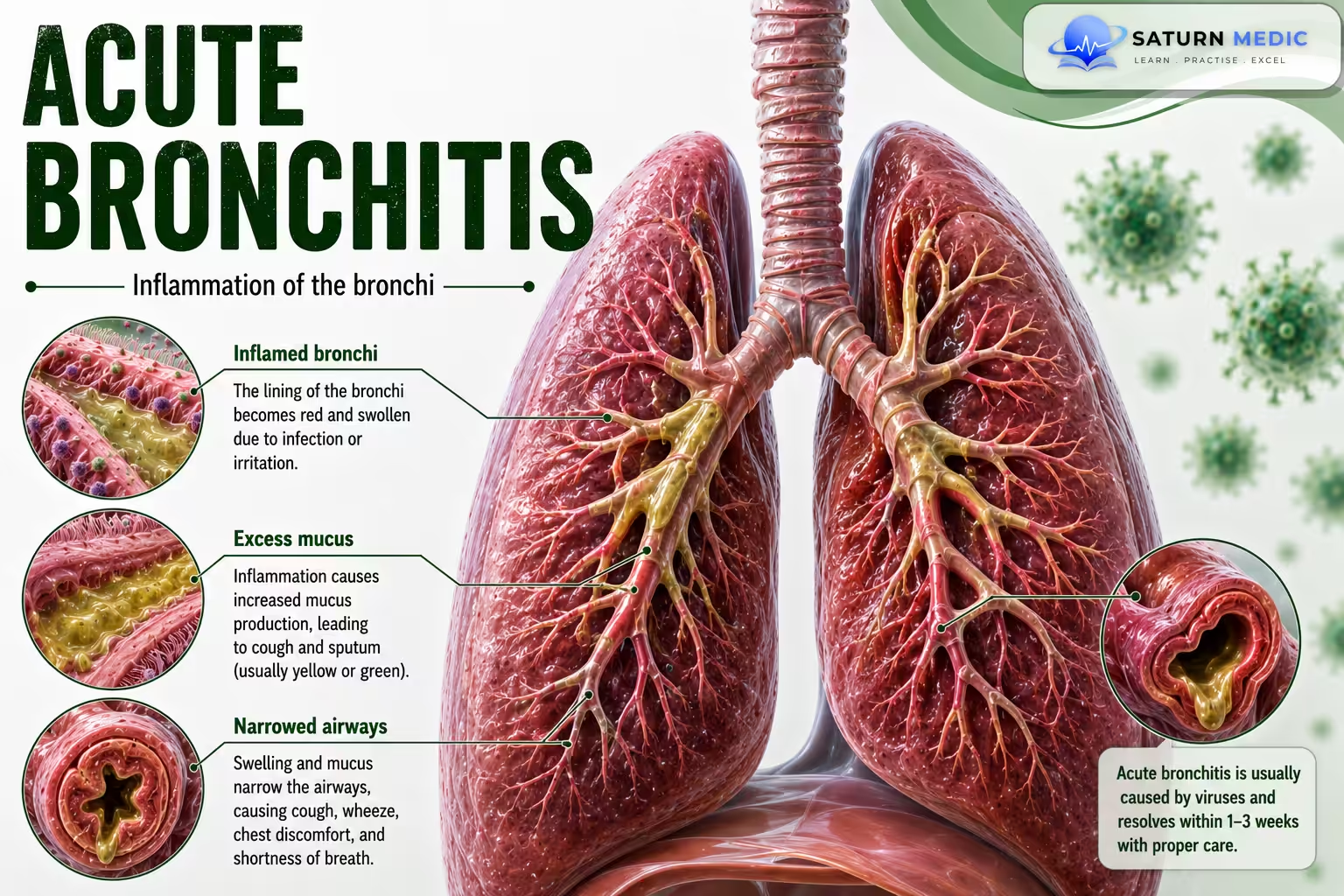
Acute bronchitis is a short-term inflammation of the bronchi, usually caused by a viral infection, with acute cough as the main symptom.
Also called
ICD-10
Specialty
Onset
Reviewed
-
OverviewOverview
-
Etiology & Risk FactorsEtiology & Risk Factors
-
PathophysiologyPathophysiology
-
Clinical PresentationClinical Presentation
-
History TakingHistory Taking
-
Physical ExaminationPhysical Examination
-
InvestigationsInvestigations
-
DiagnosisDiagnosis
-
ManagementManagement
-
ComplicationsComplications
-
PrognosisPrognosis
-
Key Points / Clinical PearlsKey Points / Clinical Pearls
Overview
commonly develops after an upper respiratory viral infection.
The infection causes:
Bronchial inflammation → Increased mucus production → Cough
The cough may be dry or productive and often lasts longer than the other symptoms.
Etiology & Risk Factors
Common Causes
Viruses — Most Common
Influenza virus
Rhinovirus
Respiratory syncytial virus (RSV)
Coronaviruses
Parainfluenza virus
Human metapneumovirus
Bacterial Causes — Uncommon
May include:
Bordetella pertussis
Mycoplasma pneumoniae
Chlamydia pneumoniae
Risk Factors
Recent viral respiratory infection
Close contact with infected people
Smoking
Air pollution
Exposure to respiratory irritants
Crowded environments
Pathophysiology
Viral infection or airway irritant
⬇
Injury to bronchial epithelium
⬇
Acute bronchial inflammation
⬇
Mucosal edema + Increased mucus production
⬇
Temporary airway hyperresponsiveness
⬇
Cough ± Sputum ± Wheezing
Key Concept
The cough may persist after the infection resolves because bronchial inflammation and airway hyperresponsiveness take time to recover.
Clinical Presentation
-Main Symptom
Acute cough
The cough may be:
Dry
Productive
Persistent for several weeks
Other Symptoms
Sputum production
Wheezing
Mild dyspnea
Chest discomfort or soreness from coughing
Sore throat
Rhinorrhea
Fatigue
Mild fever
Signs
Wheezing
Rhonchi that may improve after coughing
Mild tachypnea
History Taking
-
Ask about:
- Cough?
- When did it start?
- Dry or productive?
- Sputum color?
- Fever or chills?
- Shortness of breath?
- Wheezing?
- Chest pain?
- Cough lasting more than 3 weeks?
- Recent cold or influenza?
- Smoking history?
Physical Examination
-General Examination
Look for:
- Fever
- Tachypnea
- Tachycardia
- Reduced oxygen saturation
- Respiratory distress
-Chest Examination
May show:
- Wheezing
- Rhonchi
- Coarse breath sounds
The examination may also be normal.
Investigations
-Routine Testing
Usually not required.
Acute bronchitis is generally diagnosed clinically.
-Chest X-ray
Not routinely required.
Consider when:
Pneumonia is suspected
High fever is present
Significant tachypnea is present
Hypoxemia is present
Focal chest signs are present
-Viral Testing
May be considered when:
Influenza is suspected
COVID-19 is suspected
The result would change treatment or infection-control decisions
-Pertussis Testing
Consider when there is:
Prolonged cough
Paroxysmal coughing
Inspiratory whoop
Post-tussive vomiting
Known exposure
Diagnosis
Diagnosis is based on:
1. Acute Cough
Usually with or without:
- Sputum
- Wheezing
- Mild respiratory symptoms
2. Absence of Pneumonia
3. No Better Alternative Diagnosis
Related Topics
Management of Acute Bronchitis
-Main Goals
Relieve symptoms
Maintain hydration
Identify serious alternative diagnoses
Avoid unnecessary antibiotics
-Supportive Management
Rest
Adequate fluids
Analgesics or antipyretics when needed
Symptomatic cough treatment when appropriate
-Bronchodilators
May be considered in patients with:
Wheezing
Evidence of bronchospasm
Antibiotics
Not routinely indicated
Most cases are viral
Antibiotics provide little or no benefit in uncomplicated acute bronchitis
Complications of Acute Bronchitis
- Prolonged cough
- Secondary bacterial infection
- Pneumonia
- Asthma exacerbation
- COPD exacerbation
Prognosis of Acute Bronchitis
- Prognosis is excellent.
- It is usually self-limiting.
- Most patients recover without specific treatment.
- The cough often lasts longer than patients expect and may persist for several weeks.
- Persistent or worsening symptoms should prompt reassessment for another diagnosis.
Key Points / Clinical Pearls of Acute Bronchitis
- Acute cough is the main symptom.
- Most cases are caused by viruses.
- The main diagnostic task is to exclude pneumonia.
- Routine investigations are usually unnecessary.
- Colored or purulent sputum does not prove bacterial infection.
- Antibiotics are not routinely indicated.
- Wheezing may occur because of temporary airway hyperresponsiveness.
- Cough may persist for several weeks.
- Singh A, Avula A, Zahn E. National Center for Biotechnology Information (NIH). Acute Bronchitis, StatPearls.
- MedlinePlus, National Library of Medicine (NIH). Acute Bronchitis: Medical Encyclopedia.
- Smith MP, Lown M, Singh S, et al; CHEST Expert Cough Panel. Acute Cough Due to Acute Bronchitis in Immunocompetent Adult Outpatients: CHEST Expert Panel Report. Chest. 2020. PMID: 32017932.
- Widysanto A, Goldin J, Mathew G. National Center for Biotechnology Information (NIH). Chronic Bronchitis, StatPearls.
- Smith SM, Schroeder K, Fahey T. Over-the-Counter (OTC) Medications for Acute Cough in Children and Adults in Community Settings. Cochrane Database Syst Rev. 2014. PMID: 25420096.