
Clinical Subject Page

Acute Bacterial Prostatitis
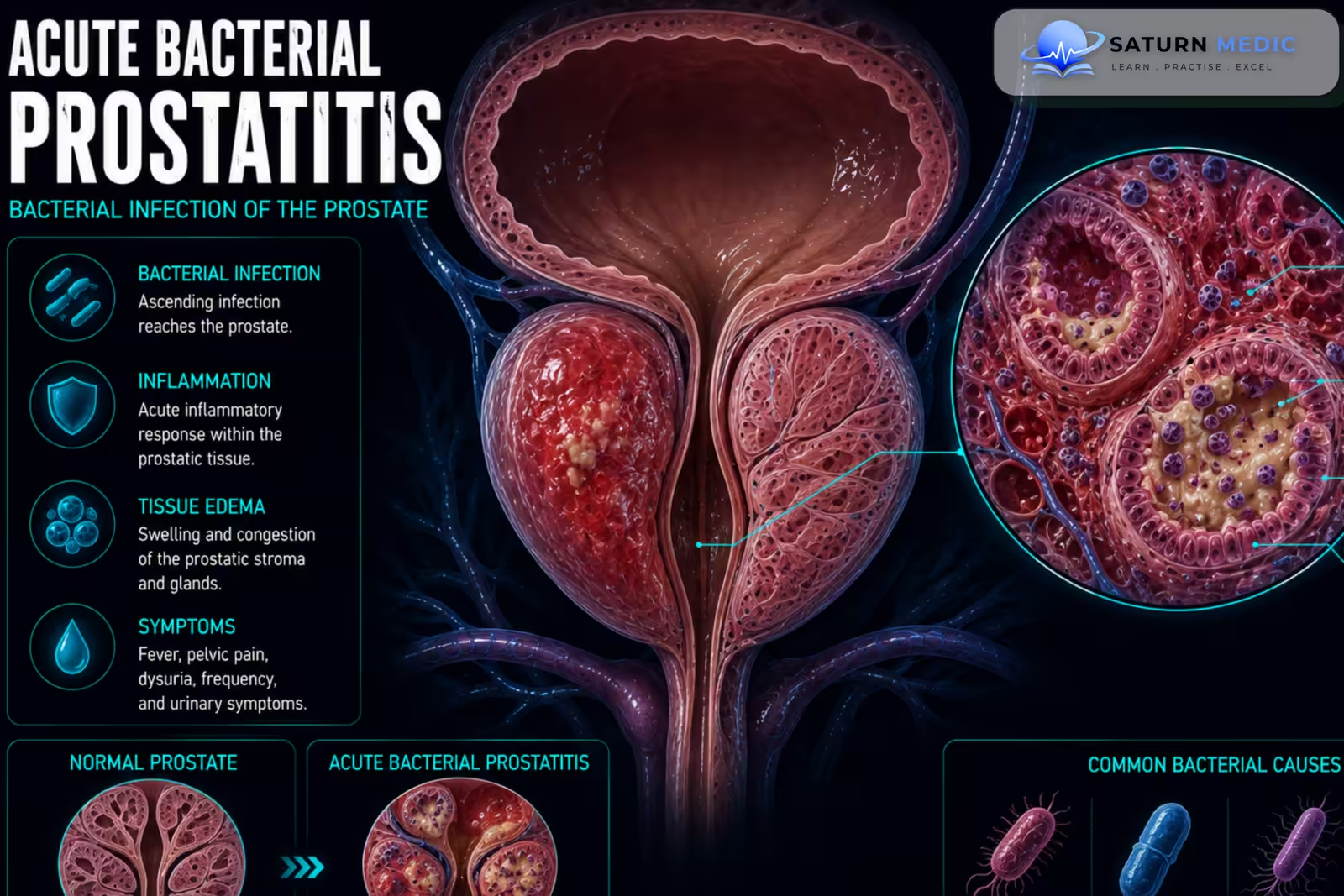
Acute Bacterial Prostatitis is an acute bacterial infection and inflammation of the prostate gland. It typically presents with fever, pelvic or perineal pain, dysuria, and lower urinary tract symptoms. Severe cases can cause urinary retention, sepsis, or a prostatic abscess
Also called
ICD-10
Specialty
Onset
Reviewed
-
OverviewOverview
-
Etiology & Risk FactorsEtiology & Risk Factors
-
PathophysiologyPathophysiology
-
Clinical PresentationClinical Presentation
-
History TakingHistory Taking
-
Physical ExaminationPhysical Examination
-
InvestigationsInvestigations
-
DiagnosisDiagnosis
-
ManagementManagement
-
ComplicationsComplications
-
PrognosisPrognosis
-
Key Points / Clinical PearlsKey Points / Clinical Pearls
Overview
-Acute Bacterial Prostatitis usually develops when bacteria ascend from the urethra or urinary tract into the prostate.
Common causative organisms include:
- Escherichia coli (E. coli) — most common
- Klebsiella species
- Proteus species
- Pseudomonas species in selected healthcare-associated cases
-The condition is usually diagnosed clinically and supported by urinalysis and urine culture. Unlike chronic prostatitis, Acute Bacterial Prostatitis often causes systemic symptoms such as fever and chills.
Etiology & Risk Factors
-Etiology
–Acute Bacterial Prostatitis is usually caused by ascending bacterial infection from the lower urinary tract.
-Important causes and associated factors include:
- Ascending urinary tract infection
- Infection after urethral catheterization
- Recent urological instrumentation
- Urinary reflux into prostatic ducts
- Sexually transmitted pathogens in selected younger patients
-Risk Factors
- Recent urinary tract infection
- Urethral catheterization
- Recent urological instrumentation
- Bladder outlet obstruction, including Benign Prostatic Hyperplasia (BPH)
- Immunosuppression
Pathophysiology
Bacterial entry into the prostate → acute infection and inflammation → prostatic edema and swelling → compression of the prostatic urethra → dysuria and urinary obstruction → bacterial spread in severe cases → bacteremia, sepsis, or prostatic abscess
Clinical Presentation
–Symptoms
- Fever
- Chills
- Dysuria
- Urinary frequency
- Urinary urgency
- Perineal pain
- Pelvic or suprapubic pain
- Low back pain
- Painful ejaculation
-Signs:
- Fever
- Tachycardia
- Suprapubic tenderness
- Perineal tenderness
- Tender prostate on examination
Digital Rectal Examination may reveal a prostate that is:
- Tender
- Enlarged
- Swollen
- Warm or boggy
History Taking
-Ask about:
- Fever and chills
- Dysuria
- Frequency and urgency
- Perineal or pelvic pain
- Difficulty passing urine
- Reduced urinary stream
- Acute urinary retention
- Previous Urinary Tract Infection (UTI)
- Previous episodes of prostatitis
Physical Examination
-General Examination
- Temperature
- Heart rate
- Blood pressure
- Signs of dehydration
- Signs of sepsis
-System-Specific Examination:
- Suprapubic tenderness or bladder distension
- Costovertebral angle tenderness if upper urinary tract involvement is suspected
- Gentle digital rectal examination for a tender, enlarged, or boggy prostate
Investigations
-Complete Blood Count
Relevant in moderate or severe Acute Bacterial Prostatitis to assess systemic infection.
-Biochemistry / Specific Tests
Urinalysis
Midstream urine culture and antimicrobial susceptibility testing
Serum creatinine and electrolytes in severe illness or urinary obstruction
Blood cultures when the patient is febrile, septic, or severely unwell
Testing for sexually transmitted infections may be indicated in selected patients.
-Imaging
Imaging is not routinely required in uncomplicated Acute Bacterial Prostatitis.
Ultrasound or CT
May be used when:
A prostatic abscess is suspected
The patient does not improve with appropriate treatment
Urinary obstruction is suspected
Another diagnosis needs to be excluded
-Special / Confirmatory Tests
Urine culture is the key microbiological investigation to identify the causative organism and guide antibiotic therapy.
Prostatic massage and expressed prostatic secretion testing are not indicated in the acute phase.
Diagnosis
-The diagnosis of Acute Bacterial Prostatitis is usually based on:
Acute urinary symptoms + fever or systemic illness + pelvic/perineal pain + a tender prostate on examination + supportive urinalysis and urine culture.
-Urine culture helps confirm the bacterial cause and guide antibiotic selection.
Management
1. First-Line / Emergency Management
Patients with severe Acute Bacterial Prostatitis, sepsis, inability to tolerate oral medication, or acute urinary retention require urgent assessment.
Management may include:
Intravenous fluids when indicated
Analgesia
Prompt antimicrobial therapy
Sepsis management when present
Safe urinary drainage for significant retention
2. Definitive Treatment
Appropriate antibiotic therapy is the main definitive treatment.
Antibiotics should be selected according to:
Severity of illness
Likely causative organisms
Local antimicrobial resistance patterns
Urine culture results and susceptibility testing
Treatment should be reviewed and adjusted once culture results are available.
3. Medical Treatment
Important treatments include:
Appropriate antibiotics with good prostatic penetration
Analgesics
Antipyretics
Adequate hydration
Alpha-blockers in selected patients with significant obstructive symptoms
The duration of antibiotic therapy depends on clinical severity, response, and the chosen antimicrobial regimen.
Complications
- Acute urinary retention
- Sepsis
- Bacteremia
- Prostatic abscess
- Recurrent prostatitis
- Chronic bacterial prostatitis
- Epididymitis
Prognosis
The prognosis of Acute Bacterial Prostatitis is generally good with early diagnosis and appropriate antimicrobial treatment. Most patients improve with treatment, although delayed therapy, severe infection, resistant organisms, or urinary obstruction can increase the risk of complications. Some patients may develop recurrent or chronic bacterial prostatitis
Key Points / Clinical Pearls
- Acute Bacterial Prostatitis is an acute bacterial infection of the prostate gland.
- Escherichia coli (E. coli) is the most common causative organism.
- Fever, dysuria, and perineal pain are common features.
- A tender, enlarged, or boggy prostate supports the diagnosis.
- Urine culture is a key investigation.
- Blood cultures are indicated in patients with significant systemic illness or sepsis.
- Prostatic massage should be avoided during the acute infection.
- Imaging is not routinely required in uncomplicated cases.
- Failure to improve should raise suspicion for a prostatic abscess or resistant infection.
- Antibiotics are the main treatment.
- Antibiotic therapy should be adjusted according to culture and susceptibility results.
- European Association of Urology (EAU). EAU Guidelines on Urological Infections .
- Krieger JN, Nyberg L Jr, Nickel JC. NIH Consensus Definition and Classification of Prostatitis. JAMA. 1999;282(3):236-237. JAMA .
- Coker TJ, Dierfeldt DM. Acute Bacterial Prostatitis: Diagnosis and Management. Am Fam Physician. 2016;93(2):114-120. American Family Physician .
- Lipsky BA, Byren I, Hoey CT. Treatment of Bacterial Prostatitis. Clin Infect Dis. 2010;50(12):1641-1652. Clinical Infectious Diseases .
- Nickel JC. Prostatitis. Can Urol Assoc J. 2011;5(5):306-315. Canadian Urological Association Journal .
- National Library of Medicine (NIH). Acute Bacterial Prostatitis . StatPearls.