
Clinical Subject Page

Chronic Pelvic Pain Syndrome (CPPS)
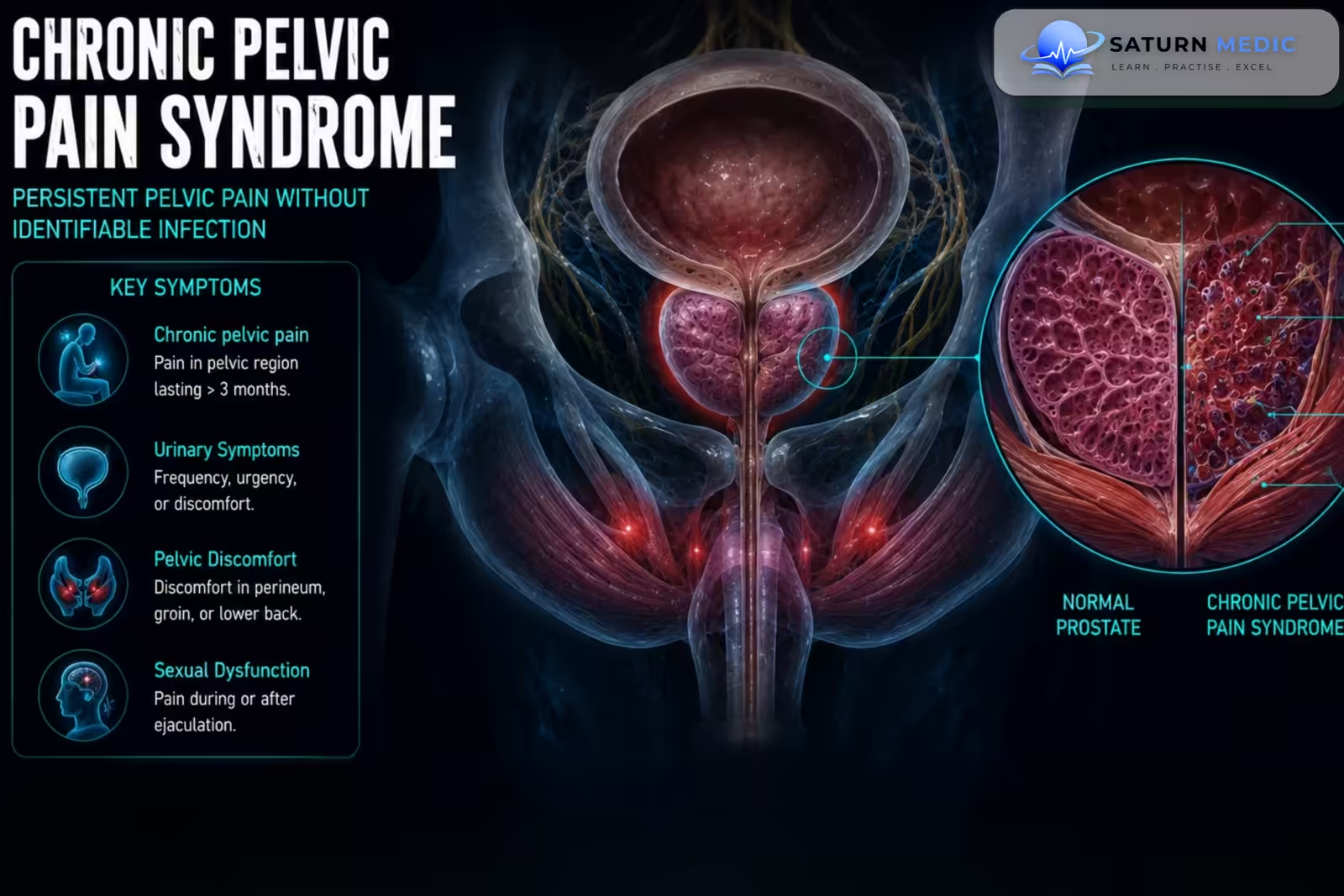
Chronic Pelvic Pain Syndrome (CPPS) is a long-lasting pelvic or genitourinary pain condition, usually lasting at least 3 months, without evidence of an active bacterial infection that explains the symptoms. In men, it is commonly classified as chronic prostatitis/chronic pelvic pain syndrome (CP/CPPS)
Also called
ICD-10
Specialty
Onset
Reviewed
-
OverviewOverview
-
Etiology & Risk FactorsEtiology & Risk Factors
-
PathophysiologyPathophysiology
-
Clinical PresentationClinical Presentation
-
History TakingHistory Taking
-
Physical ExaminationPhysical Examination
-
InvestigationsInvestigations
-
DiagnosisDiagnosis
-
ManagementManagement
-
ComplicationsComplications
-
PrognosisPrognosis
-
Key Points / Clinical PearlsKey Points / Clinical Pearls
Overview
-Chronic Pelvic Pain Syndrome (CPPS) is the most common prostatitis syndrome. It causes persistent or recurrent pain in the pelvis, perineum, penis, testes, or lower abdomen and may be associated with urinary and sexual symptoms.
CPPS is commonly divided into:
- Inflammatory CPPS (NIH Category IIIA): inflammatory cells are present in prostatic or urinary specimens.
- Non-inflammatory CPPS (NIH Category IIIB): inflammatory cells are not significantly increased.
Etiology & Risk Factors
-Etiology
–The exact cause of Chronic Pelvic Pain Syndrome (CPPS) is not fully understood. Possible mechanisms include:
- Pelvic floor muscle dysfunction
- Previous infection or inflammation
- Peripheral and central nervous system sensitization
- Neuropathic pain mechanisms
- Psychosocial stress
- Urinary dysfunction
CPPS is not usually caused by an ongoing bacterial infection.
-Risk Factors
- Previous urinary or genital infection
- Pelvic floor dysfunction
- Chronic stress
- Previous episodes of pelvic pain
- Urinary tract symptoms
Pathophysiology
Triggering inflammation, injury, or stress → pelvic floor dysfunction and peripheral nerve sensitization → persistent pain signaling → central nervous system sensitization → chronic pelvic pain → urinary, sexual, and psychological symptoms → ongoing pain cycle
Clinical Presentation
–Symptoms
- Perineal pain
- Suprapubic pain
- Penile pain
- Testicular or scrotal pain
- Pain during or after ejaculation
- Dysuria
- Urinary frequency
- Urinary urgency
- Weak urinary stream
-Signs:
Physical examination may be normal.
Possible findings include:
- Pelvic floor muscle tenderness
- Pelvic floor muscle spasm or increased tone
- Perineal tenderness
- Prostatic tenderness in some patients
History Taking
-Ask about:
- Duration and location of pain
- Pain during urination
- Pain during or after ejaculation
- Urinary frequency or urgency
- Weak stream or hesitancy
- Sexual dysfunction
- Previous Urinary Tract Infection (UTI)
- Previous prostatitis
- Sexually transmitted infection risk when relevant
- Previous pelvic trauma or surgery
Physical Examination
-General Examination
- Assess general health
- Look for fever or systemic illness
- Assess psychological impact when clinically relevant
-System-Specific Examination:
- Abdominal and suprapubic examination
- External genital examination
- Assess pelvic floor tenderness or increased muscle tone
- Gentle digital rectal examination when appropriate
Investigations
Biochemistry / Specific Tests
Urinalysis
Urine culture to exclude bacterial Urinary Tract Infection (UTI)
Sexually transmitted infection testing when clinically indicated
Additional tests should be guided by symptoms rather than performed routinely.
-Imaging
Not routinely required.
Ultrasound or other imaging may be considered when symptoms suggest another structural abnormality.
-Special / Confirmatory Tests
There is no single confirmatory test for Chronic Pelvic Pain Syndrome (CPPS).
The diagnosis is based on chronic symptoms and exclusion of other causes.
The NIH Chronic Prostatitis Symptom Index (NIH-CPSI) may be used to assess symptom severity and response to treatment.
Diagnosis
-Chronic Pelvic Pain Syndrome (CPPS) is diagnosed clinically when there is:
Pelvic or genitourinary pain lasting at least 3 months → associated urinary or sexual symptoms may be present → no evidence of an active bacterial infection or another condition explaining the symptoms.
-The diagnostic approach should exclude:
- Bacterial prostatitis
- Urinary Tract Infection (UTI)
- Sexually transmitted infections
- Urethral stricture
Management
1. Definitive Treatment
There is no single definitive treatment for all patients with Chronic Pelvic Pain Syndrome (CPPS).
Management is individualized and often multimodal, targeting the patient’s main symptoms and contributing factors.
2. Medical Treatment
Depending on the clinical phenotype:
Alpha-blockers for significant voiding symptoms
Nonsteroidal anti-inflammatory drugs (NSAIDs) or other analgesics
Neuropathic pain medication in selected patients
Short, targeted antibiotic treatment only when bacterial infection is suspected
Treatment for associated sexual dysfunction when appropriate
Long-term antibiotics are generally not useful when repeated investigations show no bacterial infection.
3. Surgical / Procedural Treatment
No routine surgical treatment.
Procedures are only considered when another structural cause is identified.
4. Supportive Management
Pelvic floor physiotherapy
Pelvic floor muscle relaxation
Regular physical activity
Stress management
Sleep optimization
Complications
- Chronic pain
- Reduced quality of life
- Sexual dysfunction
- Erectile dysfunction
- Sleep disturbance
- Anxiety
- Depressive symptoms
Prognosis
The prognosis of Chronic Pelvic Pain Syndrome (CPPS) is variable. Symptoms may fluctuate, improve gradually, or recur over time. Although the condition can significantly affect quality of life, a multimodal and individualized approach can improve pain, urinary symptoms, sexual function, and daily functioning.
Key Points / Clinical Pearls
- Chronic Pelvic Pain Syndrome (CPPS) causes pelvic or genitourinary pain lasting at least 3 months.
- It is commonly classified as chronic prostatitis/chronic pelvic pain syndrome.
- CPPS is not usually caused by an ongoing bacterial infection.
- Perineal pain and pain during or after ejaculation are common symptoms.
- Urinary symptoms may accompany the pain.
- Pelvic floor dysfunction is an important contributing factor.
- Physical examination may be completely normal.
- Urinalysis and urine culture help exclude infection.
- There is no single confirmatory test for CPPS.
- CPPS is primarily a diagnosis of exclusion.
- The NIH-CPSI can help assess symptom severity.
- European Association of Urology (EAU). EAU Guidelines on Chronic Pelvic Pain .
- American Urological Association (AUA). Male Chronic Pelvic Pain: AUA Guideline .
- Krieger JN, Nyberg L Jr, Nickel JC. NIH Consensus Definition and Classification of Prostatitis. JAMA. 1999;282(3):236-237. JAMA .
- Franco JVA, Turk T, Jung JH, et al. Non-Pharmacological Interventions for Treating Chronic Prostatitis/Chronic Pelvic Pain Syndrome. Cochrane Database Syst Rev. 2018. Cochrane Library .
- Nickel JC, Shoskes D, Wang Y, et al. How Does the UPOINT Phenotype System Guide Management of Chronic Prostatitis/Chronic Pelvic Pain Syndrome? World J Urol. 2013;31(4):927-932. PubMed .
- National Library of Medicine (NIH). Chronic Prostatitis and Chronic Pelvic Pain Syndrome . StatPearls.