
Clinical Subject Page

Varicocele
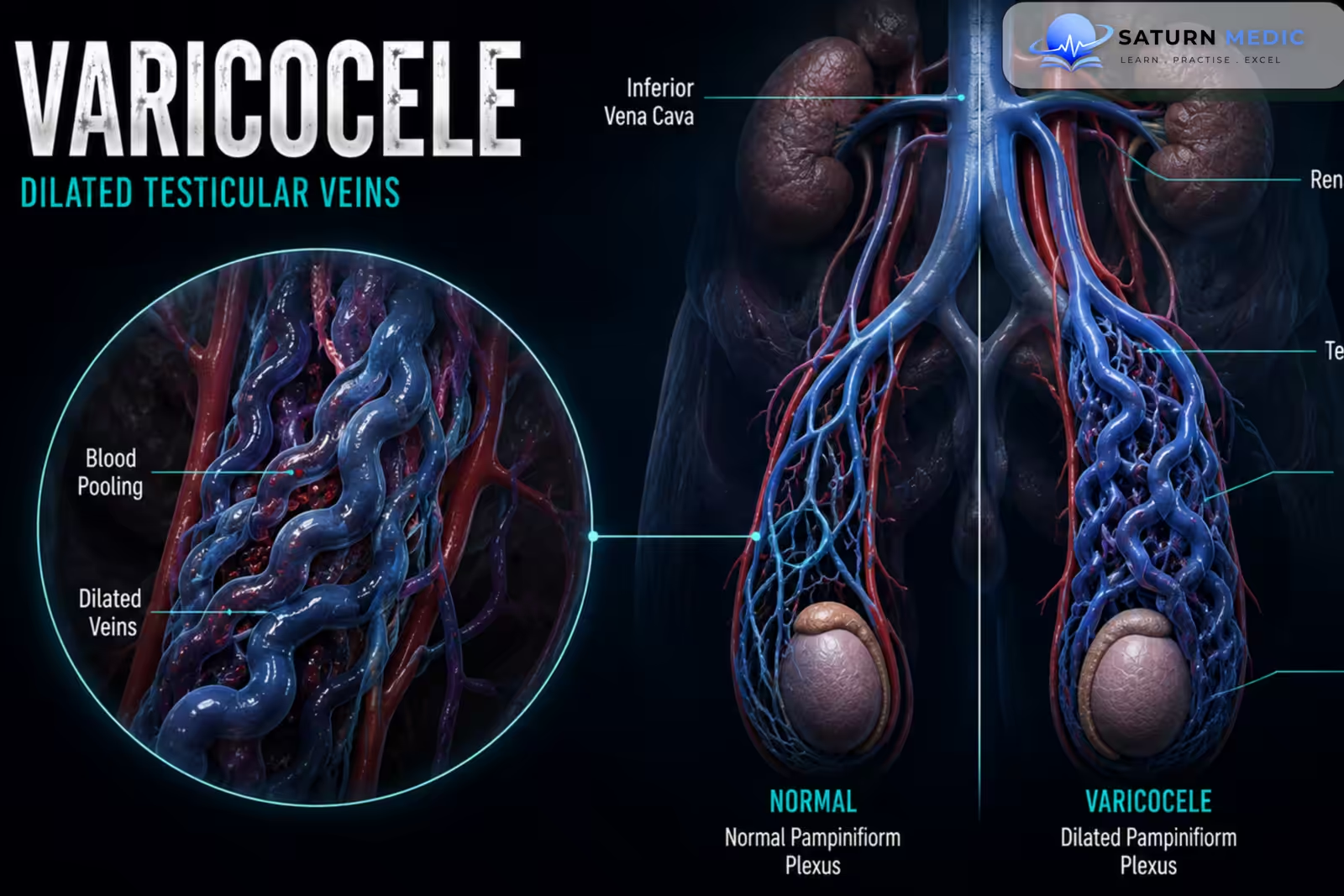
Varicocele is an abnormal dilatation of the pampiniform plexus of veins within the spermatic cord. It commonly occurs on the left side and may cause scrotal discomfort, testicular atrophy, or impaired fertility
Also called
ICD-10
Specialty
Onset
Reviewed
-
OverviewOverview
-
Etiology & Risk FactorsEtiology & Risk Factors
-
PathophysiologyPathophysiology
-
Clinical PresentationClinical Presentation
-
History TakingHistory Taking
-
Physical ExaminationPhysical Examination
-
InvestigationsInvestigations
-
DiagnosisDiagnosis
-
ManagementManagement
-
ComplicationsComplications
-
PrognosisPrognosis
-
Key Points / Clinical PearlsKey Points / Clinical Pearls
Overview
-A Varicocele develops because of impaired venous drainage and reflux within the testicular veins.
-It is:
- More common on the left side
- Often asymptomatic
- A common potentially correctable cause of male infertility
- Associated with impaired testicular growth in some adolescents
-Varicoceles are commonly graded clinically:
- Grade I: palpable only during the Valsalva maneuver
- Grade II: palpable at rest
- Grade III: visible and palpable
Etiology & Risk Factors
-Etiology
–Most cases are primary (idiopathic) and result from venous valve incompetence and increased venous pressure within the pampiniform plexus.
-Secondary Varicocele may result from obstruction of testicular venous drainage.
-Risk Factors
- Adolescence and young adulthood
- Anatomical predisposition to left-sided venous drainage
- Family history
- Conditions causing increased intra-abdominal pressure
- Venous obstruction
Pathophysiology
Venous valve incompetence or impaired venous drainage → retrograde blood flow → increased pressure in the pampiniform plexus → venous dilatation → increased scrotal temperature and oxidative stress → impaired spermatogenesis ± reduced testicular growth
Clinical Presentation
–Symptoms
Many patients are asymptomatic.
Possible symptoms include:
- Dull or aching scrotal pain
- Feeling of heaviness
- Discomfort that worsens with prolonged standing or exertion
- Symptoms that improve when lying down
- Infertility
-Signs:
- Palpable “bag of worms” appearance
- Dilated scrotal veins
- Usually left-sided
- More prominent while standing or during the Valsalva maneuver
- Reduced testicular volume in some patients
History Taking
-Ask about:
- Scrotal pain or heaviness
- Duration and progression of symptoms
- Relationship of symptoms to standing or exercise
- Relief when lying down
- Fertility history
- Previous semen analysis
- Previous scrotal trauma or surgery
- Childhood or adolescent testicular growth
- Urinary symptoms
Physical Examination
-General Examination
- Assess for signs suggesting an underlying abdominal or retroperitoneal disorder when clinically indicated
-System-Specific Examination:
- Examine the scrotum while standing and supine
- Palpate the spermatic cord
- Perform the Valsalva maneuver
- Assess Varicocele grade
- Compare testicular size and consistency
- Assess whether the Varicocele reduces when supine
Investigations
-Biochemistry / Specific Tests
Semen analysis when infertility is a concern
Hormonal testing only when clinically indicated, particularly if there are features of hypogonadism or impaired testicular function
-Imaging
Scrotal Doppler ultrasound can confirm venous dilatation and reflux when the diagnosis is uncertain.
Further abdominal or retroperitoneal imaging may be required when a secondary cause is suspected.
-Special / Confirmatory Tests
Physical examination is usually sufficient for diagnosing a clinically apparent disease.
Diagnosis
–Diagnosis is usually clinical, based on:
- Typical “bag of worms” appearance on palpation
- Increased prominence while standing or during Valsalva
- Reduction in size when lying down
-Scrotal Doppler ultrasound can confirm reflux and assess the testes when necessary.
Semen analysis is important when evaluating infertility.
Management
1. First-Line / Emergency Management
There is no routine emergency treatment.
2. Definitive Treatment
Treatment is considered for patients with:
Infertility and a clinically significant disease with abnormal semen parameters
Persistent pain despite conservative treatment
Testicular atrophy or impaired testicular growth in adolescents
3. Medical Treatment
There is no medication that corrects the underlying venous abnormality.
For mild symptoms:
Simple analgesics or NSAIDs when appropriate
Scrotal support
4. Surgical / Procedural Treatment
Treatment options include:
Microsurgical varicocelectomy
Laparoscopic varicocelectomy
Percutaneous embolization
5. Supportive Management
Avoid activities that significantly worsen discomfort
Simple analgesia when appropriate
Fertility assessment when relevant
Complications
- Chronic scrotal discomfort
- Testicular atrophy
- Impaired testicular growth
- Abnormal semen parameters
- Subfertility
- Infertility
- Reduced testosterone production in some patients
- Recurrence after treatment
- Hydrocele after surgical repair
Prognosis
The prognosis is generally good. Many patients remain asymptomatic and require no treatment. In appropriately selected patients, Varicocele repair can improve scrotal pain, testicular growth, and semen parameters. Fertility outcomes vary depending on the severity and presence of other causes of infertility
Key Points / Clinical Pearls
- Varicocele is abnormal dilatation of the pampiniform plexus.
- It is more common on the left side.
- Many Varicoceles are asymptomatic.
- A dull, aching scrotal discomfort may worsen with standing or exertion.
- The classic examination finding is a “bag of worms.”
- Varicoceles usually become more prominent during the Valsalva maneuver.
- A typical Varicocele often reduces when the patient lies down.
- Varicocele can impair spermatogenesis and contribute to male infertility.
- Testicular atrophy or impaired growth may occur.
- Physical examination is usually sufficient for diagnosis.
- Scrotal Doppler ultrasound is useful when the diagnosis is uncertain.
- Semen analysis is important when infertility is being evaluated.
- European Association of Urology (EAU). EAU Guidelines on Sexual and Reproductive Health .
- World Health Organization (WHO). WHO Laboratory Manual for the Examination and Processing of Human Semen .
- Baazeem A, Belzile E, Ciampi A, et al. Varicocele and Male Factor Infertility Treatment: A New Meta-Analysis and Review of the Role of Varicocele Repair. Eur Urol. 2011;60(4):796-808. European Urology .
- Agarwal A, Hamada A, Esteves SC. Insight Into Oxidative Stress in Varicocele-Associated Male Infertility: Part 1. Nat Rev Urol. 2012;9(12):678-690. Nature Reviews Urology .
- American Urological Association (AUA) and American Society for Reproductive Medicine (ASRM). Diagnosis and Treatment of Infertility in Men: AUA/ASRM Guideline .
- National Library of Medicine (NIH). Varicocele . StatPearls.