

Clinical Subject Page
Subacute (De Quervain) Thyroiditis
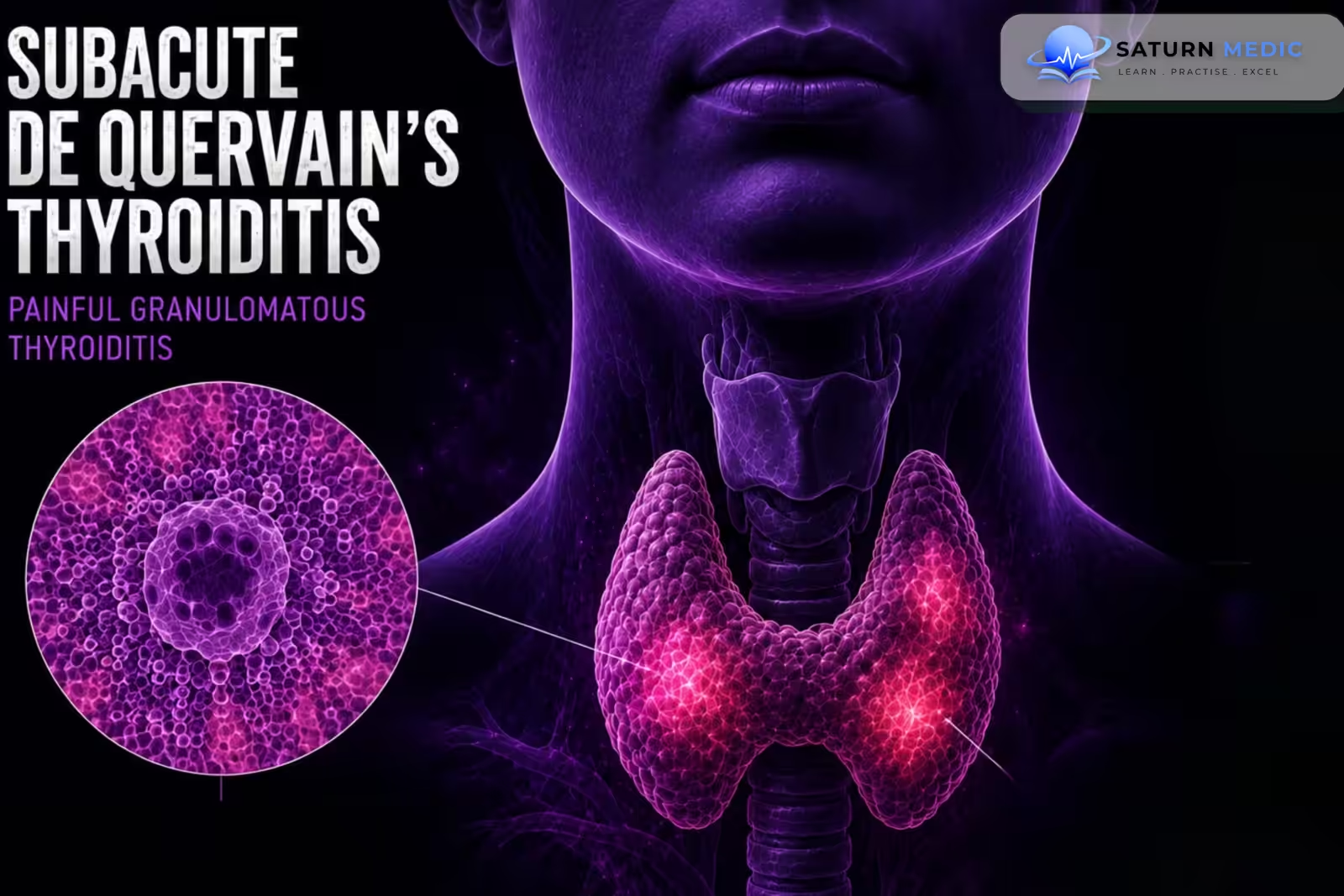
Subacute Thyroiditis is a self-limited inflammatory disorder of the thyroid gland, usually triggered by a viral infection or post-viral inflammatory response. It causes destruction of thyroid follicular cells, leading to a temporary release of stored thyroid hormones followed by a possible hypothyroid phase
Also called
ICD-10
Specialty
Onset
Reviewed
-
OverviewOverview
-
Etiology & Risk FactorsEtiology & Risk Factors
-
PathophysiologyPathophysiology
-
Clinical PresentationClinical Presentation
-
History TakingHistory Taking
-
Physical ExaminationPhysical Examination
-
InvestigationsInvestigations
-
DiagnosisDiagnosis
-
ManagementManagement
-
ComplicationsComplications
-
PrognosisPrognosis
-
Key Points / Clinical PearlsKey Points / Clinical Pearls
Overview
–Subacute Thyroiditis is the most common cause of painful thyroid inflammation
–It typically occurs after an upper respiratory viral infection and presents with anterior neck pain, fever,
and symptoms of thyrotoxicosis due to leakage of preformed thyroid hormones.
–Unlike Graves Disease, the thyroid gland is not overproducing hormones; instead, damaged thyroid cells release stored hormones.
Etiology & Risk Factors
-Etiology of Subacute Thyroiditis:
The exact cause is not fully understood, but it is believed to be a post-viral inflammatory reaction causing immune-mediated destruction of thyroid tissue.
-Commonly associated viral infections include:
• Coxsackie virus
• Influenza virus
• Adenovirus
• Mumps virus
• Other upper respiratory viral infections
-Risk Factors
• Recent viral upper respiratory infection
• Female sex
• Middle age
• Seasonal viral outbreaks
• Recent viral illness
• Postpartum state may increase risk of thyroid inflammation, although postpartum thyroiditis is a separate condition
Pathophysiology
Viral infection or post-viral immune response
→ Activation of inflammatory immune cells
→ Granulomatous inflammation of thyroid tissue
→ Destruction of thyroid follicular cells
→ Release of stored thyroid hormones (T3 and T4)
→ Temporary thyrotoxicosis→ Depletion of thyroid hormone stores
→ Reduced hormone production
→ Temporary hypothyroid phase
→ Recovery of thyroid function in most patients
Clinical Presentation
-Symptoms of Subacute Thyroiditis:
• Anterior neck pain
• Pain radiating to jaw or ear
• Fever
• Fatigue
• Malaise
• Symptoms of hyperthyroidism:
• Palpitations
• Heat intolerance
• Sweating
• Tremor
-Signs of Subacute Thyroiditis:
• Tender enlarged thyroid gland
• Fever
• Tachycardia
• Signs of thyrotoxicosis:
• Tremor
• Sweating
• Hyperactive reflexes
History Taking
-Ask about:
• Recent viral infection
• Sore throat or upper respiratory symptoms
• Onset and location of neck pain
• Radiation of pain to jaw or ears
• Fever
• Fatigue
• Palpitations
• Heat intolerance
• Sweating
• Tremor
• Weight changes
• Bowel habit changes
Physical Examination
-General Examination
• Measure temperature
• Assess pulse rate
• Assess weight changes
• Look for signs of thyrotoxicosis
• Assess general appearance
-System-Specific Examination:
-Thyroid Examination:
• Enlarged thyroid gland
• Marked thyroid tenderness
• Pain on palpation
• Firm thyroid consistency
Investigations
-Biochemistry / Specific Tests
-Thyroid Function Tests
Early phase:
• ↓ TSH
• ↑ Free T4
• ↑ Free T3
Later hypothyroid phase:
• ↑ TSH
• ↓ Free T4
-Inflammatory Markers
Usually elevated:
• Erythrocyte sedimentation rate (ESR)
• C-reactive protein (CRP)
-Thyroid Antibodies
Usually:
• TPO antibodies negative or low
• TSH receptor antibodies negative
This helps distinguish it from autoimmune hyperthyroidism.
-Imaging
Radioactive Iodine Uptake Scan
Characteristic finding:
• Low or absent radioactive iodine uptake
-Reason:
The thyroid is releasing stored hormone rather than actively producing new hormone.
Diagnosis
Diagnosis of Subacute Thyroiditis is established by:
• Painful tender thyroid
• Recent viral illness
• Thyrotoxic phase with low TSH and high thyroid hormones
• Elevated inflammatory markers
• Low radioactive iodine uptake
Management
1. First-Line Treatment
- NSAIDs for mild–moderate thyroid pain and inflammation
- Ibuprofen
- Naproxen
- Beta-blocker (e.g., propranolol) if significant thyrotoxic symptoms occur.
2. Severe or NSAID-Resistant Pain
- Corticosteroids (e.g., prednisone) for severe pain or inadequate response to NSAIDs.
3. Hypothyroid Phase
- Levothyroxine may be used temporarily if the hypothyroid phase is symptomatic or significant.
4. Monitoring & Supportive Care
- Monitor TSH and free T4 during the hyperthyroid and hypothyroid phases.
- Rest and adequate analgesia.
- Reassure the patient that the condition is usually self-limiting.
- Continue follow-up until thyroid function normalizes.
5. Surgery
- Not routinely indicated.
- Consider further evaluation only if another thyroid pathology or persistent structural abnormality is suspected.
Complications
• Temporary thyrotoxicosis
• Temporary hypothyroidism
• Persistent hypothyroidism (small proportion)
• Recurrent thyroiditis (rare)
• Thyroid pain and inflammation
Prognosis
-The prognosis of Subacute Thyroiditis is generally excellent.
–Most patients recover normal thyroid function within months. A minority may develop permanent
hypothyroidism and require long-term thyroid hormone replacement.
-Prognosis depends on:
• Severity of inflammation
• Extent of thyroid damage
• Development of persistent hypothyroidism
Key Points / Clinical Pearls
• Subacute (De Quervain) Thyroiditis is a painful inflammatory thyroid disorder.
• It is usually triggered by a viral infection.
• It causes thyroid follicular destruction and hormone leakage.
• Patients often present with anterior neck pain and fever.
• Thyrotoxicosis occurs because stored hormones are released, not because of increased synthesis.
• ESR and CRP are usually elevated.
• Radioactive iodine uptake is low.
• Antithyroid drugs are not indicated.
• NSAIDs are first-line therapy for mild cases.
• Corticosteroids are used for severe inflammation.
• Beta-blockers control thyrotoxic symptoms.
- Pearce EN, Farwell AP, Braverman LE. Thyroiditis. N Engl J Med. 2003;348(26):2646-2655. New England Journal of Medicine .
- Stasiak M, Tymoniuk B, Stasiak B, Lewinski A. The Risk of Recurrence of Subacute Thyroiditis Is Higher After Treatment With Glucocorticoids Than With Nonsteroidal Anti-Inflammatory Drugs. Endokrynol Pol. 2019;70(1):11-17.
- Volpé R. The Management of Subacute (De Quervain's) Thyroiditis. Thyroid. 1993;3(3):253-255.
- Ross DS, Burch HB, Cooper DS, et al. 2016 American Thyroid Association Guidelines for Diagnosis and Management of Hyperthyroidism and Other Causes of Thyrotoxicosis. Thyroid. 2016;26(10):1343-1421. Thyroid .
- National Library of Medicine (NIH). Subacute Thyroiditis . Endotext.
- National Library of Medicine (NIH). Subacute Thyroiditis . Endotext.