

Clinical Subject Page
Thyroid Storm
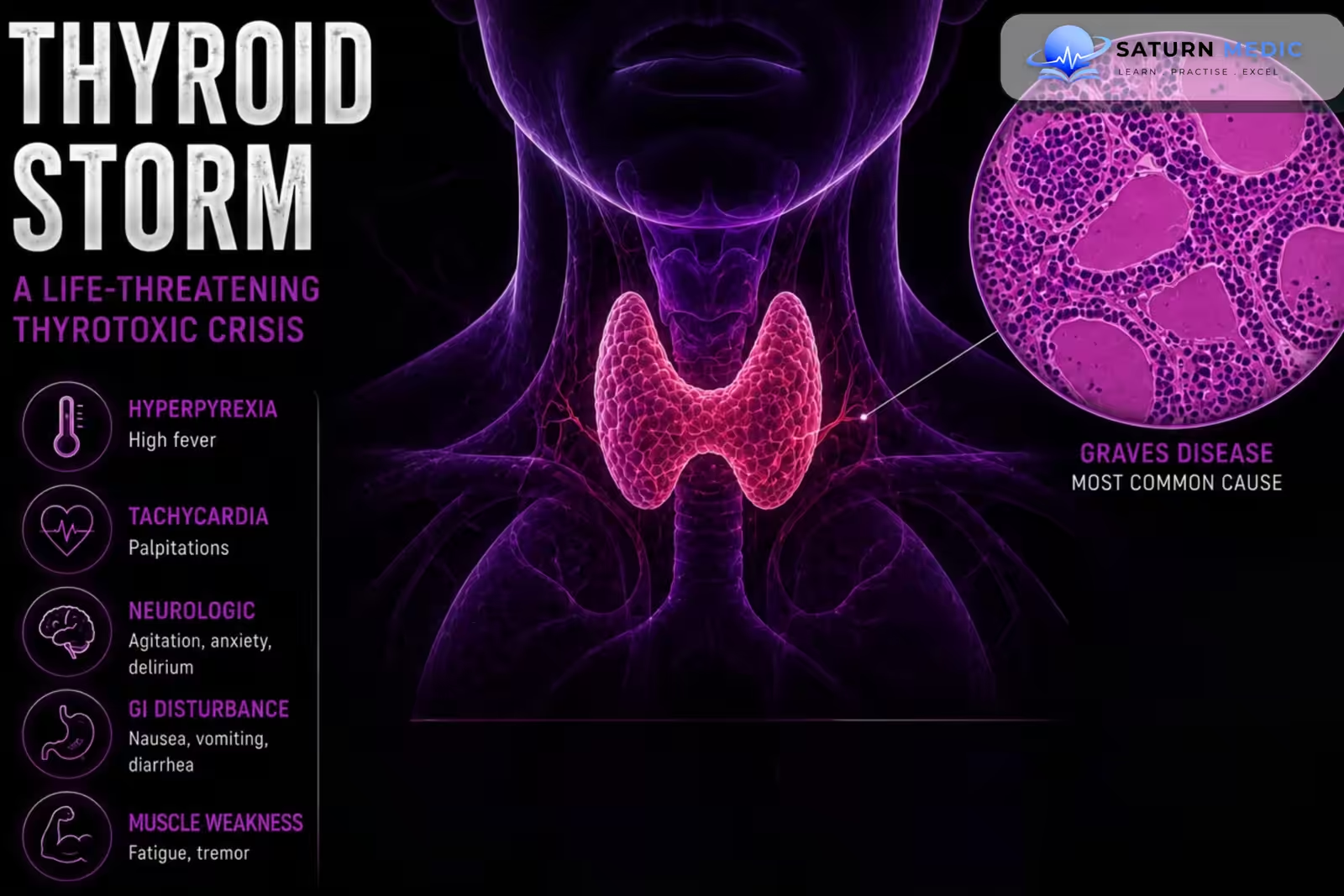
Thyroid Storm is a life-threatening extreme manifestation of thyrotoxicosis caused by severe excess thyroid hormone activity, resulting in multisystem decompensation involving the cardiovascular, neurological, and gastrointestinal systems
Also called
ICD-10
Specialty
Onset
Reviewed
-
OverviewOverview
-
Etiology & Risk FactorsEtiology & Risk Factors
-
PathophysiologyPathophysiology
-
Clinical PresentationClinical Presentation
-
History TakingHistory Taking
-
Physical ExaminationPhysical Examination
-
InvestigationsInvestigations
-
DiagnosisDiagnosis
-
ManagementManagement
-
ComplicationsComplications
-
PrognosisPrognosis
-
Key Points / Clinical PearlsKey Points / Clinical Pearls
Overview
–Thyroid Storm is a rare but potentially fatal complication of uncontrolled hyperthyroidism
-It is characterized by an acute exaggeration of thyroid hormone effects causing high fever, severe tachycardia, altered mental status, and organ dysfunction
-The most common underlying cause is untreated or poorly controlled Graves Disease.
Etiology & Risk Factors
-Etiology:
Thyroid Storm occurs when a patient with hyperthyroidism develops sudden worsening of thyroid
hormone effects due to increased physiological stress.
-Common underlying causes:
• Graves Disease
• Toxic multinodular goiter
• Toxic adenoma
-Risk Factors
• Untreated or poorly controlled hyperthyroidism
• Graves Disease
• Sudden withdrawal of antithyroid medications
• Infection (common trigger)
• Surgery
• Trauma
• Myocardial infarction
Pathophysiology
-Underlying hyperthyroidism
→ Triggering event (infection, surgery, trauma, medication withdrawal)
→ Sudden increase in thyroid hormone effects
→ ↑ Metabolic activity + ↑ Adrenergic sensitivity
→ ↑ Heat production + ↑ Oxygen consumption→ Cardiovascular stress → Tachycardia + arrhythmias + heart failure
→ CNS stimulation → Agitation + delirium + altered consciousness
→ Gastrointestinal dysfunction → Vomiting + diarrhea + dehydration
→ Multisystem failure → Thyroid Storm
Clinical Presentation
-Symptoms:
• High fever
• Severe sweating
• Palpitations
• Shortness of breath
• Anxiety
• Agitation
• Confusion
• Weakness
• Nausea and vomiting
-Signs:
• High temperature
• Marked tachycardia
• Hypertension initially, followed by hypotension in severe cases
• Atrial fibrillation
• Tremor
• Agitation or delirium
• Dehydration
History Taking
-Ask about:
• Previous diagnosis of hyperthyroidism
• Graves Disease history
• Recent medication changes
• Stopping antithyroid medications
• Symptoms of hyperthyroidism:
• Weight loss
• Heat intolerance
• Tremor
• Palpitations
• Fever symptoms
• Recent infection
• Recent surgery or trauma
Physical Examination
-General Examination
• Assess airway, breathing, and circulation
• Measure temperature
• Measure heart rate
• Measure blood pressure
• Assess hydration status
• Assess mental status
• Look for agitation or confusion
-System-Specific Examination:
-Cardiovascular
• Severe tachycardia
• Irregular rhythm due to atrial fibrillation
• Signs of heart failure:
• Peripheral edema
• Raised jugular venous pressure
• Lung congestion
-Neurological
• Anxiety
• Agitation
• Delirium
• Reduced consciousness
• Coma in severe cases
Investigations
-Biochemistry / Specific Tests
-Thyroid Function Tests
Typical findings:
• ↓ TSH
• ↑ Free T4
• ↑ Free T3
However, hormone levels may overlap with uncomplicated hyperthyroidism.
-Electrolytes
May show:
• Dehydration-related abnormalities
• Hyponatremia in severe cases
-Liver Function Tests
May show abnormalities due to:
• Thyroid hormone effects
• Drug-related toxicity
• Multiorgan dysfunction
-Glucose
May show:
• Hyperglycemia due to stress response
-Inflammatory Markers
May help identify triggering infection:
• C-reactive protein (CRP)
• Other infection markers when indicated
Diagnosis
-Thyroid Storm is diagnosed clinically based on:
• History of hyperthyroidism or thyrotoxicosis
• Acute deterioration
• Severe systemic manifestations
Management
1. First-Line / Emergency Management
Thyroid Storm
-
Admit to intensive care.
-
Stabilize airway, breathing, and circulation.
-
Give oxygen and IV fluids as needed.
-
Control fever.
-
Identify and treat the precipitating cause.
2. Definitive Treatment
Rapidly reduce thyroid hormone effects by:
-
Blocking hormone synthesis.
-
Blocking hormone release.
-
Reducing peripheral conversion and effects of thyroid hormones.
3. Medical Treatment
-
Propranolol / Esmolol: control tachycardia and adrenergic symptoms.
-
Propylthiouracil (PTU) / Methimazole: block thyroid hormone synthesis.
-
Iodine: given after antithyroid medication to reduce hormone release.
-
Hydrocortisone: reduces peripheral conversion of thyroxine (T4) to triiodothyronine (T3) and supports possible adrenal insufficiency.
-
Supportive treatment: cooling, IV fluids, electrolyte correction, and treatment of the trigger.
4. Surgical / Procedural Treatment
Emergency thyroidectomy may be considered when:
-
Medical treatment fails.
-
Antithyroid drugs are contraindicated.
-
Severe disease persists despite treatment.
5. Supportive Management
-
Continuous cardiac monitoring
-
Frequent vital-sign assessment
-
Treat heart failure if present
Complications
• Heart failure
• Arrhythmias (especially atrial fibrillation)
• Shock
• Respiratory failure
• Multiorgan dysfunction
• Coma
• Death
Prognosis
-Thyroid Storm has significant mortality risk if untreated, but outcomes improve greatly with rapid
recognition and aggressive management.
-Prognosis depends on:
• Speed of diagnosis and treatment
• Patient age
• Presence of heart failure or organ dysfunction
• Underlying cause
• Response to therapy
Key Points / Clinical Pearls
• Thyroid Storm is a life-threatening complication of severe thyrotoxicosis.
• It is most commonly caused by uncontrolled Graves Disease.
• Common triggers include infection, surgery, trauma, and stopping antithyroid medication.
• Diagnosis is mainly clinical.
• Classic features include fever, tachycardia, CNS changes, and gastrointestinal symptoms.
• Thyroid hormone levels may not distinguish thyroid storm from uncomplicated hyperthyroidism.
• Treatment requires rapid control of thyroid hormone effects.
• Beta-blockers control sympathetic symptoms.
• Antithyroid drugs block new hormone synthesis.
- Ross DS, Burch HB, Cooper DS, et al. 2016 American Thyroid Association Guidelines for Diagnosis and Management of Hyperthyroidism and Other Causes of Thyrotoxicosis. Thyroid. 2016;26(10):1343-1421. Thyroid .
- Satoh T, Isozaki O, Suzuki A, et al. 2016 Guidelines for the Management of Thyroid Storm From the Japan Thyroid Association and Japan Endocrine Society. Endocr J. 2016;63(12):1025-1064. Endocrine Journal .
- Akamizu T. Thyroid Storm: A Japanese Perspective. Thyroid. 2018;28(1):32-40. Thyroid .
- Idrose AM. Acute and Emergency Care for Thyrotoxicosis and Thyroid Storm. Acute Med Surg. 2015;2(3):147-157. Acute Medicine & Surgery .
- Chiha M, Samarasinghe S, Kabaker AS. Thyroid Storm: An Updated Review. J Intensive Care Med. 2015;30(3):131-140.
- National Library of Medicine (NIH). Thyroid Storm . StatPearls.