

Clinical Subject Page
Crohn’s Disease
Crohn’s Disease is a chronic inflammatory bowel disease (IBD) that causes inflammation in the digestive tract. It can affect any part of the gastrointestinal tract, from the mouth to the anus, but most commonly affects the end of the small intestine and the beginning of the large intestine.
Also called
Terminal ileitis (If confined to terminal ileum)
ICD-10
K50.90
Specialty
Gastroenterology
Onset
Chronic
Reviewed
July 2026
On This Page
-
OverviewOverview
-
Etiology & Risk FactorsEtiology & Risk Factors
-
PathophysiologyPathophysiology
-
Clinical PresentationClinical Presentation
-
History TakingHistory Taking
-
Physical ExaminationPhysical Examination
-
InvestigationsInvestigations
-
DiagnosisDiagnosis
-
ManagementManagement
-
ComplicationsComplications
-
PrognosisPrognosis
-
Key Points / Clinical PearlsKey Points / Clinical Pearls
Overview of Crohn’s Disease
- Crohn’s disease is caused by abnormal immune system activity, although the exact cause is unknown.
- Some people may also develop problems outside the digestive system, such as inflammation of the eyes, joints, or skin.
Teaching point
Crohn’s disease is long-term but manageable with proper treatment and regular follow-up.
Etiology & Risk Factors
-Etiology of Crohn’s Disease
- The exact cause of Crohn’s disease is unknown.
- It is believed to result from abnormal immune system activity and an imbalance of normal gut bacteria, leading to chronic inflammation.
-Risk Factors for Crohn’s Disease
- Family history of Crohn’s disease
- Genetic predisposition (e.g., certain inherited genes)
- Smoking tobacco (the most important modifiable risk factor)
Pathophysiology of Crohn’s Disease
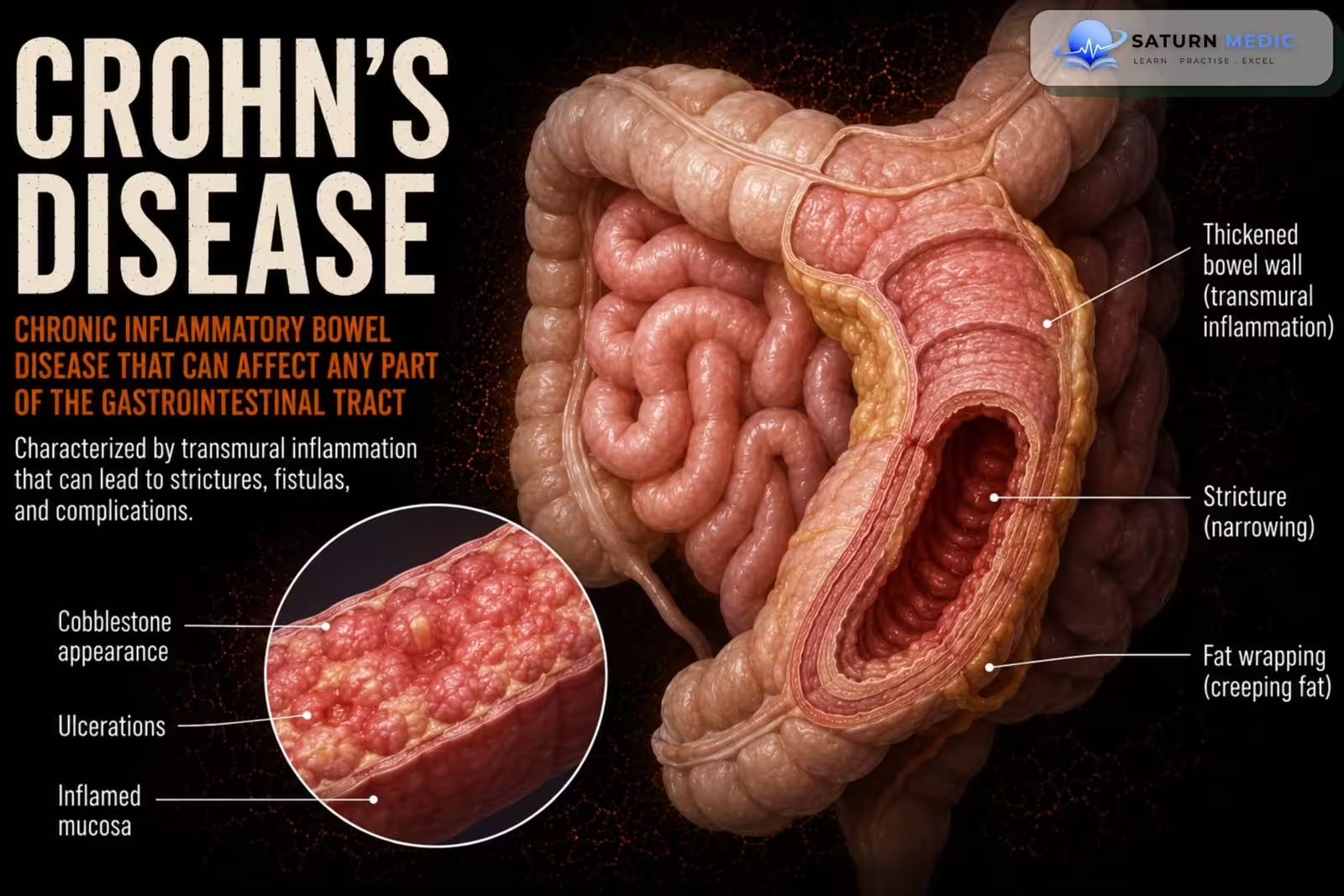
Immune dysregulation → Chronic intestinal inflammation → Edema + ulcers + tissue damage → Transmural (full-thickness) bowel inflammation → Fibrosis and scarring → Strictures/intestinal obstruction → Deep fissures → Abscess formation → Fistula formation
Clinical Presentation of Crohn’s Disease
- Chronic diarrhea
- Abdominal pain (usually in the right lower abdomen)
- Weight loss
- Fatigue
- Low-grade fever
- Loss of appetite
- Malabsorption (may cause anemia and poor growth in children)
- Perianal disease (fistulas, abscesses, or lesions)
- Blood in stool (less common)
- Extraintestinal manifestations:
- Joint pain/arthritis
- Eye inflammation (uveitis, episcleritis)
- Skin lesions (erythema nodosum, pyoderma gangrenosum)
- Mouth ulcers (oral aphthae)
Important Note
Smoking is the most important modifiable risk factor and can worsen the disease.
History Taking
-
Ask about:
- When did your symptoms start?
- How often do you have diarrhea?
- Do you have abdominal pain? Where is it located?
- Have you noticed blood in your stool?
- Have you lost weight recently?
- Do you have fever or fatigue?
- Have you lost your appetite?
- Do you have nausea or vomiting?
- Do you have pain or drainage around the anus?
- Do you have mouth ulcers?
- Do you have joint pain, eye redness, or skin rashes?
- Do you smoke?
- Does anyone in your family have Crohn’s disease or inflammatory bowel disease?
- Have you had similar symptoms before?
- What medications are you taking?
Physical Examination
- Low-grade fever
- Weight loss or signs of malnutrition
- Right lower quadrant (RLQ) abdominal tenderness
- Palpable abdominal mass (sometimes)
- Perianal lesions (fissures, fistulas, abscesses, skin tags)
- Signs of dehydration (if severe diarrhea)
- Mouth ulcers (aphthous ulcers)
- Joint swelling or tenderness
- Eye redness/inflammation
- Skin lesions (erythema nodosum, pyoderma gangrenosum)
Investigations of Crohn’s Disease
-Laboratory tests
- CBC – anemia, infection
- CRP and ESR – assess inflammation
- Stool tests – rule out infection
- Fecal calprotectin – detects intestinal inflammation
-Endoscopy
- Ileocolonoscopy with biopsy – gold standard to confirm the diagnosis
-Imaging
- MR enterography (preferred) – assesses small bowel involvement
- CT abdomen – if complications (e.g., abscess, perforation) are suspected
-Biopsy findings
-
- Transmural inflammation
- Noncaseating granulomas (when present)
Diagnosis of Crohn’s Disease
- Diagnosis is based on a combination of:
- Clinical symptoms (chronic diarrhea, abdominal pain, weight loss)
- Laboratory tests: ↑ CRP, ↑ fecal calprotectin
- Ileocolonoscopy with biopsy (gold standard)
- Endoscopic findings:
- Skip lesions
- Cobblestone appearance
- Ulcerations
- Imaging (MR enterography or CT): shows intestinal inflammation and extent of disease
Related Topics
Management of Crohn’s Disease
- Refer to a gastroenterologist.
- Smoking cessation.
- Nutritional support and correct vitamin/iron deficiencies.
- Acute flare:
- Mild disease: Budesonide
- Moderate to severe disease: Corticosteroids (e.g., prednisone)
- Severe disease: IV corticosteroids and hospitalization if needed
- Biologic therapy (e.g., anti-TNF agents such as infliximab or adalimumab) to induce and maintain remission.
- Immunomodulators (e.g., azathioprine, methotrexate) for maintenance therapy.
- Surgery for complications (e.g., bowel obstruction, fistulas, abscesses) or if medical treatment fails.
- Regular follow-up to monitor disease activity and complications.
Complications of Crohn’s Disease
- Strictures → bowel obstruction
- Fistulas (especially perianal)
- Abscess formation
- Intestinal perforation → peritonitis
- Malabsorption → weight loss, anemia, vitamin deficiencies
- Colorectal cancer (increased risk)
- Short bowel syndrome (after repeated surgery)
- Primary sclerosing cholangitis (PSC)
- Osteoporosis
Prognosis of Crohn’s Disease
- Chronic disease with no cure.
- Most patients have periods of relapse (flare-ups) and remission.
- Early diagnosis and treatment help reduce complications.
- Some patients eventually require surgery, but the disease can recur after surgery.
- Poorly controlled disease increases the risk of strictures, fistulas, and the need for surgery.
Key Points / Clinical Pearls of Crohn’s Disease
- Chronic inflammatory bowel disease (IBD) with no cure.
- Can affect any part of the gastrointestinal tract, especially the terminal ileum.
- Characterized by transmural (full-thickness) inflammation and skip lesions.
- Common symptoms: chronic diarrhea, abdominal pain, and weight loss.
- Smoking is the most important modifiable risk factor.
- Ileocolonoscopy with biopsy is the gold standard for diagnosis.
- Treatment aims to induce and maintain remission using medications such as corticosteroids, biologics, and immunomodulators.
- Surgery may be needed for complications, but the disease often recurs after surgery.
- Major complications: strictures, fistulas, abscesses, bowel obstruction, malabsorption, and increased risk of bowel cancer.
- Regular follow-up, medication adherence, and smoking cessation are essential for long-term disease control.
- Tian C, Ranasinghe IR, Hsu R. National Center for Biotechnology Information (NIH). Crohn Disease, StatPearls.
- ACG Clinical Guideline: Management of Crohn's Disease in Adults. Am J Gastroenterol. 2025. Guideline Central Summary.
- MedlinePlus, National Library of Medicine (NIH). Crohn's Disease: Health Topic.
- National Center for Biotechnology Information (NIH). Inflammatory Bowel Disease, StatPearls.
- National Center for Biotechnology Information (NIH). Cutaneous Crohn Disease, StatPearls.