

Clinical Subject Page
Lupus Pleuritis
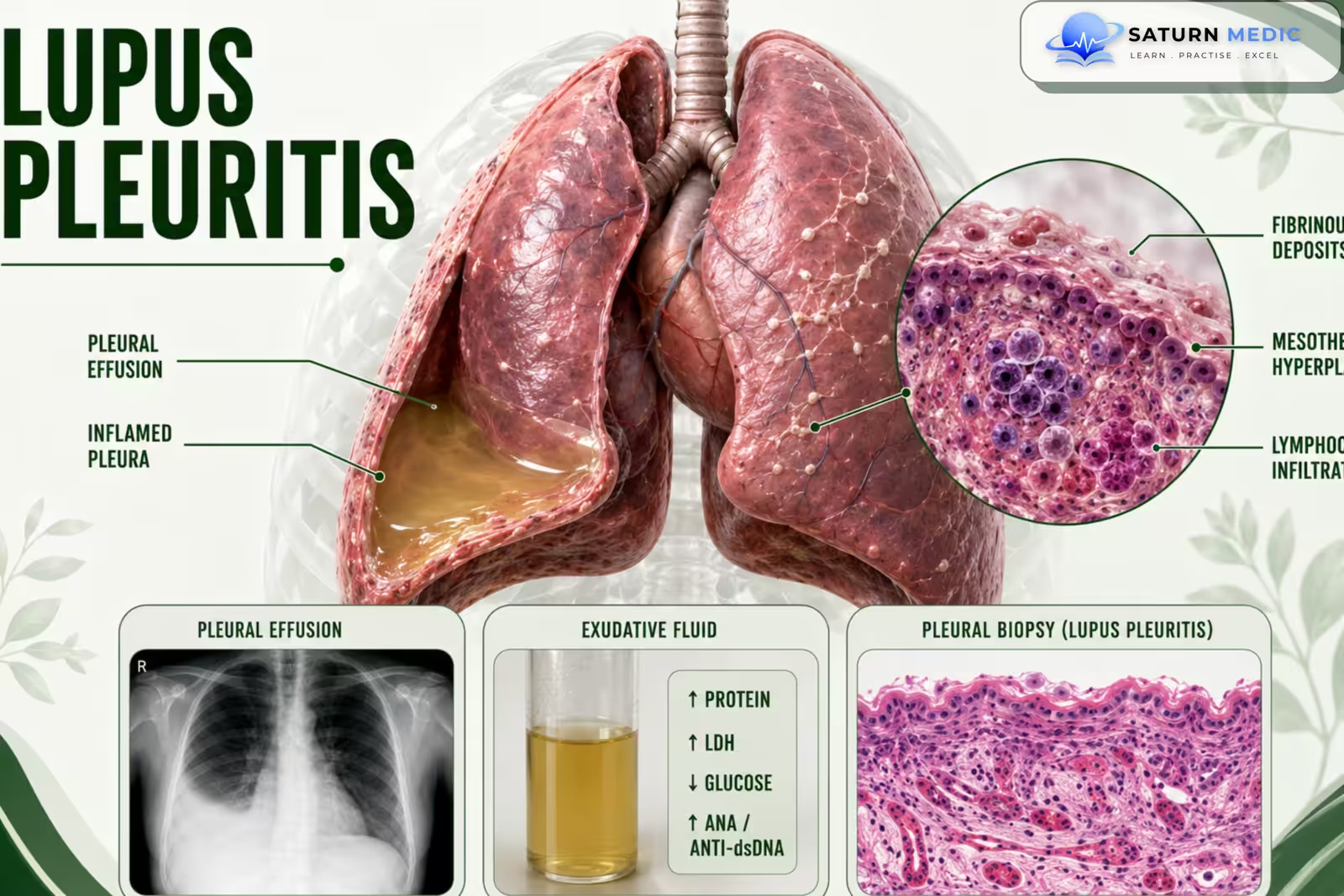
Lupus Pleuritis is inflammation of the pleura, the thin lining around the lungs and inside the chest wall. It is a common chest manifestation of systemic lupus erythematosus (SLE).
Also called
ICD-10
Specialty
Onset
Reviewed
-
OverviewOverview
-
Etiology & Risk FactorsEtiology & Risk Factors
-
PathophysiologyPathophysiology
-
Clinical PresentationClinical Presentation
-
History TakingHistory Taking
-
Physical ExaminationPhysical Examination
-
InvestigationsInvestigations
-
DiagnosisDiagnosis
-
ManagementManagement
-
ComplicationsComplications
-
PrognosisPrognosis
-
Key Points / Clinical PearlsKey Points / Clinical Pearls
Overview
Lupus causes the immune system to attack the pleura, leading to inflammation,
This inflammation typically causes sharp chest pain that gets worse with deep breathing, coughing, or sneezing (pleuritic chest pain).
Some people may also develop a pleural effusion (fluid around the lungs), which can cause shortness of breath.
Etiology & Risk Factors
-Etiology :
- Autoimmune inflammation caused by systemic lupus erythematosus (SLE).
- The immune system attacks the pleura (lining around the lungs), causing inflammation (pleuritis) and sometimes pleural effusion.
-Risk Factors :
- Female sex (especially women of childbearing age)
- Genetic predisposition (e.g., HLA-DR2, HLA-DR3, complement deficiencies)
- Hormonal factors (hyperestrogenic states)
- Cigarette smoking
- Silica exposure
- Highest prevalence in people of African descent
Pathophysiology
Systemic lupus erythematosus (SLE) → Autoantibody production (e.g., ANA, anti-dsDNA) → Immune complex formation → Complement activation (Type III hypersensitivity reaction) → Inflammation of the pleura → Increased capillary permeability → Pleural irritation ± pleural effusion → Sharp pleuritic chest pain (worse with deep breathing, coughing, or sneezing)± shortness of breath.
Clinical Presentation
- Sharp chest pain that worsens with deep breathing, coughing, or sneezing (pleuritic chest pain)
- Shortness of breath (dyspnea)
- Dry cough
- Pleural friction rub on auscultation
- Fever and fatigue (may occur with underlying lupus)
-May occur with other SLE features, including:
- Arthritis/arthralgia
- Malar (butterfly) rash
- Photosensitivity
- Oral ulcers
- Raynaud phenomenon
History Taking
- When did the chest pain start?
- Is the pain sharp?
- Does it get worse when you take a deep breath, cough, or sneeze? Do you have shortness of breath?
- Do you have a dry cough?
- Do you have fever, fatigue, or weight loss?
- Have you been diagnosed with lupus (SLE)?
- Have you had previous episodes of pleurisy or pleural effusion?
- Have you recently had a respiratory infection?
Physical Examination
-Look for:
- Pleural friction rub on auscultation
- Reduced chest expansion on the affected side (if pleural effusion is present)
- Reduced tactile fremitus
- Decreased or absent breath sounds
- Dullness to percussion over the area of pleural effusion
Investigations of Lupus Pleuritis
- Chest X-ray – look for pleural effusion
- Chest ultrasound – detect pleural effusion
- ECG – exclude pericarditis or myocardial infarction
- ANA, anti-dsDNA, anti-Sm antibodies – support SLE diagnosis
- CBC, ESR, CRP, C3, C4 – assess inflammation and disease activity
- Thoracentesis with pleural fluid analysis – if pleural effusion is present and evaluation is needed
- Chest CT – if the diagnosis remains unclear or pulmonary pathology is suspected
Diagnosis of Lupus Pleuritis
- History – pleuritic chest pain in a patient with SLE
- Physical examination – pleural friction rub ± signs of pleural effusion
- Chest X-ray or ultrasound – confirms pleural effusion (if present)
- SLE laboratory tests – ANA, anti-dsDNA, anti-Sm antibodies, complement levels (C3/C4)
- Exclude other causes of pleuritic chest pain (e.g., pulmonary embolism, myocardial infarction, pneumothorax)
- Thoracentesis with pleural fluid analysis if pleural effusion requires further evaluation
Related Topics
Management Lupus Pleuritis
- NSAIDs – first-line for pleuritic chest pain
- Hydroxychloroquine – cornerstone treatment for all patients with SLE
- Oral corticosteroids – for moderate pleuritis or persistent symptoms
- Immunosuppressive agents (e.g., azathioprine or mycophenolate) – if severe or refractory disease, under specialist guidance
- Treat pleural effusion if present (thoracentesis when indicated)
- Rheumatology referral and regular follow-up
Complications
- Pleural effusion(most common)
- Recurrent pleuritis (recurrent chest pain)
- Respiratory symptoms (shortness of breath due to pleural effusion)
- Pulmonary hypertension (as a complication of SLE)
- Interstitial lung disease (as a complication of SLE)
- Infections (related to SLE and immunosuppressive treatment)
Prognosis of Lupus Pleuritis
- Generally good with early diagnosis and appropriate treatment.
- Most patients improve with NSAIDs and treatment of the underlying SLE.
- Recurrences may occur during lupus flares.
- Prognosis depends on the severity of SLE and involvement of other organs (especially the kidneys and nervous system).
- 10-year survival is approximately 90% in patients with SLE.
- Lupus pleuritis usually responds well to treatment, but overall prognosis depends on the severity of the underlying SLE.
Key Points / Clinical Pearls of Lupus Pleuritis
- Lupus pleuritis is inflammation of the pleura caused by systemic lupus erythematosus (SLE).
- Hallmark symptom: Sharp pleuritic chest pain that worsens with deep breathing, coughing, or sneezing.
- May cause a pleural effusion, leading to shortness of breath.
- Key examination finding: Pleural friction rub; pleural effusion may cause decreased breath sounds and dullness to percussion.
- Investigations: Chest X-ray or ultrasound, ANA, anti-dsDNA, anti-Sm antibodies, complement (C3/C4), and thoracentesis if pleural effusion requires evaluation.
- Diagnosis: Based on clinical features, imaging, SLE laboratory findings, and exclusion of other causes of pleuritic chest pain.
- Treatment: NSAIDs for pain, hydroxychloroquine for SLE, corticosteroids if needed, and immunosuppressive therapy for severe disease.
- Hunter MP, Regunath H. National Center for Biotechnology Information (NIH). Pleurisy, StatPearls.
- Bashir MM, Sharma MP. National Center for Biotechnology Information (NIH). Systemic Lupus Erythematosus, StatPearls.
- Good JT Jr, King TE, Antony VB, Sahn SA. Lupus Pleuritis: Clinical Features and Pleural Fluid Characteristics with Special Reference to Pleural Fluid Antinuclear Antibodies. Chest. 1983. PMID: 6605838.
- Wang DY. Diagnosis and Management of Lupus Pleuritis. Curr Opin Pulm Med. 2002. PMID: 12055395.
- Toworakul C, Kasitanon N, Sukitawut W, et al. Characteristics of Pleural Effusions in Systemic Lupus Erythematosus: Differential Diagnosis of Lupus Pleuritis. Lupus. 2015. PMID: 25318967.
- Amarnani R, Yeoh SA, Denneny EK, Wincup C. Lupus and the Lungs: The Assessment and Management of Pulmonary Manifestations of Systemic Lupus Erythematosus. Front Med. 2021. PMC7847931.