

Clinical Subject Page
Systemic Inflammatory Response Syndrome (SIRS)
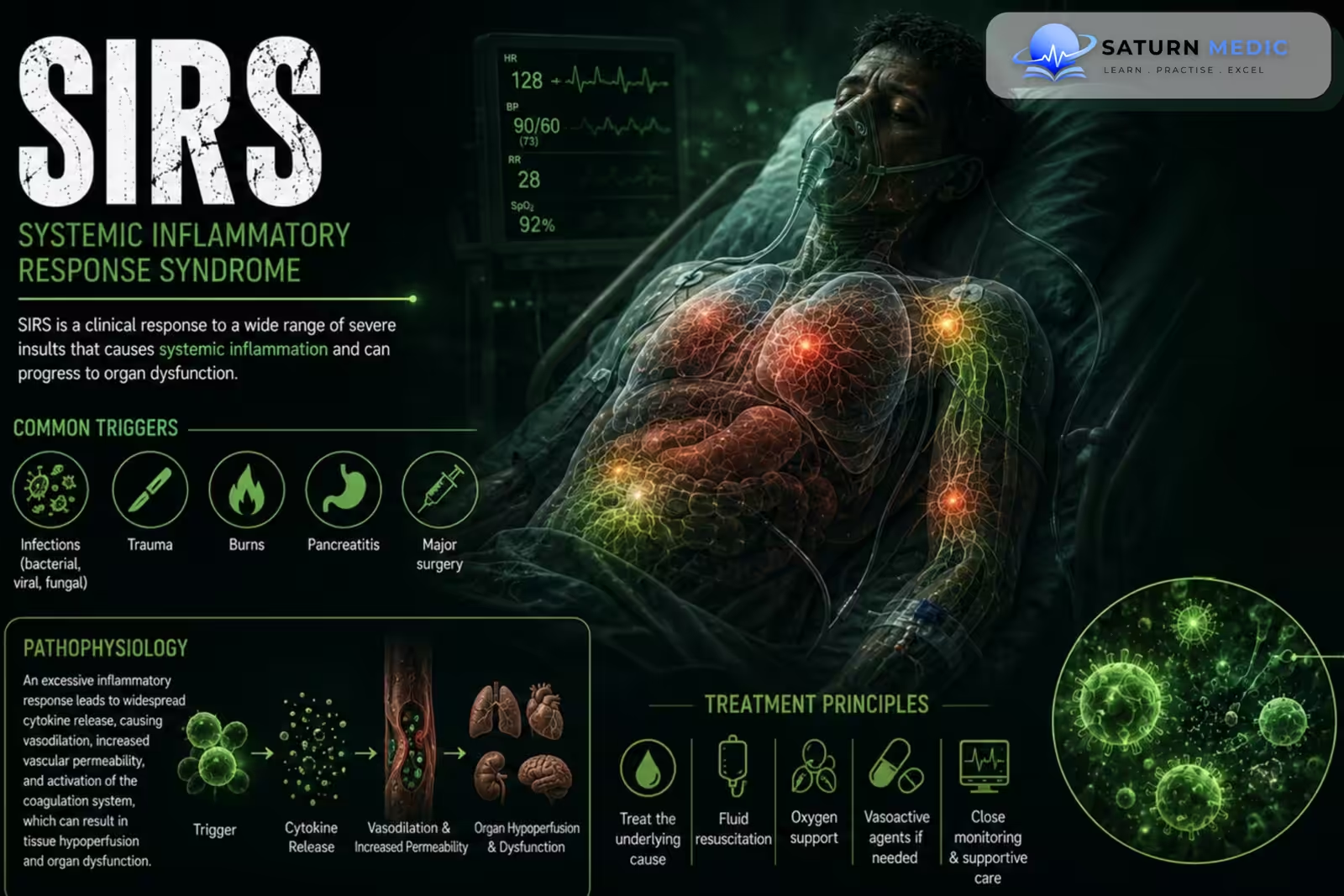
Systemic Inflammatory Response Syndrome (SIRS) is a clinical syndrome caused by an exaggerated systemic inflammatory response to an infectious or non-infectious insult. It may occur with infections, but it can also develop after trauma, burns, pancreatitis, major surgery, or other severe inflammatory conditions
Also called
Systemic inflammatory syndrome
ICD-10
N/A
Specialty
Infectious
Onset
Acute
Reviewed
August 2026
On This Page
-
OverviewOverview
-
Etiology & Risk FactorsEtiology & Risk Factors
-
PathophysiologyPathophysiology
-
Clinical PresentationClinical Presentation
-
History TakingHistory Taking
-
Physical ExaminationPhysical Examination
-
InvestigationsInvestigations
-
DiagnosisDiagnosis
-
ManagementManagement
-
ComplicationsComplications
-
PrognosisPrognosis
-
Key Points / Clinical PearlsKey Points / Clinical Pearls
Overview
–Traditionally, Systemic Inflammatory Response Syndrome (SIRS) is present when at least two of the following criteria are met:
- Temperature >38°C or <36°C
- Heart rate >90 beats/minute
- Respiratory rate >20 breaths/minute or PaCO₂ <32 mmHg
- White blood cell count >12,000/mm³, <4,000/mm³, or >10% immature bands
SIRS may occur with or without infection. Therefore, it should be used as a warning of systemic inflammation rather than as a synonym for sepsis.
Etiology & Risk Factors
-Etiology
–Common triggers include:
- Severe infection
- Major trauma
- Extensive burns
- Acute pancreatitis
- Major surgery
- Severe tissue ischemia
- Other significant inflammatory insults
-Risk Factors
- Severe infection
- Major trauma
- Extensive burns
- Recent major surgery
- Severe inflammatory disease
Pathophysiology
Systemic insult → activation of innate immunity → release of inflammatory mediators → endothelial activation and vasodilation → altered vascular permeability → impaired tissue perfusion → systemic inflammatory response → possible organ dysfunction
Clinical Presentation
-Symptoms:
Patients with Systemic Inflammatory Response Syndrome (SIRS) may develop:
- Fever or chills
- Weakness
- Malaise
- Shortness of breath
- Confusion
- Reduced urine output
Symptoms are largely determined by the underlying cause.
-Signs
- Fever or hypothermia
- Tachycardia
- Tachypnea
- Abnormal white blood cell count
- Altered mental status
- Reduced peripheral perfusion
-Severe Disease
Severe Systemic Inflammatory Response Syndrome (SIRS) may progress to:
- Hypotension
- Acute Kidney Injury (AKI)
- Acute respiratory failure
- Coagulopathy
- Metabolic acidosis
- Multiple organ dysfunction
- Shock
History Taking
-Ask about:
- Fever or chills
- Recent infection
- Trauma
- Burns
- Recent surgery
- Abdominal pain
- Respiratory symptoms
- Urinary symptoms
- Medication and procedure history
Physical Examination
-General Examination
- Temperature
- Heart rate
- Blood pressure
- Respiratory rate
- Oxygen saturation
- Mental status
- Peripheral perfusion
Look for:
- Fever
- Hepatosplenomegaly
- Lymphadenopathy
-System-Specific Examination:
Search for the underlying cause, including:
- Respiratory infection
- Abdominal pathology
- Urinary infection
- Skin or soft-tissue infection
- Surgical complications
- Traumatic injury
Investigations
-Complete Blood Count
CBC is one of the traditional SIRS criteria and may demonstrate:
Leukocytosis
Leukopenia
Neutrophilia
Other inflammatory abnormalities
It may be performed when a hematological abnormality is suspected.
-Biochemistry / Specific Tests
Depending on the clinical setting:
Serum lactate when tissue hypoperfusion is suspected
Serum electrolytes
Urea and creatinine
Liver function tests
Blood cultures when infection is suspected
Cultures from the suspected source
-Imaging
Imaging is directed toward the suspected underlying cause:
Chest X-ray for suspected pneumonia
Ultrasound for selected abdominal or urinary pathology
Computed Tomography (CT) for suspected deep infection, trauma, or other structural pathology
Special / Confirmatory Tests
There is no single confirmatory test for Systemic Inflammatory Response Syndrome (SIRS).
Diagnosis depends on the clinical criteria while simultaneously investigating the underlying cause.
Diagnosis
-Systemic Inflammatory Response Syndrome (SIRS) is identified when at least two traditional SIRS criteria are present.
-The diagnostic approach is:
Recognize systemic inflammation → Confirm SIRS criteria → Determine infectious versus non-infectious cause → Assess for organ dysfunction → Treat the underlying condition
Related Topics
Management
1. First-Line / Emergency Management
There is no specific emergency treatment for Systemic Inflammatory Response Syndrome (SIRS) itself.
Immediate priorities include:
- Airway and breathing assessment
- Circulatory assessment
- Oxygen when indicated
- Intravenous fluids when clinically appropriate
- Rapid identification of the underlying cause
2. Definitive Treatment
Treatment targets the underlying trigger.
-For infection:
- Appropriate antimicrobial therapy
- Source control
-For non-infectious causes:
- Treatment of trauma
- Burn management
- Treatment of pancreatitis
- Management of ischemia or other inflammatory conditions
3. Medical Treatment
- Intravenous crystalloids when indicated
- Antimicrobials when infection is suspected
- Vasopressors if persistent hypotension develops
- Organ-supportive treatment when required
4. Supportive Management
- Continuous vital-sign monitoring
- Serial assessment of perfusion
- Lactate monitoring when indicated
- Urine-output monitoring
- Electrolyte correction
Complications
- Hypotension
- Acute Kidney Injury (AKI)
- Acute respiratory failure
- Coagulopathy
- Metabolic acidosis
- Multiple organ dysfunction
- Shock
- Death
Prognosis
The prognosis of Systemic Inflammatory Response Syndrome (SIRS) depends mainly on its underlying cause, severity, development of organ dysfunction, and response to treatment. SIRS caused by a reversible non-infectious insult may resolve completely, whereas severe infection or major tissue injury can progress to shock and multiorgan failure.
Key Points / Clinical Pearls
- Systemic Inflammatory Response Syndrome (SIRS) describes a systemic inflammatory response.
- It can occur with infection or without infection.
- Traditionally, at least two SIRS criteria are required.
- Criteria involve temperature, heart rate, respiratory rate/PaCO₂, and white blood cell count.
- SIRS is not synonymous with sepsis.
- Infection should always be considered but is not required.
- Trauma, burns, pancreatitis, and surgery can trigger SIRS.
- Lactate can help assess tissue hypoperfusion when clinically indicated.
- Blood cultures are appropriate when infection is suspected.
- There is no specific treatment for SIRS itself.
- Treatment should target the underlying cause.
- Severe cases may develop Acute Kidney Injury (AKI) or respiratory failure.
- Persistent inflammation can progress to shock and multiple organ dysfunction.
- Bone RC, Balk RA, Cerra FB, et al. Definitions for Sepsis and Organ Failure and Guidelines for the Use of Innovative Therapies in Sepsis. Chest. 1992;101(6):1644-1655. PubMed .
- Levy MM, Fink MP, Marshall JC, et al. 2001 SCCM/ESICM/ACCP/ATS/SIS International Sepsis Definitions Conference. Crit Care Med. 2003;31(4):1250-1256. PubMed .
- Singer M, Deutschman CS, Seymour CW, et al. The Third International Consensus Definitions for Sepsis and Septic Shock (Sepsis-3). JAMA. 2016;315(8):801-810. JAMA .
- Seymour CW, Liu VX, Iwashyna TJ, et al. Assessment of Clinical Criteria for Sepsis: For the Third International Consensus Definitions for Sepsis and Septic Shock (Sepsis-3). JAMA. 2016;315(8):762-774. JAMA .
- Marshall JC, Vincent JL, Fink MP, et al. Measures, Markers, and Mediators: Toward a Staging System for Clinical Sepsis. Crit Care Med. 2005;33(8):1770-1777. PubMed .
- National Library of Medicine (NIH). Systemic Inflammatory Response Syndrome (SIRS) . StatPearls.