

Clinical Subject Page
Pyelonephritis
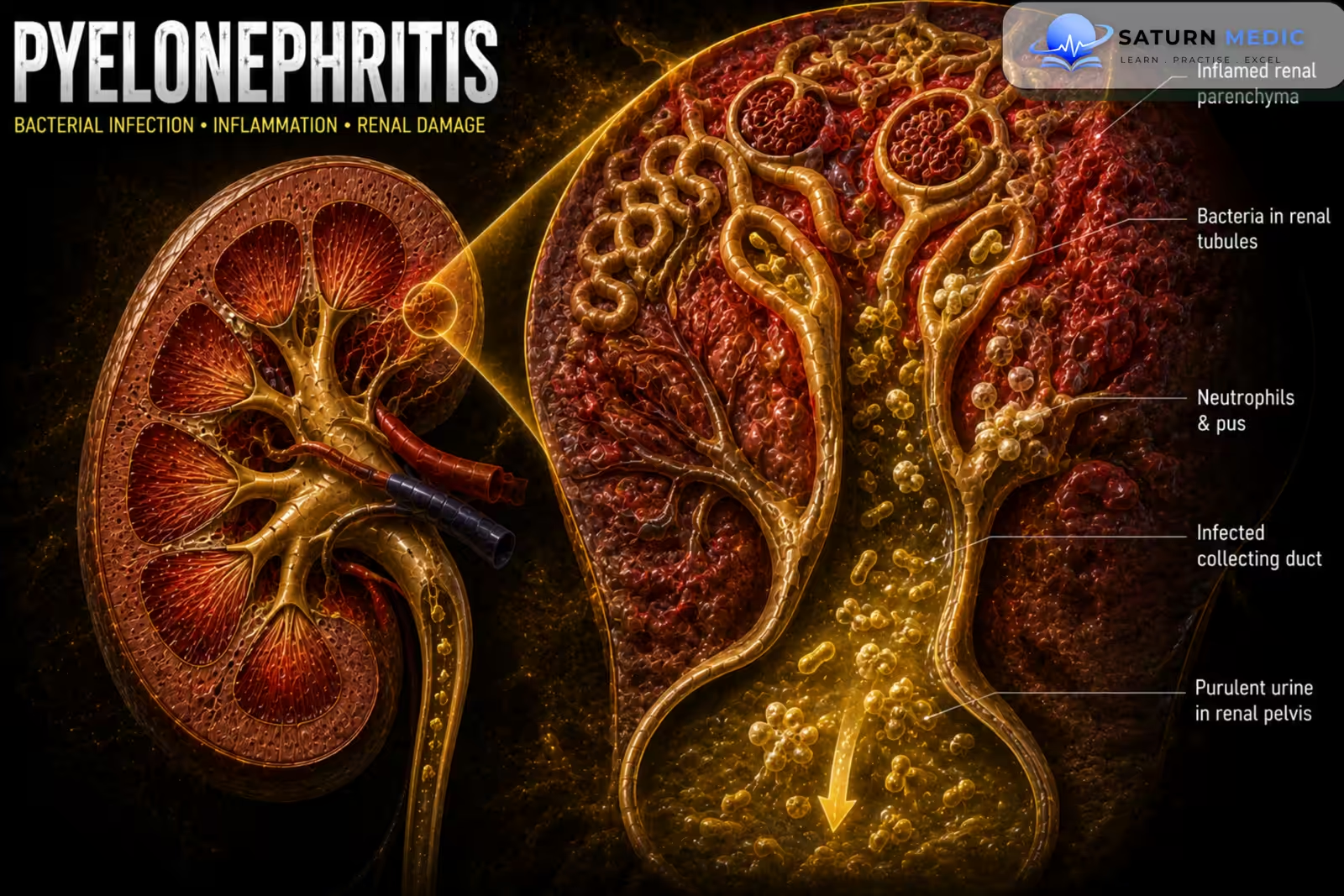
Pyelonephritis is a bacterial infection of the renal pelvis and kidney parenchyma, usually caused by an ascending urinary tract infection. It commonly presents with fever, flank pain, and urinary symptoms and can progress to sepsis if severe
Also called
ICD-10
Specialty
Onset
Reviewed
-
OverviewOverview
-
Etiology & Risk FactorsEtiology & Risk Factors
-
PathophysiologyPathophysiology
-
Clinical PresentationClinical Presentation
-
History TakingHistory Taking
-
Physical ExaminationPhysical Examination
-
InvestigationsInvestigations
-
DiagnosisDiagnosis
-
ManagementManagement
-
ComplicationsComplications
-
PrognosisPrognosis
-
Key Points / Clinical PearlsKey Points / Clinical Pearls
Overview
-Pyelonephritis may be:
- Acute: sudden bacterial infection causing inflammation of the kidney
- Chronic/recurrent: repeated infection or associated urinary abnormalities causing renal scarring
-Common causative organisms include:
- Escherichia coli (E. coli) — most common
- Klebsiella species
- Proteus species
- Other Enterobacterales
Etiology & Risk Factors
-Etiology
–Usually results from an ascending bacterial infection from the lower urinary tract.
-Less commonly, infection reaches the kidney through hematogenous spread
-Risk Factors:
- Female sex
- Urinary tract obstruction
- Kidney stones
- Vesicoureteral reflux
- Diabetes mellitus
- Pregnancy
- Urinary catheterization
- Structural urinary tract abnormalities
Pathophysiology
Lower urinary tract bacterial infection → ascending bacterial spread → renal pelvis and parenchymal infection → interstitial inflammation → renal tissue injury → systemic inflammatory response
Clinical Presentation
-Symptoms:
- Fever
- Chills or rigors
- Flank pain
- Dysuria
- Urinary frequency
- Urinary urgency
- Nausea and vomiting
- Malaise
-Signs:
- Fever
- Tachycardia
- Costovertebral angle tenderness
- Flank or abdominal tenderness
- Dehydration
History Taking
-Ask about:
- Fever and chills
- Flank or back pain
- Dysuria
- Urinary frequency and urgency
- Hematuria
- Nausea and vomiting
- Previous urinary tract infections
- Kidney stones
- Urinary obstruction
- Recent urinary procedures
- Pregnancy
- Diabetes mellitus
Physical Examination
-General Examination
- Temperature
- Heart rate
- Blood pressure
- Hydration status
- Signs of sepsis
-System-Specific Examination:
- Costovertebral angle tenderness
- Flank tenderness
- Suprapubic tenderness
- Abdominal examination for obstruction or complications
Investigations
-Biochemistry / Specific Tests
Urinalysis
Urine culture and antimicrobial susceptibility testing
Serum creatinine and eGFR when systemic illness, complicated infection, or kidney dysfunction is suspected
Serum electrolytes when clinically indicated
Blood cultures in severe infection or sepsis
Typical urine findings include:
Pyuria
Bacteriuria
Positive leukocyte esterase
Possible hematuria
White blood cell casts may occur
Imaging
Imaging is not routinely required in uncomplicated Pyelonephritis.
Consider renal ultrasound or CT when there is:
Suspected urinary obstruction
Kidney stones
Severe or complicated infection
Persistent fever despite treatment
Recurrent infection
Suspected renal or perinephric abscess
-Special / Confirmatory Tests
Urine culture is the key microbiological investigation and should be obtained before antibiotics when feasible, particularly in complicated disease
Diagnosis
–Diagnosis of Pyelonephritis is usually clinical, supported by:
- Fever or systemic symptoms
- Flank pain
- Costovertebral angle tenderness
- Urinary symptoms
- Pyuria and bacteriuria
Urine culture confirms the causative organism and provides antimicrobial susceptibility information.
Management
1. First-Line / Emergency Management
For severe infection or sepsis:
Assess and stabilize airway, breathing, and circulation
Obtain cultures when feasible without delaying antibiotics
Start appropriate IV antibiotics promptly
IV fluids for sepsis or significant volume depletion
Manage septic shock according to standard protocols
Infected urinary obstruction → urgent urological drainage.
2. Definitive Treatment
Appropriate antibiotic therapy
Treat urinary obstruction or structural abnormalities
Remove or replace infected urinary devices when appropriate
3. Medical Treatment
Antibiotic choice depends on local resistance patterns, severity, previous cultures, and patient factors.
Common options include:
Fluoroquinolones in appropriate patients and settings
Third-generation cephalosporins
Trimethoprim–sulfamethoxazole when the organism is susceptible
Other antibiotics guided by culture and susceptibility results
Stable uncomplicated cases may be treated with appropriate oral therapy, while severe or complicated infection generally requires initial IV therapy.
4. Surgical / Procedural Treatment
Procedures are required when there is infected obstruction or an abscess:
Ureteric stent
Percutaneous nephrostomy
Drainage of renal or perinephric abscess when indicated
5. Supportive Management
Adequate hydration
Antipyretics and analgesia
Monitor urine output
Monitor kidney function in complicated disease
Complications
- Sepsis
- Septic shock
- Acute Kidney Injury (AKI)
- Renal abscess
- Perinephric abscess
- Papillary necrosis
- Renal scarring
- Recurrent urinary tract infection
- Chronic Pyelonephritis
- Chronic Kidney Disease (CKD)
Prognosis
-Most patients with uncomplicated acute Pyelonephritis recover completely with appropriate antibiotic treatment.
-Prognosis is worse with urinary obstruction, resistant organisms, delayed treatment, diabetes, or severe sepsis. Recurrent or chronic infection can cause renal scarring and progressive Chronic Kidney Disease (CKD).
Key Points / Clinical Pearls
- Pyelonephritis is a bacterial infection of the renal pelvis and kidney parenchyma.
- Most cases result from an ascending urinary tract infection.
- Escherichia coli (E. coli) is the most common causative organism.
- Fever, flank pain, and costovertebral angle tenderness are classic findings.
- Dysuria, frequency, and urgency may accompany upper urinary tract infection.
- Pyuria and bacteriuria are common.
- Urine culture is the key microbiological investigation.
- Blood cultures are indicated in severe infection or sepsis.
- Imaging is not routinely required in uncomplicated cases.
- Imaging is important when obstruction, stones, abscess, or treatment failure is suspected.
- Antibiotics are the mainstay of treatment.
- Severe or complicated infections may require IV antibiotics.
- European Association of Urology (EAU). EAU Guidelines on Urological Infections .
- Gupta K, Hooton TM, Naber KG, et al. International Clinical Practice Guidelines for the Treatment of Acute Uncomplicated Cystitis and Pyelonephritis in Women: A 2010 Update by the IDSA and ESCMID. Clin Infect Dis. 2011;52(5):e103-e120. Clinical Infectious Diseases .
- Johnson JR, Russo TA. Acute Pyelonephritis in Adults. N Engl J Med. 2018;378(1):48-59. New England Journal of Medicine .
- Flores-Mireles AL, Walker JN, Caparon M, Hultgren SJ. Urinary Tract Infections: Epidemiology, Mechanisms of Infection and Treatment Options. Nat Rev Microbiol. 2015;13(5):269-284. Nature Reviews Microbiology .
- National Institute of Diabetes and Digestive and Kidney Diseases (NIDDK). Kidney Infection (Pyelonephritis) . National Institutes of Health.
- National Library of Medicine (NIH). Acute Pyelonephritis . StatPearls.