

Clinical Subject Page
End-Stage Renal Disease (ESRD)
End-Stage Renal Disease (ESRD) is the advanced stage of Chronic Kidney Disease (CKD) in which kidney function is severely and irreversibly reduced, typically requiring dialysis or kidney transplantation to sustain life
Also called
ICD-10
Specialty
Onset
Reviewed
-
OverviewOverview
-
Etiology & Risk FactorsEtiology & Risk Factors
-
PathophysiologyPathophysiology
-
Clinical PresentationClinical Presentation
-
History TakingHistory Taking
-
Physical ExaminationPhysical Examination
-
InvestigationsInvestigations
-
DiagnosisDiagnosis
-
ManagementManagement
-
ComplicationsComplications
-
PrognosisPrognosis
-
Key Points / Clinical PearlsKey Points / Clinical Pearls
Overview
–End-Stage Renal Disease (ESRD) represents the final stage of progressive Chronic Kidney Disease (CKD).
-It is generally associated with an eGFR <15 mL/min/1.73 m² and severe loss of kidney function.
–At this stage, the kidneys cannot adequately maintain:
- Fluid balance
- Electrolyte balance
- Acid-base balance
- Waste-product excretion
- Endocrine functions
–Kidney replacement therapy with dialysis or transplantation may be required.
Etiology & Risk Factors
-Etiology
–End-Stage Renal Disease (ESRD) usually results from progressive Chronic Kidney Disease (CKD).
-Major causes of End-Stage Renal Disease (ESRD) include:
- Diabetes mellitus
- Hypertension
- Chronic glomerular diseases
- Polycystic kidney disease
- Chronic tubulointerstitial disease
- Recurrent or severe kidney injury
-Risk Factors:
- Long-standing diabetes mellitus
- Poorly controlled hypertension
- Severe or progressive CKD
- Significant albuminuria
- Recurrent acute kidney injury
- Cardiovascular disease
Pathophysiology
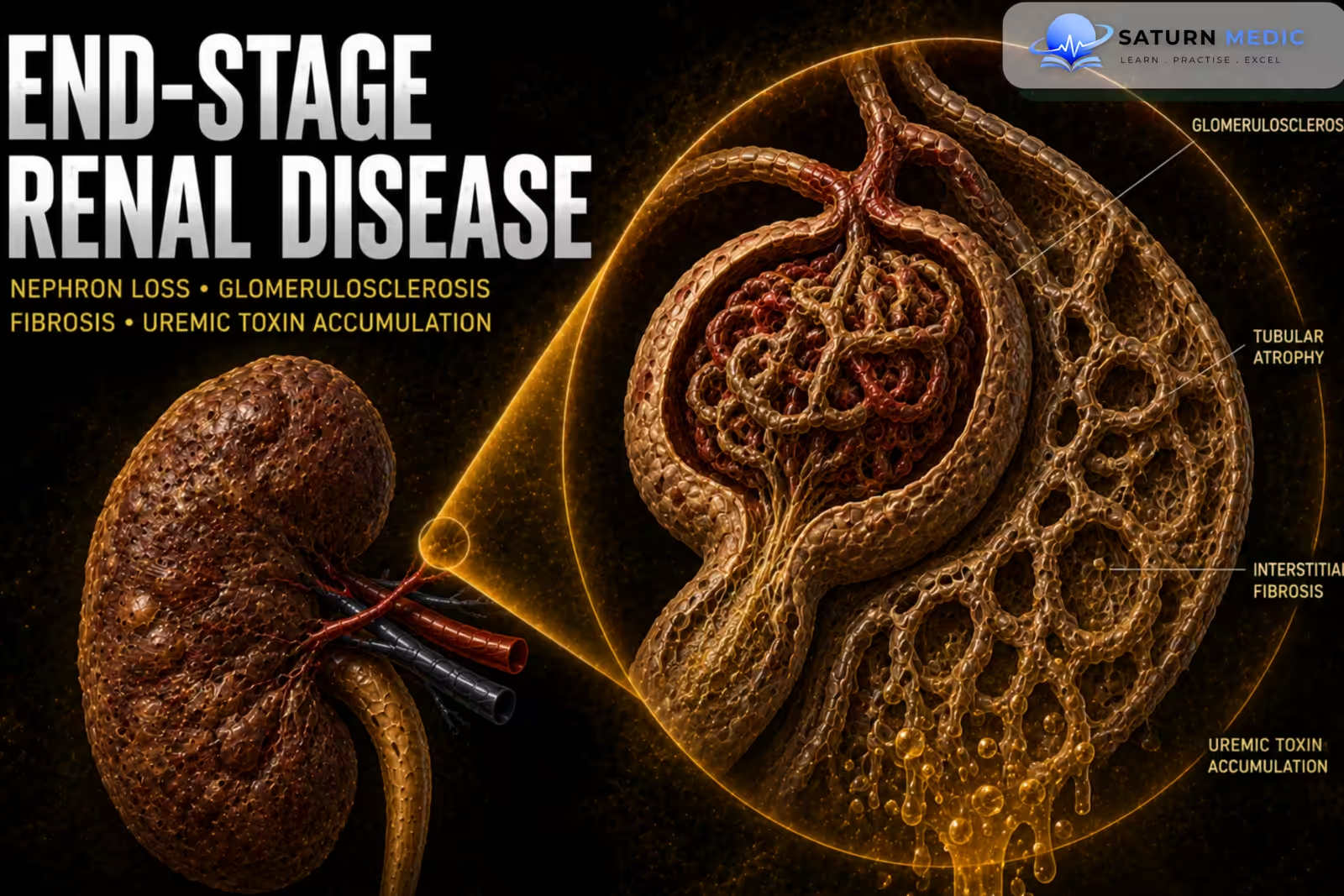
Chronic kidney disease → progressive nephron loss → severe reduction in GFR → accumulation of uremic toxins → fluid, electrolyte, and acid-base disturbances → endocrine dysfunction → kidney failure → need for kidney replacement therapy
Clinical Presentation
-Symptoms:
- Fatigue
- Weakness
- Loss of appetite
- Nausea and vomiting
- Pruritus
- Sleep disturbances
- Nocturia or reduced urine output
- Peripheral edema
- Dyspnea
-Signs:
- Hypertension
- Peripheral edema
- Pallor
- Fluid overload
- Muscle wasting
- Uremic features
- Signs of the underlying kidney disease
History Taking
-Ask about:
- Duration and cause of Chronic Kidney Disease (CKD)
- Previous eGFR and rate of decline
- Urine output
- Edema and weight changes
- Dyspnea or symptoms of fluid overload
- Nausea, vomiting, and appetite loss
- Pruritus
- Cognitive or neurological symptoms
- Muscle cramps or weakness
- Symptoms of hyperkalemia
- Previous dialysis
Physical Examination
-General Examination
- Blood pressure
- Pallor
- Peripheral edema
- Signs of fluid overload
- Nutritional status
- Uremic features
-System-Specific Examination:
- Cardiovascular examination for hypertension and fluid overload
- Respiratory examination for pulmonary edema
- Neurological examination for uremic encephalopathy
- Abdominal examination for underlying renal disease
- Examination of dialysis vascular access when present
Investigations
-Complete Blood Count
Relevant for assessing anemia associated with advanced Chronic Kidney Disease (CKD).
-Biochemistry / Specific Tests
-
Serum creatinine and eGFR
-
Serum urea
-
Serum potassium
-
Serum sodium
-
Serum bicarbonate
-
Calcium
-
Phosphate
-
Serum albumin
-
Parathyroid hormone when assessing CKD-mineral and bone disorder
-
Urinalysis when evaluating the underlying cause
-Imaging
Renal ultrasound may be used to assess kidney size, structure, obstruction, or cystic disease.
-Special / Confirmatory Tests
There is no single confirmatory test for End-Stage Renal Disease (ESRD).
Diagnosis
-End-Stage Renal Disease (ESRD) is diagnosed when there is advanced, persistent kidney failure, generally with:
- eGFR <15 mL/min/1.73 m²
- Persistent severe loss of kidney function
- Clinical and/or biochemical manifestations of kidney failure
-The underlying cause and complications should also be identified.
Management
1. First-Line / Emergency Management
Urgently manage life-threatening complications:
-
Severe hyperkalemia
-
Pulmonary edema
-
Severe metabolic acidosis
-
Uremic encephalopathy
-
Uremic pericarditis
Urgent dialysis may be required when these complications are refractory to medical treatment.
2. Definitive Treatment
Kidney replacement therapy:
-
Hemodialysis
-
Peritoneal dialysis
-
Kidney transplantation
Kidney transplantation is the preferred definitive treatment for suitable candidates.
3. Medical Treatment
-
Antihypertensive therapy
-
Diuretics for fluid overload when residual kidney function remains
-
Erythropoiesis-stimulating agents for selected patients with CKD-associated anemia
-
Iron therapy when indicated
-
Phosphate-lowering therapy when indicated
-
Vitamin D-based therapy when appropriate
-
Sodium bicarbonate for selected patients with metabolic acidosis
-
Potassium-lowering therapy when required
4. Surgical / Procedural Treatment
-
Hemodialysis vascular access creation
-
Peritoneal dialysis catheter placement
-
Kidney transplantation
5. Supportive Management
-
Fluid and sodium management
-
Appropriate dietary modification
-
Avoid nephrotoxic medications
-
Management of anemia
-
Management of CKD-mineral and bone disorder
Complications
- Uremia
- Hyperkalemia
- Metabolic acidosis
- Fluid overload
- Pulmonary edema
- Severe anemia
- CKD-mineral and bone disorder
- Secondary hyperparathyroidism
- Cardiovascular disease
- Uremic encephalopathy
- Uremic pericarditis
Prognosis
-The prognosis of End-Stage Renal Disease (ESRD) depends on the underlying cause, cardiovascular health, nutritional status, complications, and access to kidney replacement therapy.
–Kidney transplantation generally provides better long-term survival and quality of life than long-term dialysis in suitable candidates.
Key Points / Clinical Pearls
- End-Stage Renal Disease (ESRD) is the advanced stage of kidney failure.
- It usually develops from progressive Chronic Kidney Disease (CKD).
- Diabetes mellitus and hypertension are major causes.
- eGFR <15 mL/min/1.73 m² corresponds to G5 kidney failure.
- Patients may initially have few symptoms despite severe kidney dysfunction.
- Uremia develops from accumulation of metabolic waste products.
- Common complications include hyperkalemia, acidosis, anemia, and fluid overload.
- Pulmonary edema and severe hyperkalemia may require urgent treatment.
- Dialysis is not initiated based on eGFR alone.
- Hemodialysis and peritoneal dialysis are the main dialysis modalities.
- Kidney transplantation is the preferred definitive treatment for suitable patients.
- Kidney Disease: Improving Global Outcomes (KDIGO) CKD Work Group. KDIGO 2024 Clinical Practice Guideline for the Evaluation and Management of Chronic Kidney Disease. Kidney Int. 2024;105(4S):S117-S314. KDIGO .
- Kidney Disease: Improving Global Outcomes (KDIGO) Dialysis Work Group. KDIGO Clinical Practice Guideline for the Evaluation and Management of Chronic Kidney Disease. Kidney Int. 2013;3(Suppl):1-150. KDIGO .
- Tattersall J, Dekker F, Heimbürger O, et al. When to Start Dialysis: Update of a Systematic Review on the Initiation of Dialysis. Clin Kidney J. 2011;4(4):282-288. Clinical Kidney Journal .
- Cooper BA, Branley P, Bulfone L, et al. A Randomized, Controlled Trial of Early versus Late Initiation of Dialysis. N Engl J Med. 2010;363(7):609-619. New England Journal of Medicine .
- National Institute of Diabetes and Digestive and Kidney Diseases (NIDDK). Kidney Failure . National Institutes of Health.
- National Kidney Foundation. Kidney Failure (End-Stage Kidney Disease) .