

Clinical Subject Page
Influenza
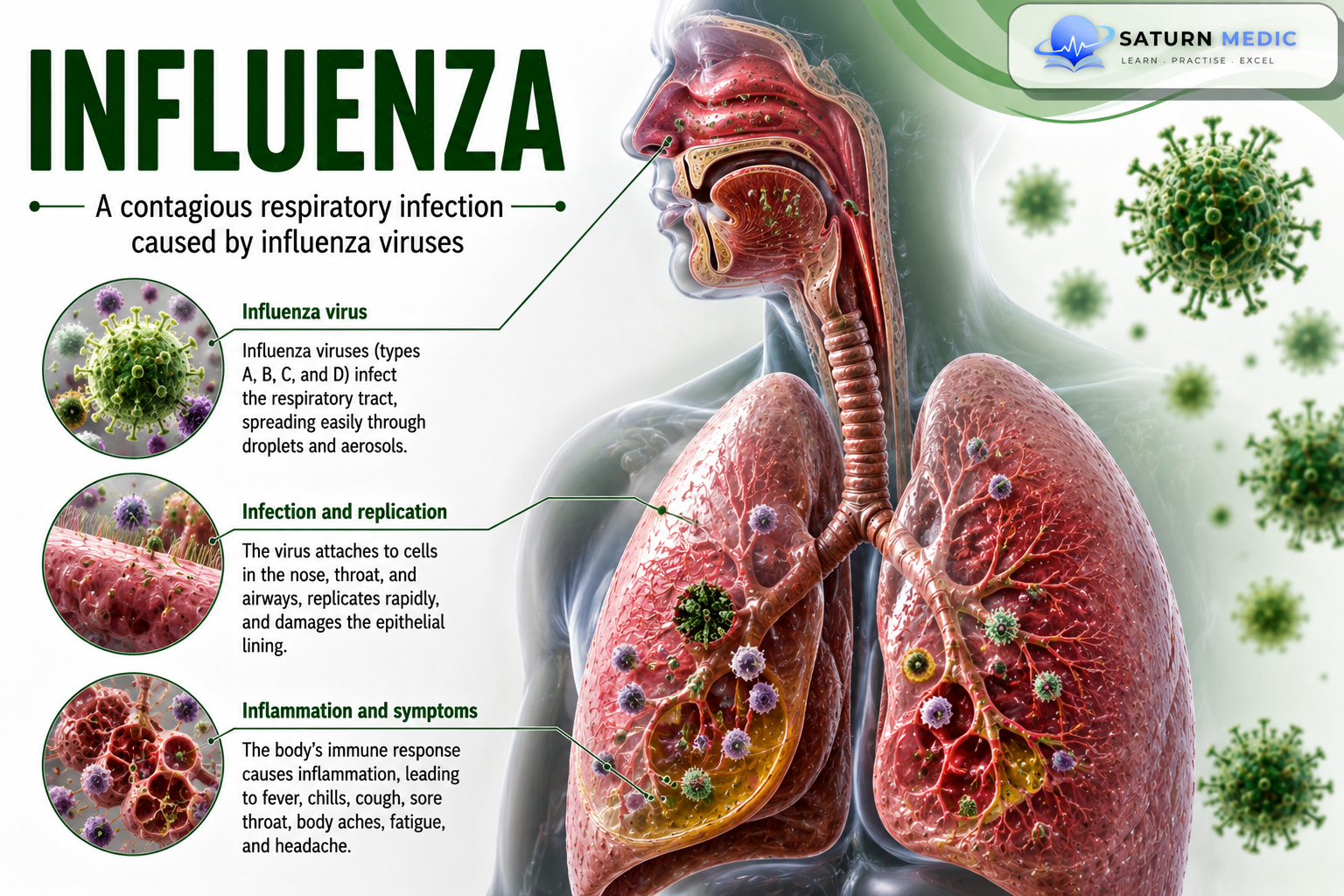
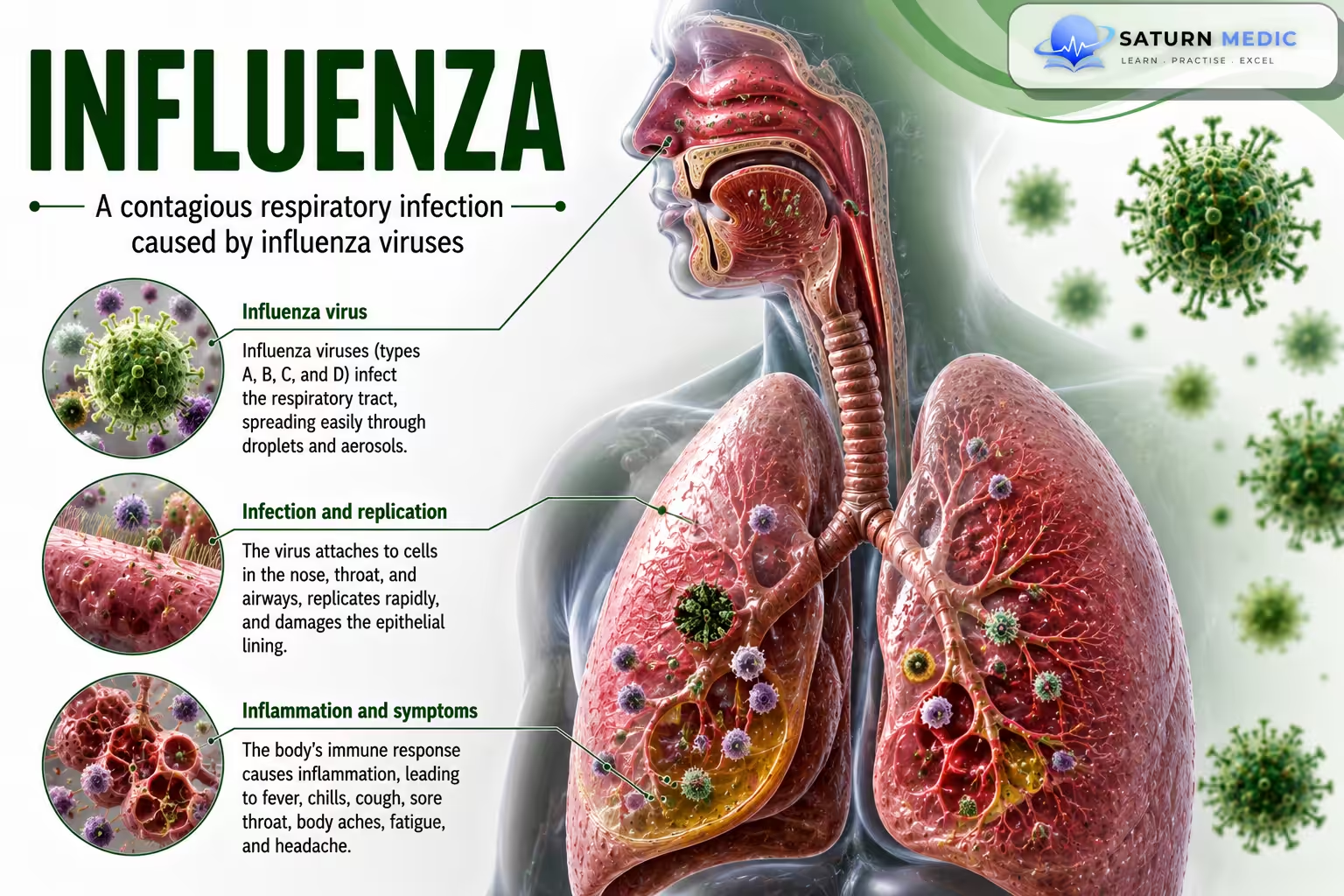
Influenza (flu) is an acute contagious viral infection of the respiratory tract caused by influenza viruses, typically producing sudden fever, cough, headache, and prominent systemic symptoms.
Also called
ICD-10
Specialty
Onset
Reviewed
-
OverviewOverview
-
Etiology & Risk FactorsEtiology & Risk Factors
-
PathophysiologyPathophysiology
-
Clinical PresentationClinical Presentation
-
History TakingHistory Taking
-
Physical ExaminationPhysical Examination
-
InvestigationsInvestigations
-
DiagnosisDiagnosis
-
ManagementManagement
-
ComplicationsComplications
-
PrognosisPrognosis
-
Key Points / Clinical PearlsKey Points / Clinical Pearls
Overview
It mainly affects the:
- Nose
- Throat
- Airways
- Lungs
Unlike the common cold, it usually causes a more sudden and severe systemic illness, with prominent:
- Fever
- Myalgia
- Headache
- Fatigue
Most patients recover completely, but severe disease may cause pneumonia, respiratory failure, or death, particularly in high-risk patients.
Etiology & Risk Factors
-Influenza A
-
Causes seasonal epidemics
-
Can cause pandemics
-
Infects humans and some animals
-Influenza B
-
Causes seasonal epidemics
-
Mainly affects humans
-Transmission
spreads through:
-
Respiratory droplets and particles
-
Close contact with infected people
-
Contact with contaminated respiratory secretions
Risk Factors for Severe Disease
-
Age ≥65 years
-
Young children
-
Pregnancy
-
Chronic lung disease
-
Cardiovascular disease
-
Diabetes mellitus
-
Chronic kidney disease
-
Immunosuppression
-
Severe obesity
Important Note
A + B are the main causes of clinically significant seasonal disease.
Pathophysiology
Exposure to the virus
⬇
Virus enters the respiratory tract
⬇
Attachment to respiratory epithelial cells
⬇
Viral replication
⬇
Epithelial cell injury
⬇
Strong inflammatory and immune response
⬇
Airway inflammation + Systemic cytokine release
⬇
Fever + Myalgia + Headache + Fatigue + Respiratory symptoms
Severe Disease
Extensive lung involvement
→ Viral pneumonia
→ Impaired gas exchange
→ Respiratory failure
Key Concept
The strong systemic inflammatory response explains the prominent fever, myalgia, headache, and fatigue.
Clinical Presentation
-Typical Symptoms
-
Sudden fever
-
Chills
-
Dry cough
-
Sore throat
-
Headache
-
Myalgia
-
Marked fatigue
-
Malaise
-
Nasal symptoms
Typical Pattern
Symptoms usually:
-
Begin suddenly
-
Are more severe than the common cold
-
Include prominent systemic symptoms
Signs
-
Fever
-
Tachycardia
-
Throat redness
-
Nasal discharge
Severe Disease
May present with:
-
-
Dyspnea
-
Hypoxemia
-
Chest pain
-
Confusion
-
Respiratory distress
-
History Taking
-Ask about:
-
- Sudden onset of symptoms?
- Fever or chills?
- Dry cough?
- Sore throat?
- Headache?
- Muscle aches?
- Severe fatigue?
- Shortness of breath?
- Chest pain?
- Sick contacts?
- Recent outbreak?
- vaccination history?
Physical Examination
-General Examination
Look for:
- Fever
- Tachycardia
- General illness
- Dehydration
- Reduced oxygen saturation
- Respiratory distress
-Nose & Throat Examination
May show:
- Nasal discharge
- Throat redness
-Chest Examination
Usually normal in uncomplicated cases.
May show:
- Crackles
- Reduced air entry
- Signs of pneumonia
Investigations
-Routine Testing
Testing is not always required in mild, uncomplicated disease.
-Molecular Testing — Preferred Test
-
Rapid molecular assays
-
RT-PCR
These tests detect influenza viral RNA.
When Testing Is Most Useful
Consider testing when:
-
The patient is hospitalized
-
Severe disease is present
-
The patient is at high risk of complications
-
The result will change treatment or infection-control decisions
-Chest X-ray
Not routinely required.
Consider when:
-
Pneumonia is suspected
-
Hypoxemia is present
-
Symptoms are severe or worsening
-Additional Tests
In severe disease:
-
-
CBC
-
Renal function
-
Electrolytes
-
Liver function
-
Arterial blood gas when indicated
-
Diagnosis
-
Diagnosis is based on:
1. Compatible Clinical Features
- Sudden fever
- Cough
- Myalgia
- Headache
- Fatigue
2. Epidemiological Context
- the disease circulating in the community
- Contact with infected individuals
3. Viral Testing When Indicated
Related Topics
Management of Influenza
-Main Goals
-
Relieve symptoms
-
Reduce complications
-
Treat high-risk patients early
-
Prevent transmission
-Supportive Management
-
Rest
-
Adequate fluids
-
Analgesics
-
Antipyretics
-
Oxygen when hypoxemic
-Antiviral Treatment
Oseltamivir
A commonly used antiviral treatment.
Other antivirals may be used depending on:
-
Patient factors
-
Disease severity
-
Local recommendations
Antiviral treatment is particularly important for:
-
Hospitalized patients
-
Severe or progressive disease
-
High-risk patients
-Timing
Treatment is most effective when started early, ideally within 48 hours of symptom onset, but may still benefit hospitalized or severely ill patients when started later.
Antibiotics
-
-
Not routinely indicated
-
because it is a viral infection
-
Use only when bacterial coinfection is suspected or confirmed
-
Complications of Influenza
- Primary viral pneumonia
- Secondary bacterial pneumonia
- Respiratory failure
- Acute respiratory distress syndrome (ARDS)
- Asthma exacerbation
- COPD exacerbation
- Myocarditis
- Pericarditis
- Encephalitis
Prognosis of Influenza
- Most healthy patients recover completely.
- Symptoms usually improve over several days.
- Fatigue and cough may persist longer.
- Prognosis is worse in:
- Older adults
- Young children
- Pregnant patients
- Immunocompromised patients
- Patients with chronic diseases
- Severe disease may cause pneumonia, respiratory failure, and death.
Key Points / Clinical Pearls of Influenza
- Influenza is an acute respiratory infection caused mainly by influenza A and B viruses.
- Symptoms usually begin suddenly.
- Fever, dry cough, myalgia, headache, and marked fatigue are classic features.
- Systemic symptoms are usually more prominent than in the common cold.
- Molecular testing is preferred when confirmation is needed.
- Do not delay antivirals in severely ill or high-risk patients while awaiting results.
- Antivirals work best when started early.
- Antibiotics do not treat uncomplicated cases.
- Boktor SW, Hafner JW. National Center for Biotechnology Information (NIH). Influenza, StatPearls.
- World Health Organization. Influenza (Seasonal): Fact Sheet.
- MedlinePlus, National Library of Medicine (NIH). Flu: Health Topic.
- Kalarikkal SM, Jaishankar GB. National Center for Biotechnology Information (NIH). Influenza Vaccine, StatPearls.
- Seasonal Influenza: A Narrative Review of Epidemiology, Clinical Features, and Preventive Strategies. 2025. PMC12640676.