

Clinical Subject Page
Lung Adenocarcinoma
Lung adenocarcinoma is a non-small cell lung cancer (NSCLC) that typically arises in the
peripheral lung. It is the most common type of primary lung cancer and is more common
in women and nonsmokers than other lung cancer subtypes.
Also called
ICD-10
Specialty
Onset
Reviewed
-
OverviewOverview
-
Etiology & Risk FactorsEtiology & Risk Factors
-
PathophysiologyPathophysiology
-
Clinical PresentationClinical Presentation
-
History TakingHistory Taking
-
Physical ExaminationPhysical Examination
-
InvestigationsInvestigations
-
DiagnosisDiagnosis
-
ManagementManagement
-
ComplicationsComplications
-
PrognosisPrognosis
-
Key Points / Clinical PearlsKey Points / Clinical Pearls
Overview
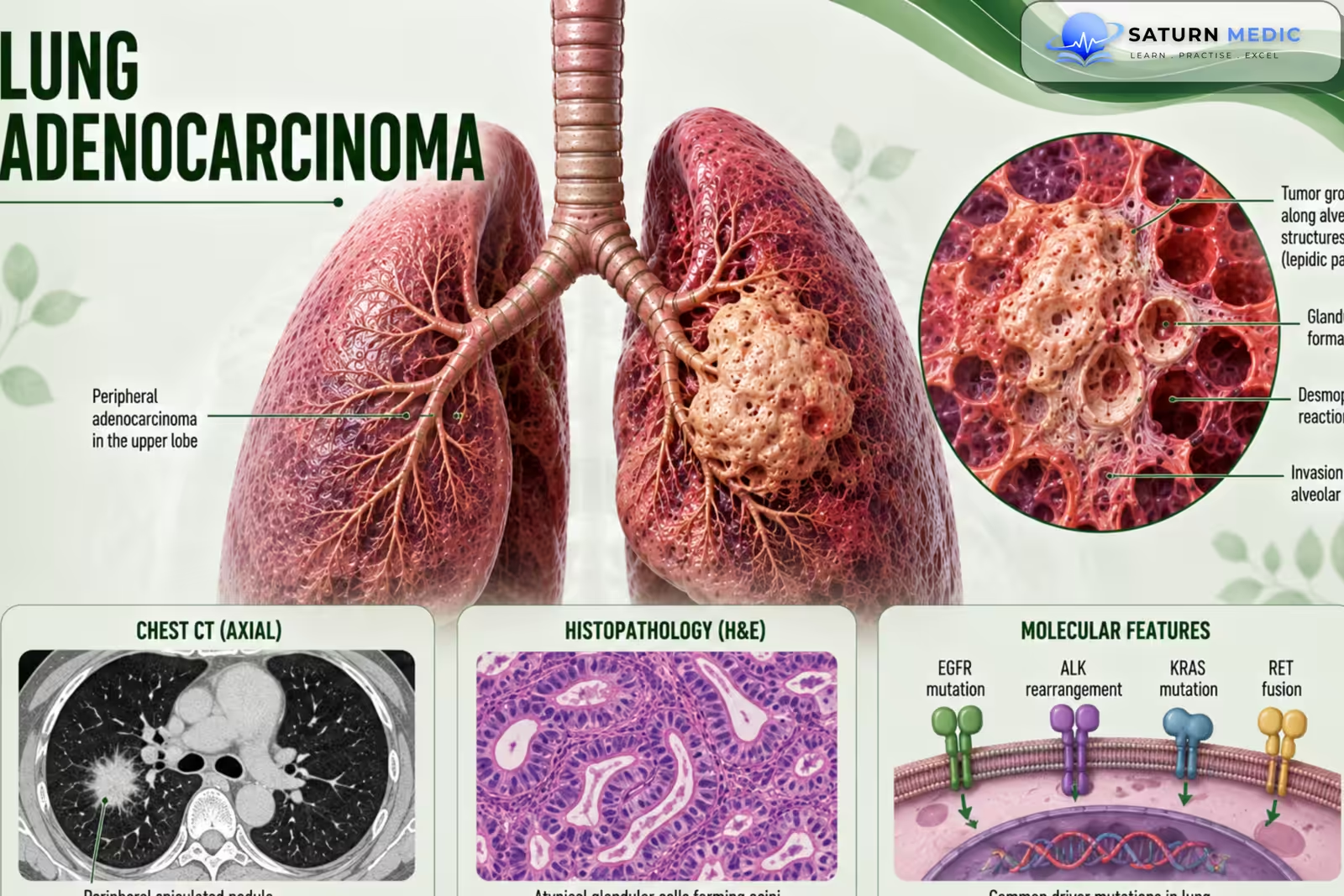
Adenocarcinoma is a malignant gland-forming epithelial tumor characterized by mucin
production. It commonly occurs in the lung periphery and is associated with mutations
such as EGFR, ALK, and KRAS. Compared with other lung cancers, it generally has a
better prognosis.
Etiology & Risk Factors
Lung adenocarcinoma develops from malignant transformation of glandular or mucus-producing epithelial cells, usually in the peripheral lung.
Major causes include:
- Cigarette smoking
- Environmental carcinogens
- Occupational carcinogens
- Acquired genetic mutations
Risk Factors
-
- Cigarette smoking
- Secondhand smoke exposure
- Radon exposure
- Increasing age
- Family history of lung cancer
- Occupational exposure to:
- Asbestos
- Arsenic
- Chromium
- Nickel
- Silica
- Air pollution
- Previous chest radiation
- Chronic lung scarring or fibrosis
Pathophysiology
• Malignant transformation of glandular epithelial cells.
• Produces mucin.
• Usually arises in the peripheral lung.
• May demonstrate lepidic growth along intact alveolar walls.
• Most common lung cancer arising in pulmonary scars.
Clinical Presentation
• Pulmonary symptoms
• Extrapulmonary symptoms
• Features of metastatic disease
Associated findings include:
• Hypertrophic osteoarthropathy (digital clubbing)
History Taking
-Assess for:
• Respiratory symptoms
• Smoking history (although common in nonsmokers)
• Constitutional symptoms
• Symptoms of metastatic disease
Physical Examination
-Assess for:
• Respiratory findings
• Digital clubbing (hypertrophic osteoarthropathy)
• General performance status
• Signs of metastatic disease
Investigations of Lung Adenocarcinoma
-Laboratory studies :
• CBC
• Comprehensive metabolic panel
• LDH
-Imaging :
• Chest X-ray
• CT chest
For staging:
• CT thorax and abdomen
• Brain MRI (preferred) or CT
• PET-CT
-Histopathology :
Characteristic findings:
• Glandular tumor
• Mucin-producing cells (positive mucin staining)
Immunohistochemical markers:
• Napsin A
• TTF-1
Growth pattern:
• Lepidic growth (tumor growth along intact alveoli)
-Molecular testing:
Recommended in advanced or metastatic NSCLC:
• EGFR mutation testing
• ALK rearrangement testing
• ROS1 rearrangement testing
• PD-L1 testing
Diagnosis of Lung Adenocarcinoma
-Diagnosis is based on:
• Clinical evaluation
• Chest imaging
• Histopathological confirmation by biopsy
• Molecular testing in advanced disease to guide therapy
Related Topics
Management of Lung Adenocarcinoma
Management depends on disease stage and should involve a multidisciplinary tumor
board whenever available.
Stage I–IIA (No metastases)
• Preferred: Surgical resection with or without chemotherapy
• If inoperable: Radiotherapy (e.g., stereotactic radiotherapy)
Stage IIB–IIIC
• Preferred: Surgical resection plus chemotherapy
• If inoperable:
• Chemotherapy plus radiotherapy
• Consider adjuvant immunotherapy
Stage IVA–IVB (Metastatic disease)
• Palliative treatment
If targetable mutations are present:
• Molecular targeted therapy
If no targetable mutation:
• Chemotherapy and/or immunotherapy
General principles
• Early palliative care improves quality of life and may prolong survival.
Complications
• Metastatic disease
• Progressive respiratory compromise
• Metastatic disease
Prognosis of Lung Adenocarcinoma
- Compared with other lung cancer subtypes, adenocarcinoma generally has a better
prognosis, although prognosis depends largely on the stage at diagnosis.
Key Points / Clinical Pearls of Lung Adenocarcinoma
• Most common primary lung cancer.
• NSCLC subtype.
• Usually peripheral.
• More common in women and nonsmokers.
• Produces mucin.
• Common mutations:
• EGFR
• ALK
• KRAS
• Histology shows glandular tumor with mucin-producing cells.
- Sabbula BR, Gasalberti DP, Mukkamalla SKR, Anjum F. National Center for Biotechnology Information (NIH). Squamous Cell Lung Cancer, StatPearls.
- Clark SB, Alsubait S. National Center for Biotechnology Information (NIH). Non-Small Cell Lung Cancer, StatPearls.
- National Cancer Institute (NIH). Non-Small Cell Lung Cancer Treatment (PDQ), Health Professional Version.
- MedlinePlus, National Library of Medicine (NIH). Lung Cancer: Health Topic.
- Perri F, Pisconti S, Della Vittoria Scarpati G, et al. Squamous Cell Carcinomas of the Lung and of the Head and Neck: New Insights on Molecular Characterization. Oncotarget. 2016. PMC5041888.