

Clinical Subject Page
Small Cell Lung Cancer (SCLC)
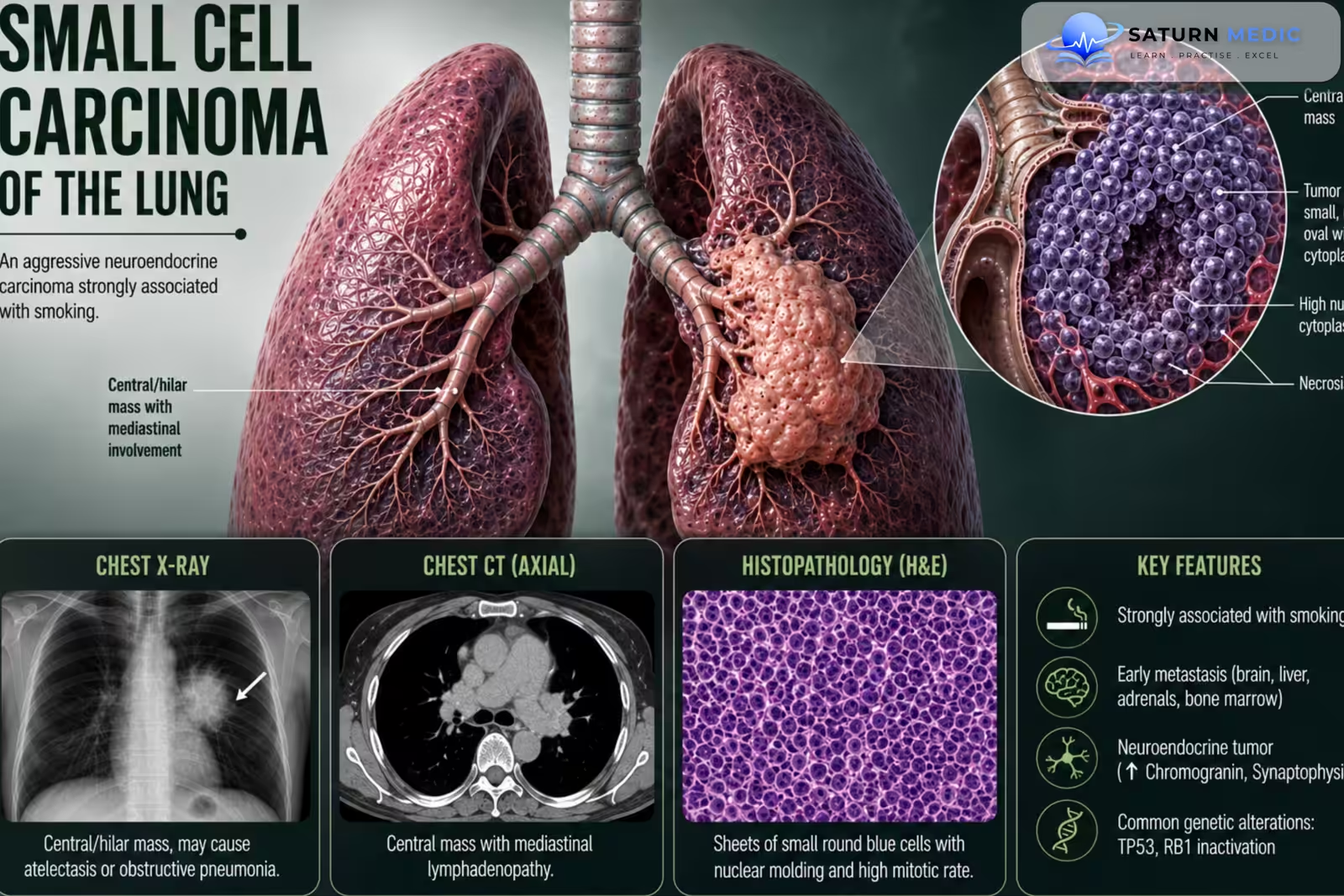
Small cell lung cancer (SCLC) is a high-grade neuroendocrine lung carcinoma characterized by rapid growth, early metastasis, and a strong association with cigarette smoking. It is typically located centrally within the lung
Also called
ICD-10
Specialty
Onset
Reviewed
-
OverviewOverview
-
Etiology & Risk FactorsEtiology & Risk Factors
-
PathophysiologyPathophysiology
-
Clinical PresentationClinical Presentation
-
History TakingHistory Taking
-
Physical ExaminationPhysical Examination
-
InvestigationsInvestigations
-
DiagnosisDiagnosis
-
ManagementManagement
-
ComplicationsComplications
-
PrognosisPrognosis
-
Key Points / Clinical PearlsKey Points / Clinical Pearls
Overview
SCLC is an aggressive neuroendocrine tumor arising from Kulchitsky cells. Although it
often responds well initially to chemotherapy, recurrence is common, and many patients
present with advanced disease.
Etiology & Risk Factors
Etiology
Main cause:
- Cigarette smoking — strongly associated with SCLC
Other causes include long-term exposure to:
- Secondhand smoke
- Occupational carcinogens
- Air pollution
Risk Factors
- Heavy cigarette smoking
- Long smoking duration
- Older age
- Secondhand smoke exposure
- Occupational exposure to:
- Asbestos
- Radon
- Arsenic
- Chromium
- Nickel
- Previous radiation exposure
Pathophysiology
• Originates from neuroendocrine (Kulchitsky) cells
• Rapid growth
• High mitotic activity
• Early metastatic spread
• Frequently associated with paraneoplastic syndrome
Clinical Presentation
- Patients may present with:
• Pulmonary symptoms
• Extrapulmonary symptoms
• Paraneoplastic syndromes
• Features of metastatic disease
SCLC commonly presents at an advanced stage due to its rapid progression.
History Taking
-Assess for:
• Smoking history
• Respiratory symptoms
• Constitutional symptoms
• Symptoms suggestive of paraneoplastic syndromes
• Symptoms suggestive of metastatic disease
Physical Examination
-Assess for:
• Respiratory findings
• Evidence of metastatic disease
• Signs of paraneoplastic syndromes
• General performance status
Investigations of Small Cell Lung Cancer (SCLC)
-Imaging :
• CT chest (initial evaluation)
• Further staging imaging as indicated
-Tissue diagnosis :
• Bronchoscopic biopsy
• CT-guided biopsy
Histopathology
Characteristic findings:
• Small, dark blue neuroendocrine (Kulchitsky) cells
• Hyperchromatic nuclei with “salt-and-pepper” appearance
• Scant cytoplasm
• High mitotic rate (>10 mitoses/2 mm²)
-Immunohistochemical markers :
• Chromogranin A
• Synaptophysin
• Neuron-specific enolase (NSE)
• CD56
Diagnosis of Small Cell Lung Cancer (SCLC)
-Diagnosis is based on:
• Clinical evaluation
• Chest CT
• Histopathological confirmation by biopsy
• Immunohistochemical staining
Related Topics
Management Small Cell Lung Cancer (SCLC)
-Management depends on disease stage and should involve a multidisciplinary tumor board whenever available.
Limited-stage disease
Stage I–II (N0)
• Consider surgical resection
-All patients
• Systemic therapy
• Concurrent radiotherapy
• Consider prophylactic cranial irradiation (PCI)
-Extensive-stage disease
• Palliative chemotherapy
• Chemotherapy with or without immunotherapy
• Consider prophylactic cranial irradiation (PCI) or MRI surveillance
-General points
• Early palliative care improves quality of life and may prolong survival.
• Most patien
Complications
• Early distant metastases
• Paraneoplastic syndromes
• Disease recurrence (commonly within 6 months after initial chemotherapy response)
Prognosis of Small Cell Lung Cancer (SCLC)
• Very aggressive malignancy.
• Good initial response to chemotherapy is common.
• Most patients relapse within approximately 6 months.
• Overall prognosis is poor because most patients present with advanced disease.
Key Points / Clinical Pearls of Small Cell Lung Cancer (SCLC)
• High-grade neuroendocrine lung carcinoma.
• Strongly associated with smoking.
• Usually centrally located.
• Rapid growth with early metastasis.
• Originates from Kulchitsky cells.
• Positive neuroendocrine markers:
• Chromogranin A
• Synaptophysin
• Neuron-specific enolase
• CD56
• Diagnosis requires biopsy
- Pincott J, Kanchustambham V. National Center for Biotechnology Information (NIH). Small Cell Lung Cancer, StatPearls.
- MedlinePlus, National Library of Medicine (NIH). Lung Cancer: Health Topic.
- Megyesfalvi Z, Gay CM, Popper H, et al. Clinical Insights Into Small Cell Lung Cancer: Tumor Heterogeneity, Diagnosis, Therapy, and Future Directions. CA Cancer J Clin. 2023. PMID: 37329269.
- National Cancer Institute (NIH). Small Cell Lung Cancer Treatment (PDQ), Health Professional Version.
- Siddiqui F, Vaqar S, Siddiqui AH. National Center for Biotechnology Information (NIH). Lung Cancer, StatPearls.